Bürkert Fluid Control Systems
Type 8189
Level
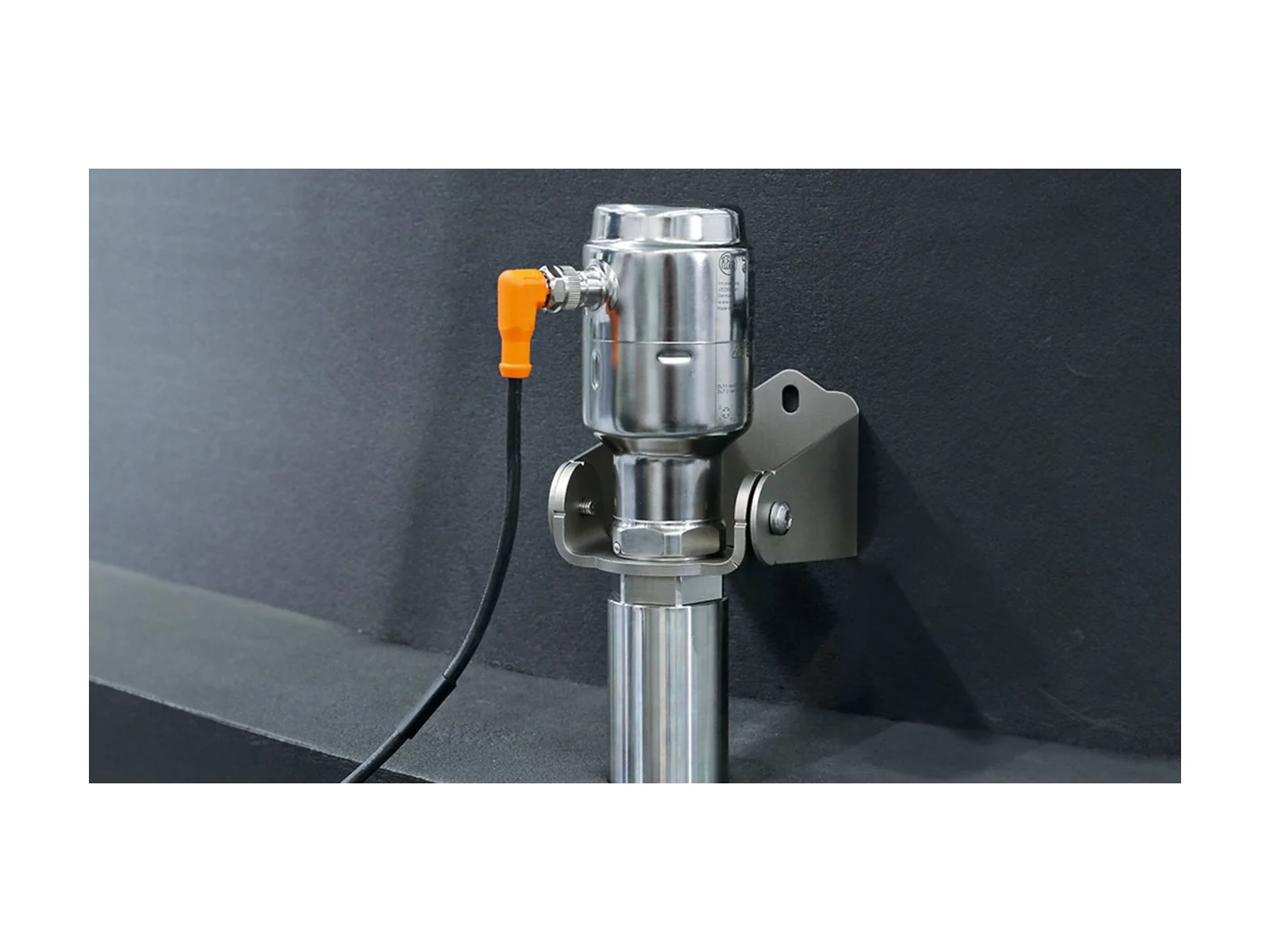
Radar level transmitters
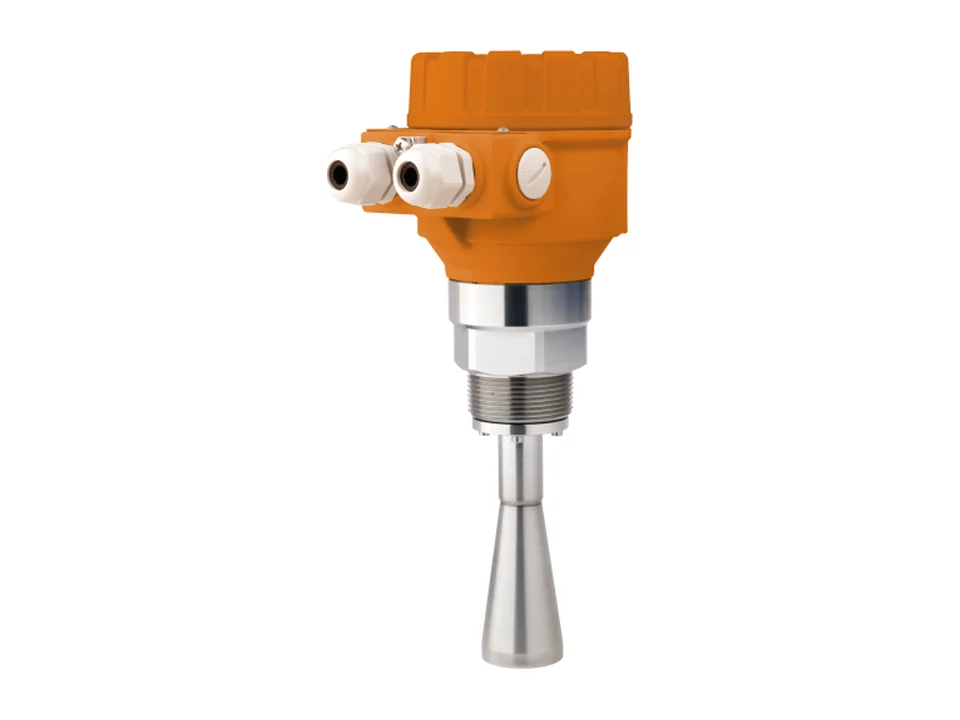
The LW2120 is a radar level sensor for precise, non-contact monitoring of liquids and viscous media in industrial tanks up to 10 m high. Measurement remains stable even with steam or condensate present. Applications named for the sensor are water treatment, open and closed metal tanks, plastic tanks such as IBC containers, open tubs and flow measurement in Venturi flumes.
The sensor operates with FMCW (frequency modulated continuous wave) technology in the 77–81 GHz band. It emits a frequency-modulated signal towards the medium and calculates the distance from the frequency difference between the transmitted and reflected signals, giving millimetre-precision results. Because the principle is non-contact, there are no problems with adhesion or wear on the sensor. An intelligent algorithm suppresses reflections from interfering structures in the tank. The radar signal can penetrate non-metallic walls, so the sensor can measure through the wall of plastic tanks.
The measuring range is 0.01 to 10 m with an accuracy of ±2 mm.
The output configuration is either two switching outputs or one switching output and one 4–20 mA analogue output. Via IO-Link, parameters can be set and the sensor monitored remotely from a PC or via a Bluetooth adapter; PC software for this is available. Electrical connection uses standard M12 connection technology for quick set-up.
The process connection is G1 and the sensor is protected to IP69K. It can be installed above plastic tanks, and with an antenna extension available as an accessory it can also be used outside closed metal tanks.
A hygienic version is available as LW2720. The LW2160 variant works in the 76–77 GHz range and is the version available for India and Malaysia.
Typical uses include level monitoring in water treatment, in metal and plastic tanks and IBC containers and in open tubs, as well as open-channel flow measurement in Venturi flumes.
When enquiring, please state the medium, tank type and height, mounting situation, required outputs and whether the hygienic version or an antenna extension is required.
LW2120
Identify the vessel height, nozzle position and surface conditions. A point alarm and a continuous level reading require different outputs.
For an installed instrument, copy the complete ordering code and its suffixes from the nameplate. Identify the part that will remain in service and the part that needs to be replaced. A photograph of the connection face or terminal markings helps resolve differences between versions that share the same housing.
For a new installation, describe what the instrument must measure or control and where the reading will be used. Give the normal operating conditions separately from short peaks. Include units with every numerical value. A drawing with the available space, orientation and access for removal gives the supplier a practical starting point.
Add the quantity for each position and identify any accessories that belong with it. Where a particular drawing, material certificate or calibration record is required, mention it with the line item. Submit the list with the destination country so that the response can cover the requested configuration and delivery.