ELGAS s.r.o.
picoELCOR
Flow
Water, gas & heat meters
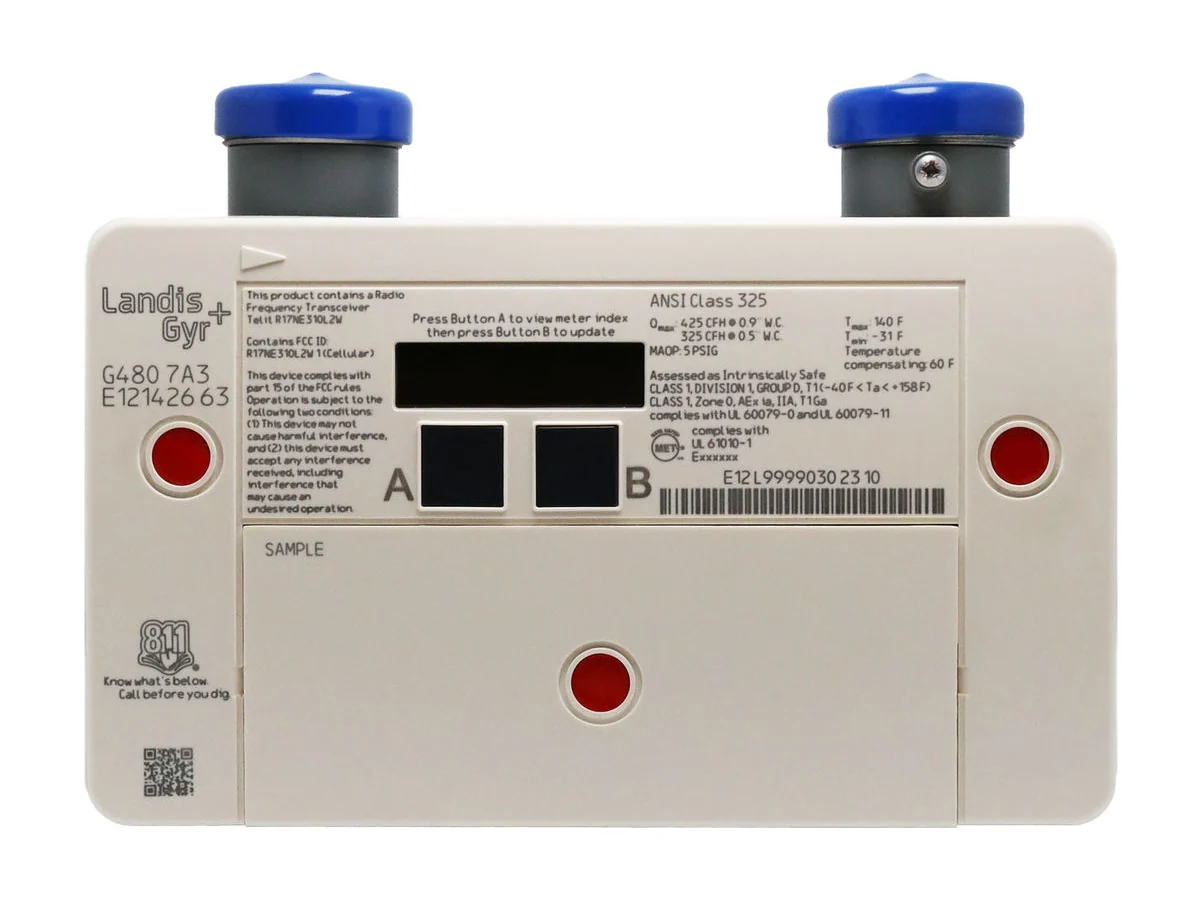
The Surent G480 is an all-in-one ultrasonic smart gas meter. It combines gas measurement, pressure sensing and an integrated shutoff valve in a single solid-state device and is intended for gas utilities, including investor-owned utilities, municipal utilities and gas cooperatives.
The meter uses solid-state ultrasonic measurement and has no moving parts. Ultrasonic flow measurement determines gas flow from the transit time of sound pulses through the gas, so no mechanical measuring element is needed. The meter maintains its accuracy in any installation orientation. Compared with diaphragm meters, it is half the size and weight.
The G480 records data in three channels at intervals: gas volume, pressure and temperature. These interval records give the utility information not only on consumption but also on supply pressure and gas temperature at the meter. The meter measures natural gas accurately, including hydrogen blends up to 23 %. It has been tested and certified to meet the applicable AGA/ANSI gas measurement accuracy standards.
The integrated shutoff valve allows both autonomous actions, taken by the meter itself, and remote actions initiated by the utility.
For communication the meter supports cellular, Wi-SUN, RF Mesh and Mesh IP protocols, which are available as options. Data is transmitted over the utility's IoT network.
The main features of the G480 are therefore solid-state ultrasonic measurement without moving parts, three-channel interval recording of volume, pressure and temperature, the integrated shutoff valve for autonomous and remote actions, suitability for hydrogen blends up to 23 %, a compact size and weight of half that of diaphragm meters, and a choice of cellular, Wi-SUN, RF Mesh and Mesh IP communication.
Please state the required communication protocol, the gas type and the number of meters in your enquiry.
State the minimum, normal and peak flow with units. Pipe bore, fluid properties and the available straight run affect the choice of measuring principle.
For an installed instrument, copy the complete ordering code and its suffixes from the nameplate. Identify the part that will remain in service and the part that needs to be replaced. A photograph of the connection face or terminal markings helps resolve differences between versions that share the same housing.
For a new installation, describe what the instrument must measure or control and where the reading will be used. Give the normal operating conditions separately from short peaks. Include units with every numerical value. A drawing with the available space, orientation and access for removal gives the supplier a practical starting point.
Add the quantity for each position and identify any accessories that belong with it. Where a particular drawing, material certificate or calibration record is required, mention it with the line item. Submit the list with the destination country so that the response can cover the requested configuration and delivery.