
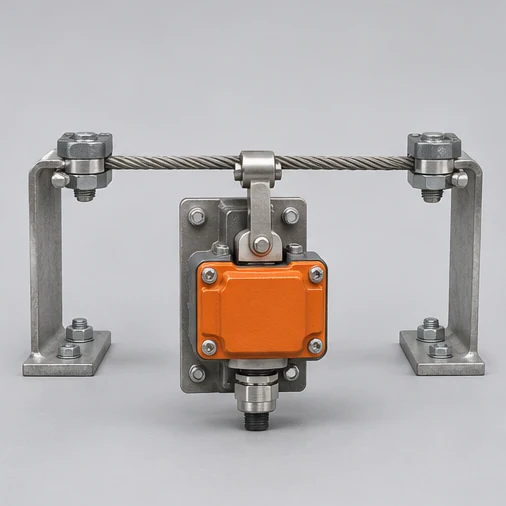
Belt tear detectors
Identify the measurement point on the belt, in the ventilation gallery or on the support. Include the signal, mounting, cable entry and any site-required approval for the precise instrument variant.
What to specify
- Measuring range
- Operating environment
- Output signal
- Mounting arrangement
Selection notes
For an installed instrument, copy the complete ordering code and its suffixes from the nameplate. Identify the part that will remain in service and the part that needs to be replaced. A photograph of the connection face or terminal markings helps resolve differences between versions that share the same housing.
For Belt tear detectors, the reference values on a nameplate or drawing help identify the correct variant. Typical markings include contact · loop · interface.
For a new installation, describe what the instrument must measure or control and where the reading will be used. Give the normal operating conditions separately from short peaks. Include units with every numerical value. A drawing with the available space, orientation and access for removal gives the supplier a practical starting point.
Identify the measurement point on the belt, in the ventilation gallery or on the support. Include the signal, mounting, cable entry and any site-required approval for the precise instrument variant.