ELGAS s.r.o.
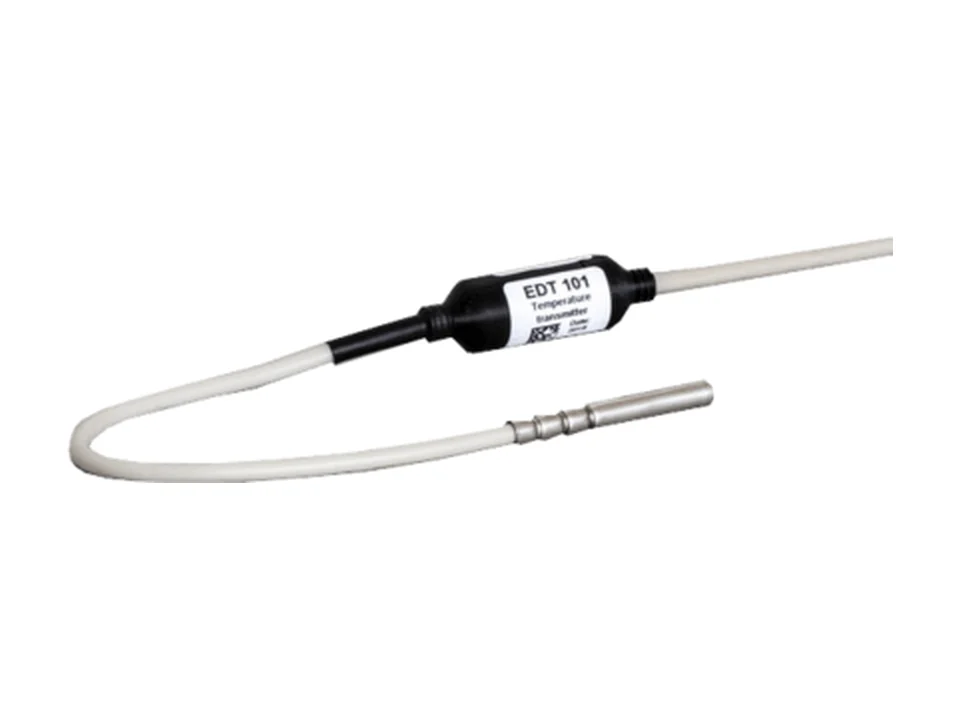
EDT 101
Temperature
Thermocouples
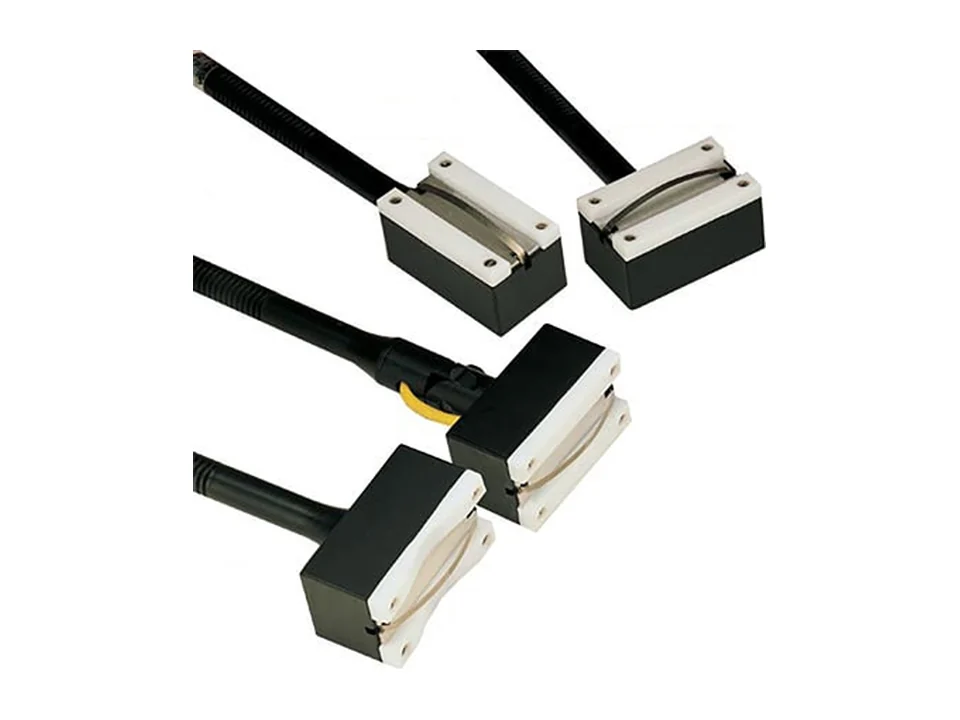
The 88000 series are handheld thermocouple probes for measuring the surface temperature of moving or rotating surfaces. They are used in the paper, fibre and printing industries and in iron and steel works, and work on both metal and plastic surfaces up to 250 °C (480 °F).
The sensing element is a thin thermocouple that is pressed against the surface while it moves. PFA sliders on the probe tip ensure smooth running on the surface and protect the element. The probes are available with type K or type E thermocouples, both with standard limits of error. The element is mounted in a stainless steel sheath, and the cable has TPE insulation with moulded strain relief at the handle.
The maximum surface velocity is 61 m per minute (200 ft/min). The head rotates through 180° and swivels, so the element follows the surface even if the probe is not held perfectly perpendicular; the maximum element deflection is 1.5 mm (0.06 in). Swivel head models of the 98227 series additionally have end braces that minimise flexing caused by the moving surface and so prolong probe life. High-temperature exposure models are offered in the 88227 series.
Three head configurations are available: standard, right-angle and swivel. The probe is connected through a 60 in cable with 28 AWG conductors and an expansion length of 1.5 m (5 ft), terminated with a miniature male thermocouple connector. M8 or M12 connectors, straight or right-angled, are available as alternatives, as well as SMP and SMPW connector styles. Adaptors TAS-K-3 and TAS-E-3 are offered for connection to instruments.
The sensing element wears during use on moving surfaces; replacement elements with the -RE suffix are available separately, so only the element needs to be changed rather than the whole probe. The probes are RoHS compliant.
Please state the thermocouple type, head configuration, connector and the surface speed and temperature of your application in your enquiry.
88220K, 88222K, 98220K, 98221K, 98227K, 98220E, 88220K-M8-S-M, 88220(*)-RE, 88221(*)-RE, 88222(*)-RE, 88223(*)-RE, 88224(*)-RE, 88225(*)-RE, 88226(*)-RE, 88227(*)-RE, TAS-K-3, TAS-E-3, M8-S-M, M12-S-M, M8-R-M, 88006, 88007, 88008, 88010, 88011, 88012, 88016, 88009, 88014, 88013, 88001, 88002, 88003, 88101, 88102, 88103, 88104, 88105, 88106, 88107, 88108, 88201, 88202, 88203, 88220, 88221, 88222, 88223, 88224, 88225, 88226, 88227, 88301, 88305, 88306, 88307, 88308, 98201 Swivel, 98202 Swivel, 98203 Swivel, 98225 Swivel, 98226 Swivel, 98227 Swivel
Match the sensing element, insertion length and wiring to the existing input. Separate the process temperature from the ambient temperature at the connection head.
For an installed instrument, copy the complete ordering code and its suffixes from the nameplate. Identify the part that will remain in service and the part that needs to be replaced. A photograph of the connection face or terminal markings helps resolve differences between versions that share the same housing.
For a new installation, describe what the instrument must measure or control and where the reading will be used. Give the normal operating conditions separately from short peaks. Include units with every numerical value. A drawing with the available space, orientation and access for removal gives the supplier a practical starting point.
Add the quantity for each position and identify any accessories that belong with it. Where a particular drawing, material certificate or calibration record is required, mention it with the line item. Submit the list with the destination country so that the response can cover the requested configuration and delivery.