ELGAS s.r.o.
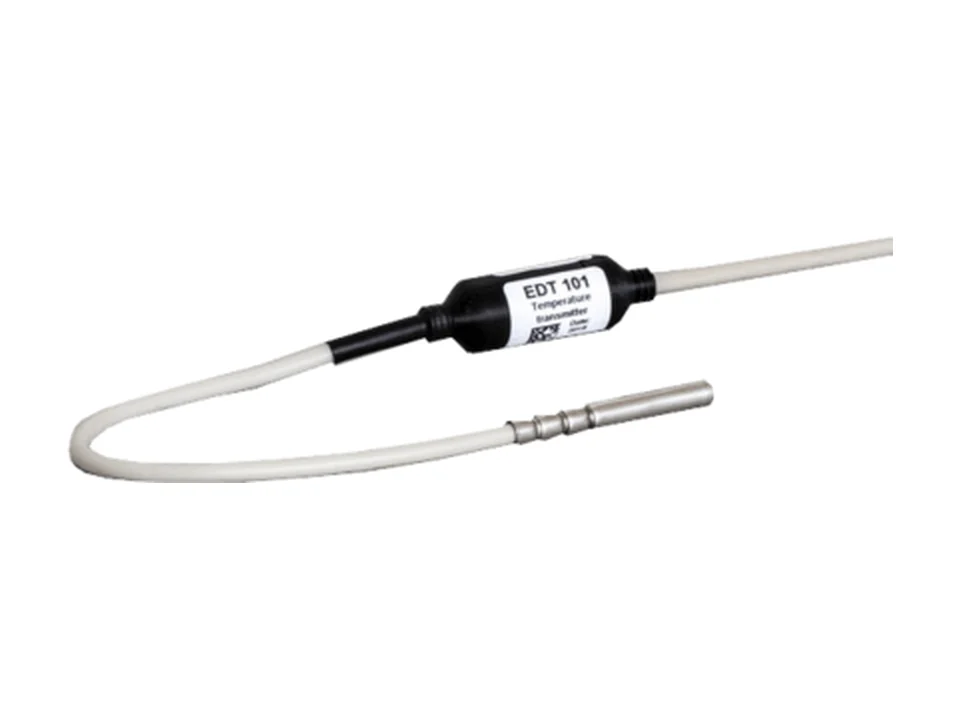
EDT 101
Temperature
Temperature transmitters
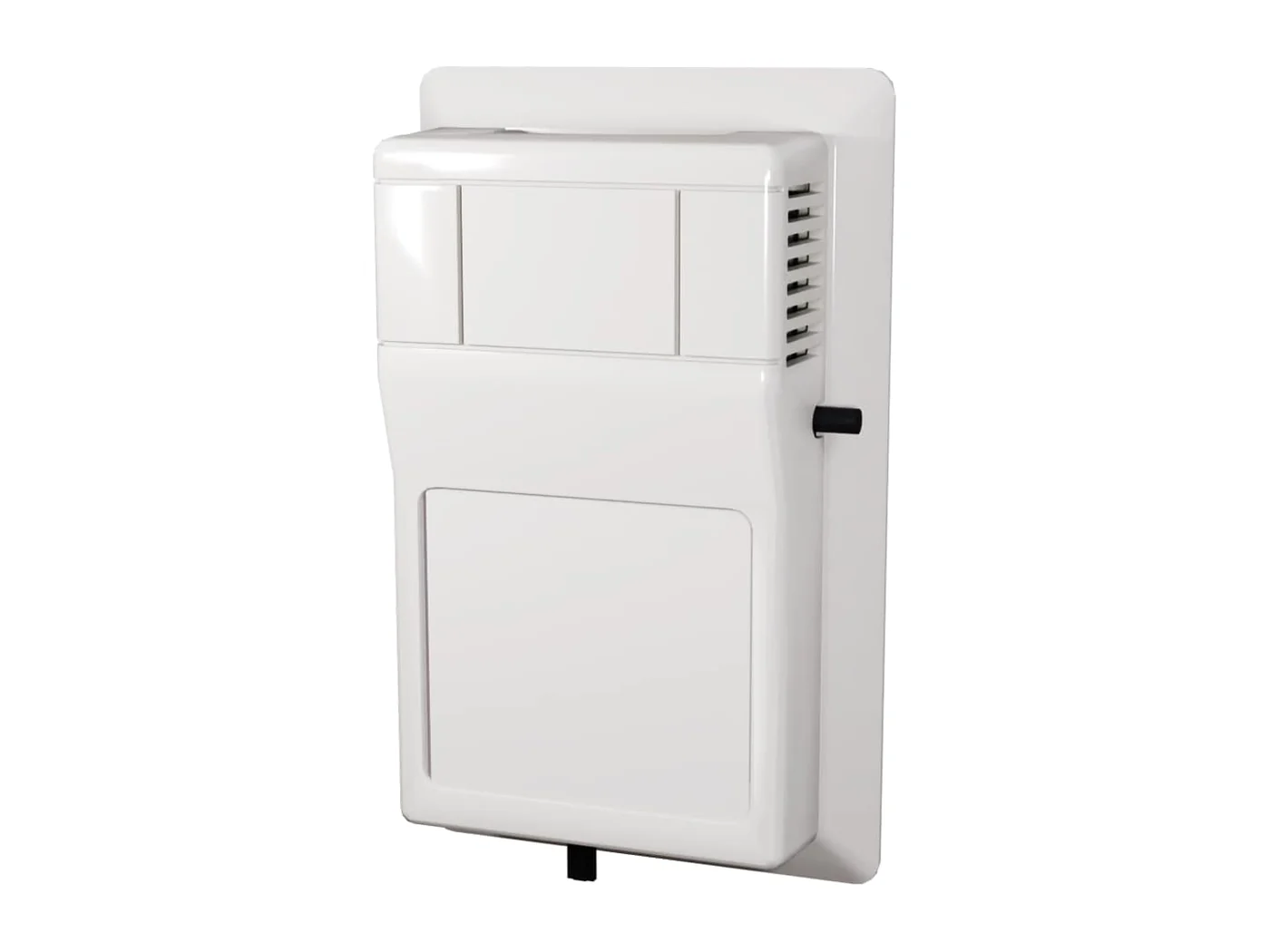
This wall-mounted room temperature transmitter measures the space temperature in offices, schools, hospitals, commercial buildings, plants and data centres and sends it as a standard signal to a building automation system or a controller. It combines a platinum RTD sensor and transmitter electronics in a neat plastic enclosure designed to sit on the wall like a room thermostat.
The sensor is a 100 Ω or 1 kΩ platinum resistance element. The electronics convert its signal into a 4–20 mA two-wire loop-powered output or, as an option, into a 1–5 V or 2–10 V voltage output with a three-wire connection. The transmitter is powered with 8.5 to 32 V DC, regulated or unregulated. The temperature span is set to order, for example −30 to 130 °F or 40 to 90 °F, and the unit is calibrated to that span. Accuracy is ±0.2 % of span for spans below 500 °F (260 °C) and ±0.5 % for larger spans; long-term stability of the element is ±0.03 % after 1000 hours at 300 °C.
Several options turn the transmitter into a simple room operating unit. A setpoint output lets occupants adjust the desired temperature, with direct or reverse acting characteristic. An override input provides a normally open dry contact, for example to extend occupancy mode. An optional 3½-digit LCD shows the measured value locally. Matched sensor versions are available with a 3-point or 5-point traceable calibration certificate for applications that require documented accuracy, such as pharmaceutical and laboratory rooms.
The enclosure is moulded in ABS plastic to UL94-HB, available in beige or white, and measures about 114 mm in height with a 25 mm profile. Wiring is made on screw terminals. A thermally insulated foam backing pad is available as an accessory. The device operates at 5 to 95 %RH, non-condensing, and complies with RoHS and WEEE.
Please state the sensor type, output signal, temperature span and required options in your enquiry, and we will specify the correct ordering code.
A/TT100-R-2-LCD, A/TT1K-RS-4-LCD, A/TT1K-RSO-4-C5, A/TTM1K-R2-4-5PTNIST, A/ROOM-FOAM-PAD, 106821, 126386, 143369
Match the sensing element, insertion length and wiring to the existing input. Separate the process temperature from the ambient temperature at the connection head.
For an installed instrument, copy the complete ordering code and its suffixes from the nameplate. Identify the part that will remain in service and the part that needs to be replaced. A photograph of the connection face or terminal markings helps resolve differences between versions that share the same housing.
For a new installation, describe what the instrument must measure or control and where the reading will be used. Give the normal operating conditions separately from short peaks. Include units with every numerical value. A drawing with the available space, orientation and access for removal gives the supplier a practical starting point.
Add the quantity for each position and identify any accessories that belong with it. Where a particular drawing, material certificate or calibration record is required, mention it with the line item. Submit the list with the destination country so that the response can cover the requested configuration and delivery.