ELGAS s.r.o.
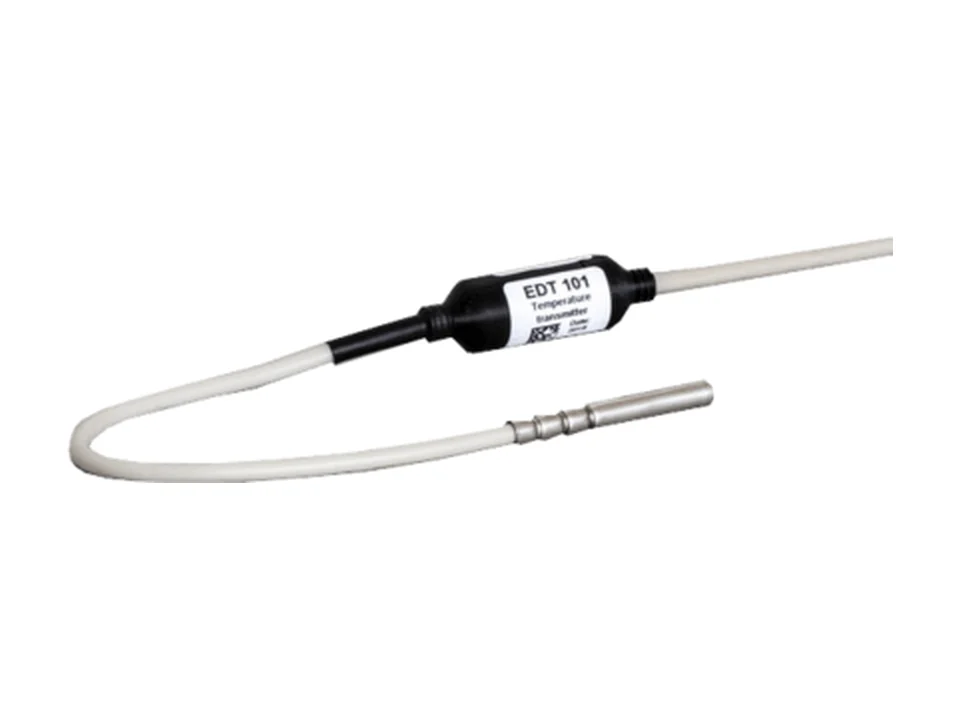
EDT 101
Temperature
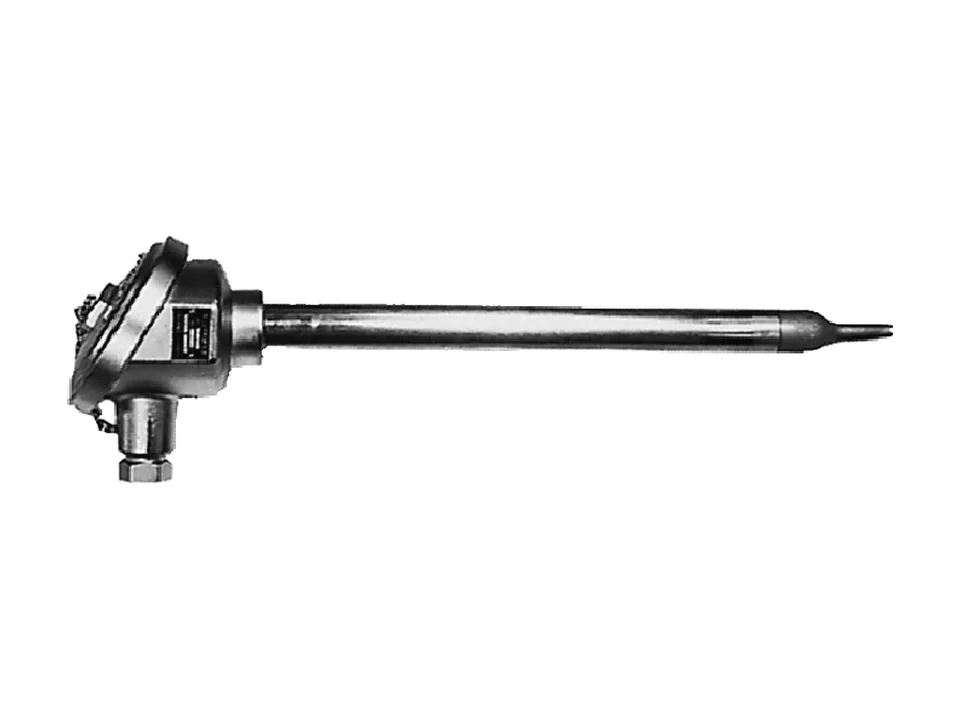
Thermocouples
The C025 is a thermocouple developed specifically for temperature measurement in asphalt plants, at locations where the falling aggregate strikes the sensor. Such points demand a sensor that is resistant to shock and abrasion and still responds quickly, and the C025 is designed with these three properties in mind. It is also suitable for other locations where abrasion resistance is required.
The sensor is a thermocouple: two different metal wires joined at the measuring junction generate a voltage that depends on the temperature. The C025 uses type K or type J thermoelements with a wire diameter of φ0.65 mm; a version with two thermocouple pairs is also possible. The measuring junction is of the grounded type. Tolerance is JIS class 2, and the maximum measuring temperature is 300 °C.
Response times for 90 % of a step change are about 10 seconds from 0 °C to 100 °C in boiling water and about 13 seconds from 100 °C to 0 °C in stirred water.
The protective tube is made of SUS304 stainless steel combined with a wear-resistant special alloy, which takes the impact and abrasion of the aggregate. Two models are available with different tube dimensions: the C025-12 with φ22 × 270 mm plus φ9 × 30 mm, and the C025-11 with φ16 × 270 mm plus φ9 × 30 mm. The electrical connection is made in a CG-type terminal box, a sealed waterproof terminal design.
Options include a total protective tube length other than 300 mm, wear-resistant alloy parts with lengths other than 60 mm, and mounting fittings such as flanges and nipples or a mounting bracket, so the thermocouple can be adapted to the existing installation point.
The listed application is temperature measurement in asphalt plants, together with other places where abrasion resistance is needed.
For a quotation, please state the model (C025-11 or C025-12), thermocouple type and number of pairs, the required tube length and the mounting fitting.
C025-12, C025-11
Match the sensing element, insertion length and wiring to the existing input. Separate the process temperature from the ambient temperature at the connection head.
For an installed instrument, copy the complete ordering code and its suffixes from the nameplate. Identify the part that will remain in service and the part that needs to be replaced. A photograph of the connection face or terminal markings helps resolve differences between versions that share the same housing.
For a new installation, describe what the instrument must measure or control and where the reading will be used. Give the normal operating conditions separately from short peaks. Include units with every numerical value. A drawing with the available space, orientation and access for removal gives the supplier a practical starting point.
Add the quantity for each position and identify any accessories that belong with it. Where a particular drawing, material certificate or calibration record is required, mention it with the line item. Submit the list with the destination country so that the response can cover the requested configuration and delivery.