voestalpine Railway Systems
UNILIGHT LED PPI
Controllers, recorders & signal conditioning
Indicators & totalisers
The DFG-RS3 is a universal digital indicator for force and torque measurement that works with interchangeable remote sensors. It displays readings from tension/compression load cells and reaction torque sensors, and can be held in the hand or mounted on fixtures and test stands. The indicator is intended for laboratory and industrial testing.
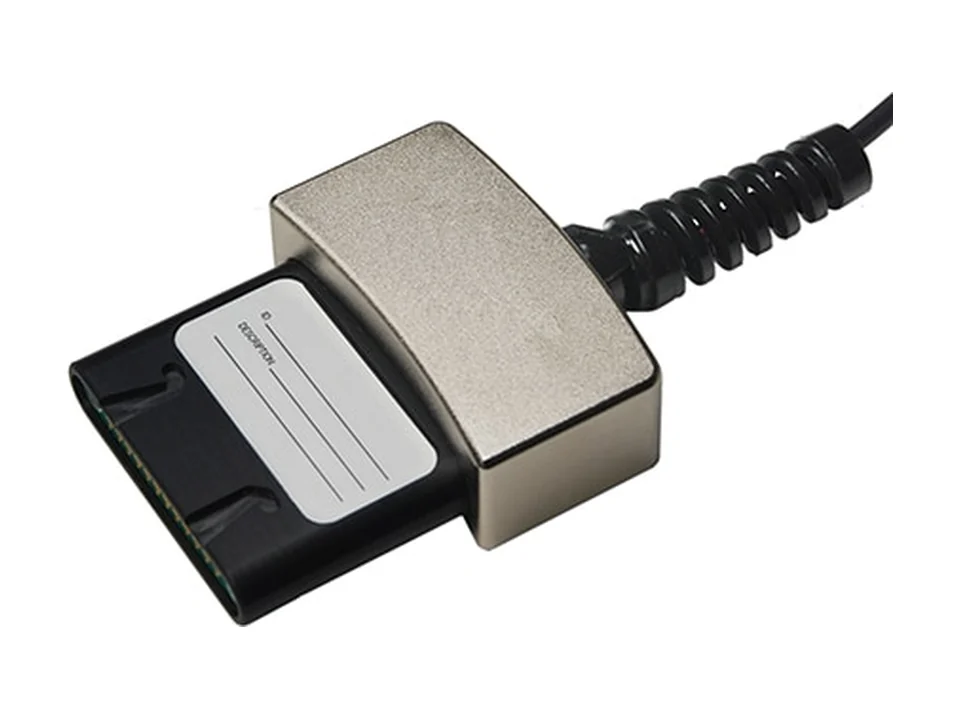
The key to the system is sensor interchangeability. Calibration and configuration data are stored in the smart connector of each sensor, so a sensor can be exchanged without recalibrating the indicator. Signals are sampled at a high rate of 2000 Hz, which allows fast changes in load to be captured. The large backlit graphics display shows the value together with a live load bargraph and set point markers, and four units of measure can be selected.
With the matching sensors, the system covers forces from 0.25 to 10,000 lb and torques from 10 oz-in to 100 lb-in. Accuracy depends on the sensor series: ±0.15 % of full scale with RLC01 tension/compression and RLC03 low-capacity tension/compression load cells, ±0.5 % with RLC02 compression-only load cells, ±0.2 % with RLC04 miniature tension/compression load cells and ±0.35 % with RTQ50 reaction torque sensors.
Programmable set points with pass/fail indicators support simple go/no-go testing. Individual data points can be sent to a computer through the USB output, configurable up to 115,200 baud. The unit is powered from 12 V DC at 0.5 A; battery operation lasts up to 7 hours of continuous use with the backlight on, or 24 hours with the backlight off.
The housing is ultra-compact: 99.1 × 64.3 × 38.1 mm, with a weight of 0.3 kg. Permitted operating conditions are 4 to 38 °C and up to 96 % RH non-condensing. The indicator carries CE, UKCA and RoHS markings.
The range comprises the DFG-RS3 indicator, the DFG-RSA programmable adapter and sensors of the RLC01, RLC02, RLC03, RLC04 and RTQ50 series, for example RLC01 load cells from 50 to 2K capacity. Typical applications are force measurement with tension/compression load cells, torque measurement with reaction torque sensors, and laboratory and industrial testing. Please send the required force or torque range, the sensor type and the mounting arrangement with your enquiry.
DFG-RS3, DFG-RSA, RLC01-50, RLC01-100, RLC01-200, RLC01-500, RLC01-1K, RLC01-2K, RLC01-5K, RLC01-10K, RLC02-100, RLC02-200, RLC02-500, RLC02-1K, RLC02-2K, RLC02-5K, RLC02-10K, RLC03-0.25, RLC03-0.5, RLC03-2, RLC03-5, RLC03-10, RLC03-20, RLC03-50, RLC03-100, RLC04-0.25, RLC04-0.5, RLC04-2, RLC04-5, RLC04-10, RLC04-20, RLC04-50, RLC04-100, RTQ50-10Z, RTQ50-20Z, RTQ50-50Z, RTQ50-12, RTQ50-50, RTQ50-100, G1038
List input types and the destination of each output. Match panel cutout, supply and communication options before choosing a replacement.
For an installed instrument, copy the complete ordering code and its suffixes from the nameplate. Identify the part that will remain in service and the part that needs to be replaced. A photograph of the connection face or terminal markings helps resolve differences between versions that share the same housing.
For a new installation, describe what the instrument must measure or control and where the reading will be used. Give the normal operating conditions separately from short peaks. Include units with every numerical value. A drawing with the available space, orientation and access for removal gives the supplier a practical starting point.
Add the quantity for each position and identify any accessories that belong with it. Where a particular drawing, material certificate or calibration record is required, mention it with the line item. Submit the list with the destination country so that the response can cover the requested configuration and delivery.