voestalpine Railway Systems
UNILIGHT LED PPI
Controllers, recorders & signal conditioning
Recorders & data loggers
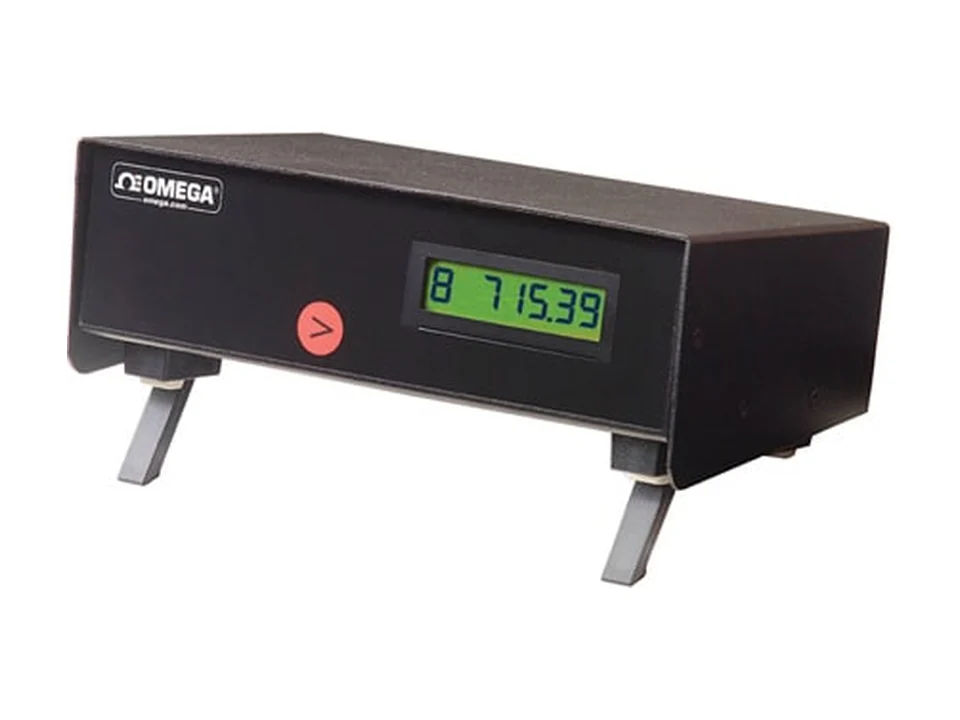
The DP9800 series is an eight-channel benchtop digital thermometer and data logger for thermocouple or Pt100 RTD sensors. It combines accurate temperature measurement with scanning and logging and is connected to a PC through a USB interface.
The instrument works either stand-alone, as an indicator and logger with its own backlit LCD, or connected to a PC, where the included software is used for remote control, measurement, logging and calibration. Reference junction compensation for thermocouples is automatic. A built-in self-calibration facility calibrates the instrument automatically on every A/D cycle.
Accuracy is ±0.1 °C. For thermocouple types J, K, T, E and N the accuracy is better than ±0.1 °C ±0.1 % of range from zero to span. Resolution is 0.1 °C on thermocouple ranges and 0.01 °C on the Pt100 range, linearisation accuracy is ±0.05 °C, and zero and span drift are ±0.01 % of span per °C. Example ranges are −200 to 750 °C for type J, −200 to 1200 °C for type K and −200 to 350 °C for type T; types R, S and B are also supported. Linearisation follows IEC 584 for thermocouples and IEC 751 for Pt100.
The channels are sampled at 0.5 Hz, i.e. two seconds between updates, and the logging interval is configurable from 5 seconds to 1 hour. The instrument is powered from a 6 V DC adaptor for 120 to 250 V mains. It operates from 0 to 50 °C and can be stored from −20 to 70 °C. CE and RoHS conformity is stated.
Two models are available: DP9800-TC with eight thermocouple inputs on mini connectors, and DP9800-RTD with eight Pt100 inputs on terminal blocks. The instrument is supplied complete with power adaptor, USB cable, software and operator's manual on CD, and technical support is available for installation of the software driver.
The logger is intended for temperature measurement and logging in the plant and in the laboratory, and for product development and testing. When you enquire, please state whether you need the thermocouple or the Pt100 version and which sensor types you will connect.
DP9800-TC, DP9800-RTD
List input types and the destination of each output. Match panel cutout, supply and communication options before choosing a replacement.
For an installed instrument, copy the complete ordering code and its suffixes from the nameplate. Identify the part that will remain in service and the part that needs to be replaced. A photograph of the connection face or terminal markings helps resolve differences between versions that share the same housing.
For a new installation, describe what the instrument must measure or control and where the reading will be used. Give the normal operating conditions separately from short peaks. Include units with every numerical value. A drawing with the available space, orientation and access for removal gives the supplier a practical starting point.
Add the quantity for each position and identify any accessories that belong with it. Where a particular drawing, material certificate or calibration record is required, mention it with the line item. Submit the list with the destination country so that the response can cover the requested configuration and delivery.