ifm electronic
LDH313
Gas analysis
Process gas analysers & chromatographs
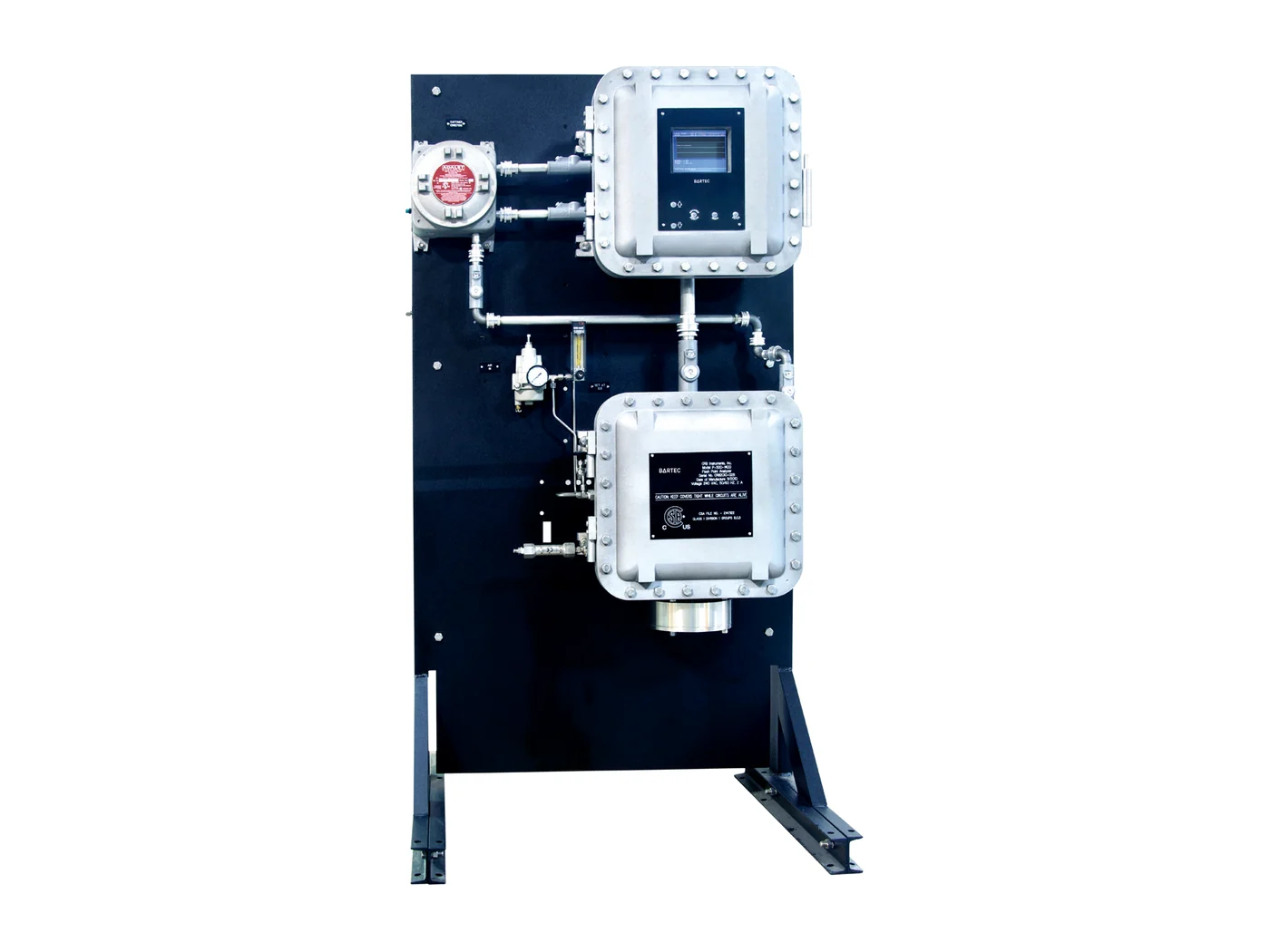
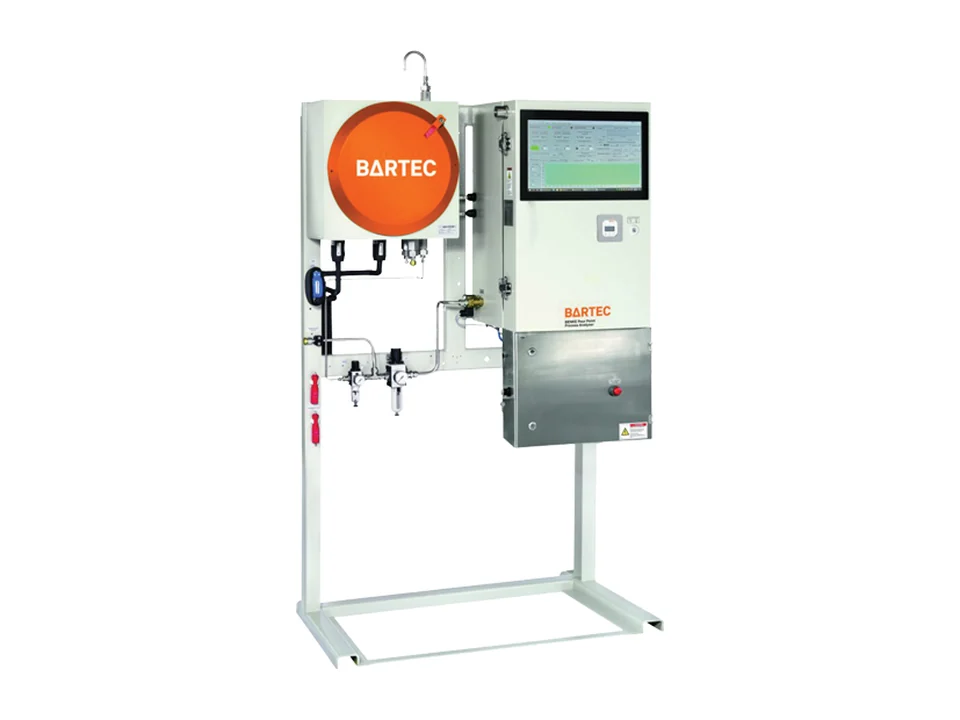
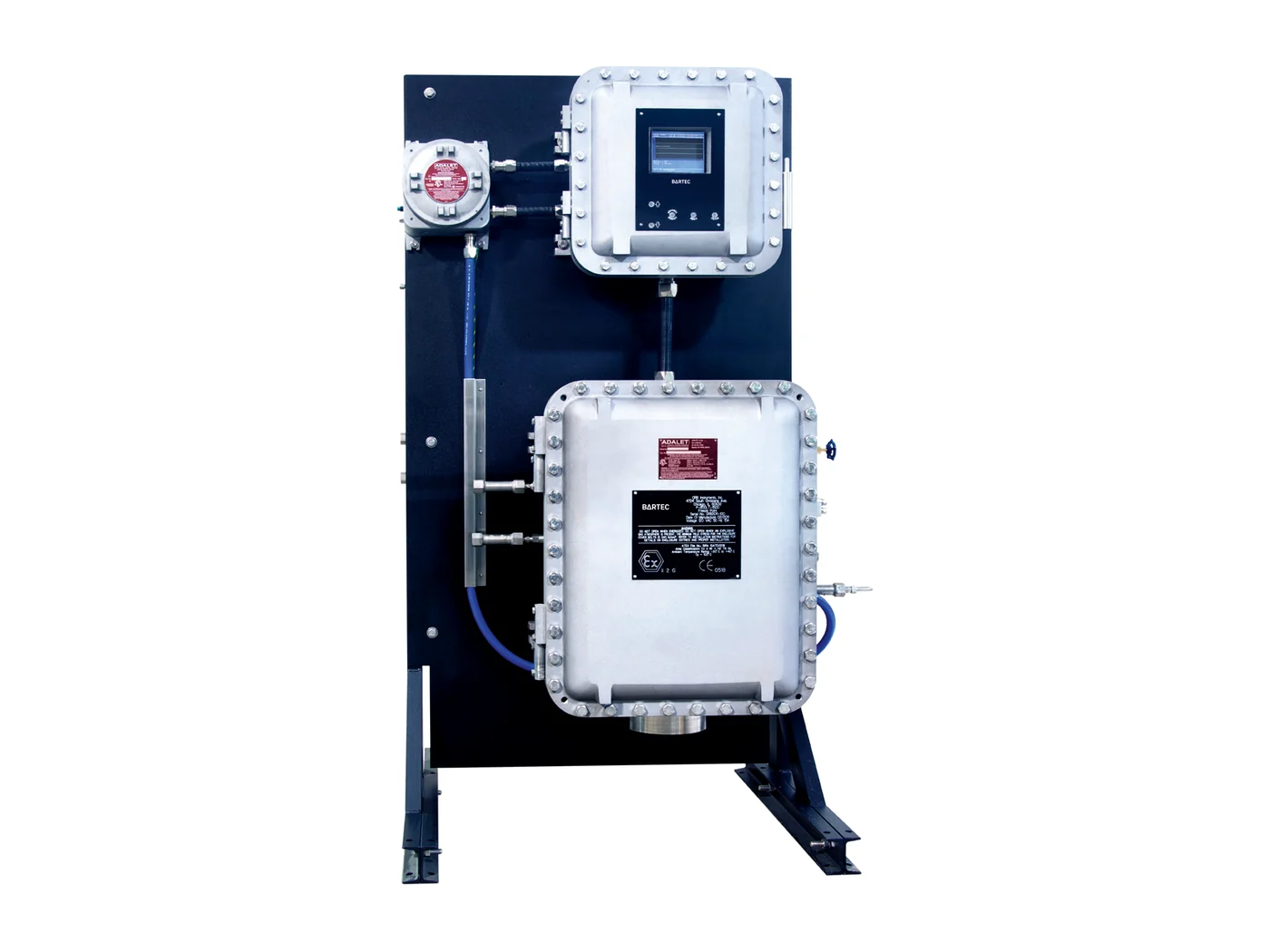
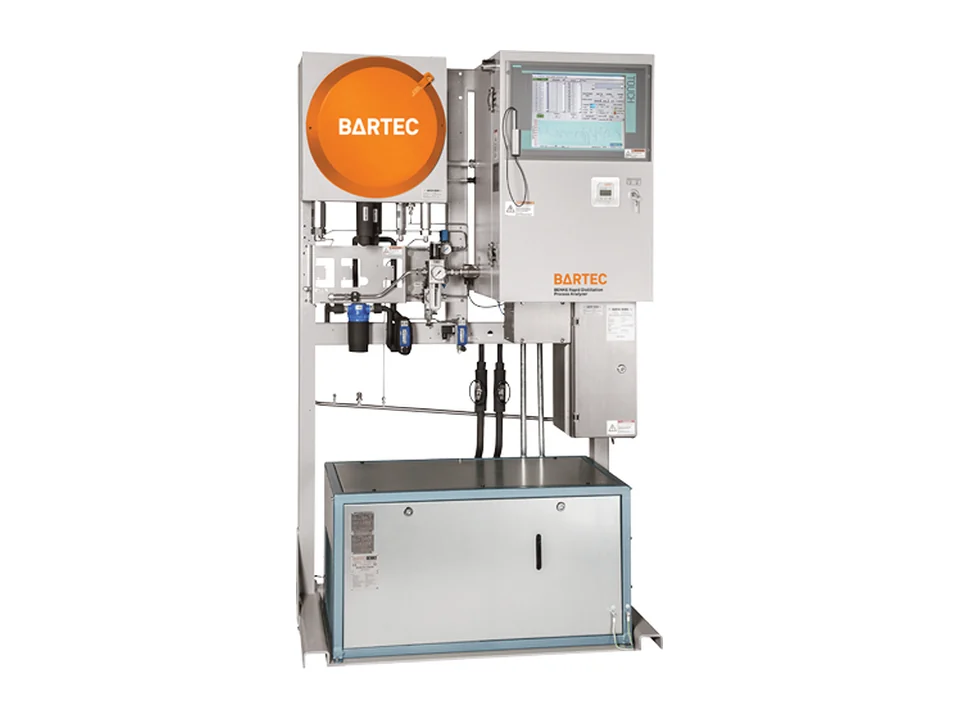
The DPA-4 is a batch distillation analyser for online measurement of physical properties in industrial processes. It determines the distillation characteristics of liquid products directly at the plant, using a method compliant with ASTM D86, DIN EN ISO 3405 and IP 123; ASTM D4814 and ASTM D4737 are also listed among the related standards.
Distillation separates the component substances of a liquid mixture by selective vaporisation and re-condensation, so the boiling behaviour reflects the differences in volatility of the components. The analyser works with a flask-condenser-receiver arrangement: the sample is heated in the flask, the vapour is condensed and the recovered volume is measured against the vapour temperature. The result is the complete boiling curve from the initial boiling point (IBP) to the final boiling point (FBP). The analyser can also operate below atmospheric pressure, has a de-coking feature and offers an optional Rapid Analysis Mode (RAM) that reduces the cycle time.
Up to two sample streams and one validation stream can be connected. The sample must be filtered to 50 µm and bubble-free with a viscosity of no more than 37 cSt at inlet temperature. The sample flow is about 10 to 40 l/h (maximum 15 l/h at 10 cSt or more), the inlet pressure 1.5 to 2 bar and the inlet temperature at most 55 °C, depending on application; the outlet is at atmospheric pressure. Tube fittings are typically 6, 12 or 18 mm compression fittings.
Results are output as 4–20 mA signals, with up to eight active isolated outputs on request, and digital inputs are provided. Communication is via Modbus RTU over RS-485, RS-422 or fibre optic, or Modbus TCP over fibre optic or Ethernet (VDSL). Operation is through a 19-inch touch display running Windows 10 Enterprise LTSB with dedicated control software. Supply is 24 V DC.
The cabinet is rated IP54 and measures approximately 1140 × 1900 × 710 mm, weighing about 250 kg; 150 mm free space is needed on the right and 100 mm on the left. The DPA-4.5 version without chiller is certified to ATEX and IECEx as Ex h IIC T4 Gb, and the version including the FKS-KWS chiller as Ex h IIB+H2 T4 Gb. Remote access, additional sample streams and a cyber security package are available, together with consulting, engineering and after-sales service.
Applications named include oil and gas, chemicals, pharmaceuticals, energy, hydrogen, LNG, manufacturing and logistics, and food and beverages.
Please send the product to be analysed, the number of streams, sample conditions, required outputs and area classification with your enquiry.
Identify the target gas, background gas and concentration units. State whether the sampling system is already installed or belongs in the enquiry.
For an installed instrument, copy the complete ordering code and its suffixes from the nameplate. Identify the part that will remain in service and the part that needs to be replaced. A photograph of the connection face or terminal markings helps resolve differences between versions that share the same housing.
For a new installation, describe what the instrument must measure or control and where the reading will be used. Give the normal operating conditions separately from short peaks. Include units with every numerical value. A drawing with the available space, orientation and access for removal gives the supplier a practical starting point.
Add the quantity for each position and identify any accessories that belong with it. Where a particular drawing, material certificate or calibration record is required, mention it with the line item. Submit the list with the destination country so that the response can cover the requested configuration and delivery.