Landis+Gyr
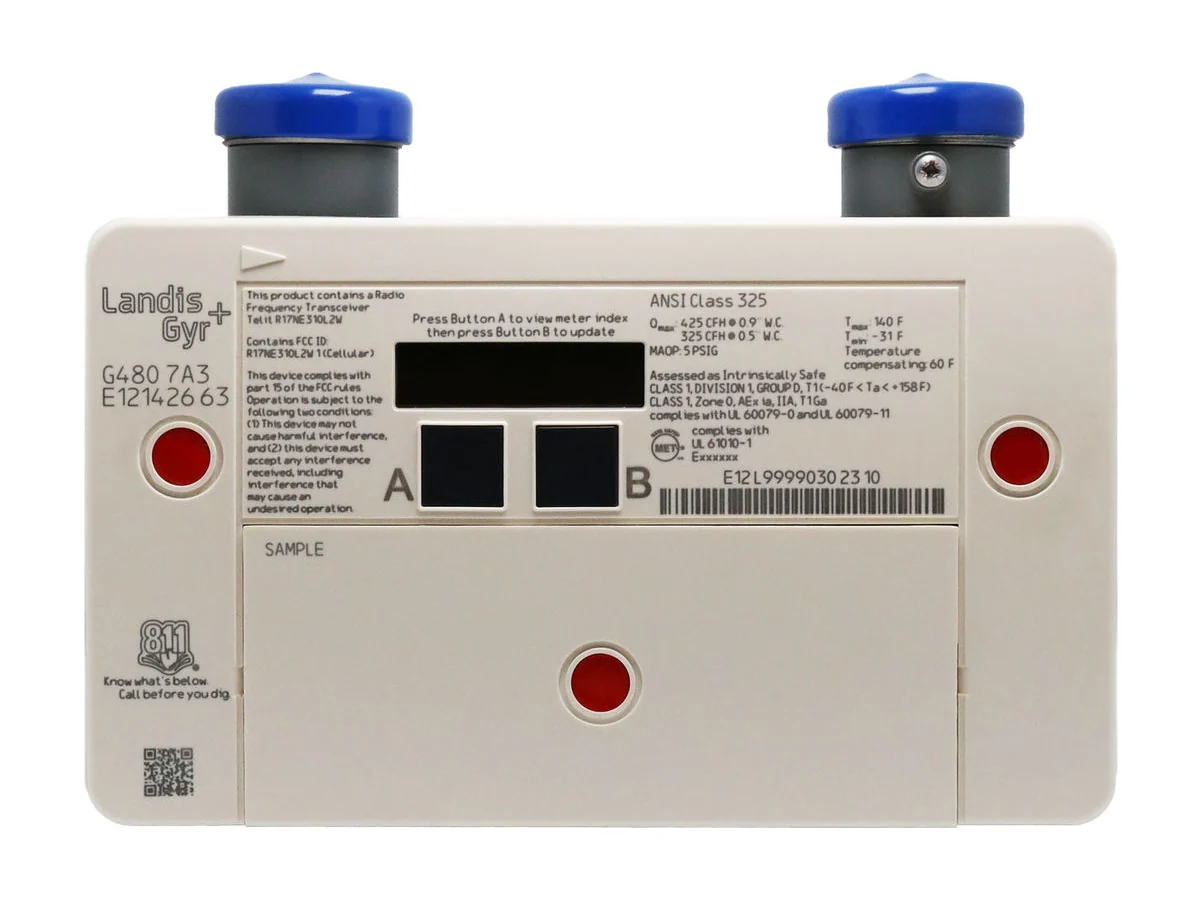
Surent G480
Flow
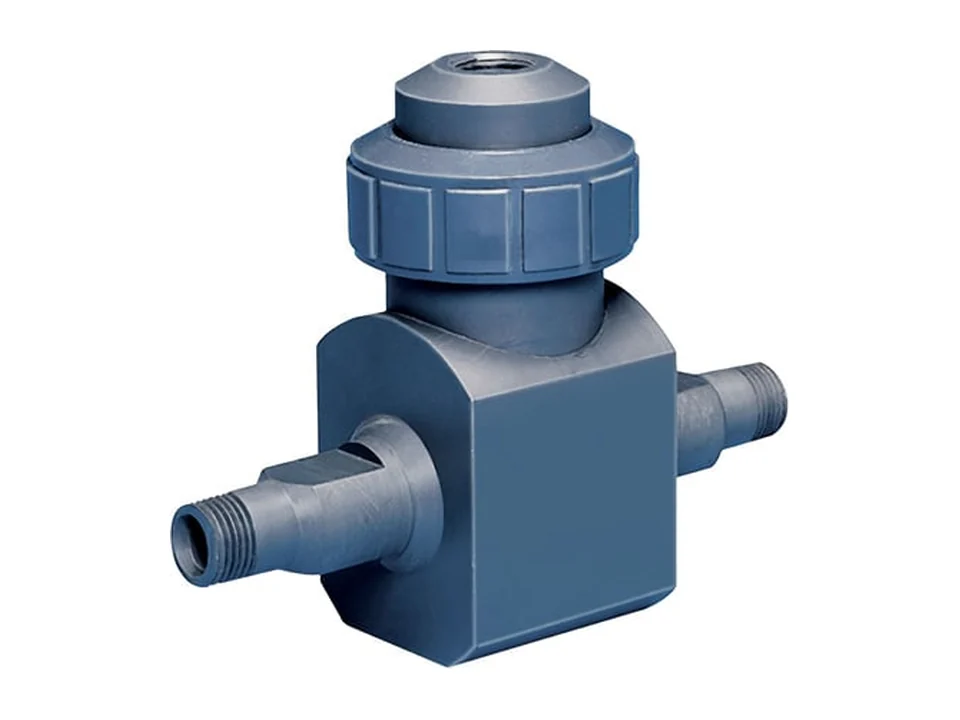
Vortex flowmeters
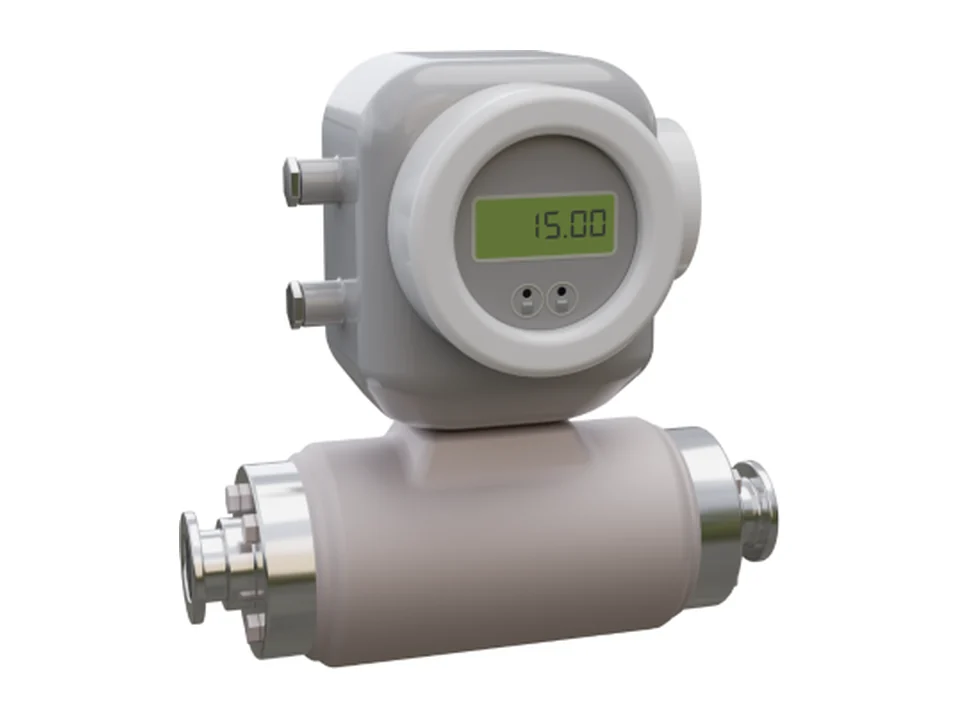
The FV-200 series is an all-plastic vortex flowmeter for measuring the volumetric flow of corrosive liquids, ultra-pure water and slurries. It uses vortex shedding technology and has no moving parts, which helps to prevent contamination of the fluid, and its all-plastic construction resists corrosion.
As the liquid flows around a bluff body inside the meter, vortices are shed alternately from its sides. These vortices create pressure fluctuations, which are detected by a piezoelectric crystal. The frequency of the vortices is directly proportional to the flow rate and is converted into a 4–20 mA or pulse signal.
Accuracy is ±1 % of full scale with the 4–20 mA output, or ±2 % of full scale with the frequency pulse output, and repeatability is ±0.25 %. The response time is at least 2 seconds for a step change in flow. The meter operates up to 150 psi and from 0 to 66 °C; a high-temperature option is available with the -HT suffix.
The standard output is 4–20 mA. With the -P option, the meter provides a frequency pulse from a source/sink driver rated 1 A source and 1.5 A sink, with a typical output resistance of 10 Ω. Supply voltage is 8 to 28 V DC, and an unregulated 24 V DC power supply (PSU-93) can be ordered.
The body is made of PVC, CPVC or PVDF, and process connections are male NPT threads from 1/4 to 2 in. The housing is rated IP66 and NEMA 4X, and the meter is marked CE and RoHS (RoHS 2015/863). A NIST certificate is included. The series includes models such as FV-221 to FV-226, FV-231 and FV-232.
Straight pipe runs are required upstream of the meter. For horizontal flow with the sensing element in vertical orientation, specific straight lengths, for example 20 or 27 pipe diameters, must be observed. Slurries should be free of significant fibres or abrasives.
Applications named for the FV-200 are ultra-pure water, highly corrosive chemicals and slurries. Please send the liquid, flow range, pipe size, temperature and preferred body material with your enquiry.
FV-221, FV-222, FV-223, FV-224, FV-225, FV-226, FV-231, FV-232, FV-233, FV-234, FV-235, FV-236, PSU-93
State the minimum, normal and peak flow with units. Pipe bore, fluid properties and the available straight run affect the choice of measuring principle.
For an installed instrument, copy the complete ordering code and its suffixes from the nameplate. Identify the part that will remain in service and the part that needs to be replaced. A photograph of the connection face or terminal markings helps resolve differences between versions that share the same housing.
For a new installation, describe what the instrument must measure or control and where the reading will be used. Give the normal operating conditions separately from short peaks. Include units with every numerical value. A drawing with the available space, orientation and access for removal gives the supplier a practical starting point.
Add the quantity for each position and identify any accessories that belong with it. Where a particular drawing, material certificate or calibration record is required, mention it with the line item. Submit the list with the destination country so that the response can cover the requested configuration and delivery.