ifm electronic
VVB3
Mechanical & physical measurement
Load cells & force transducers
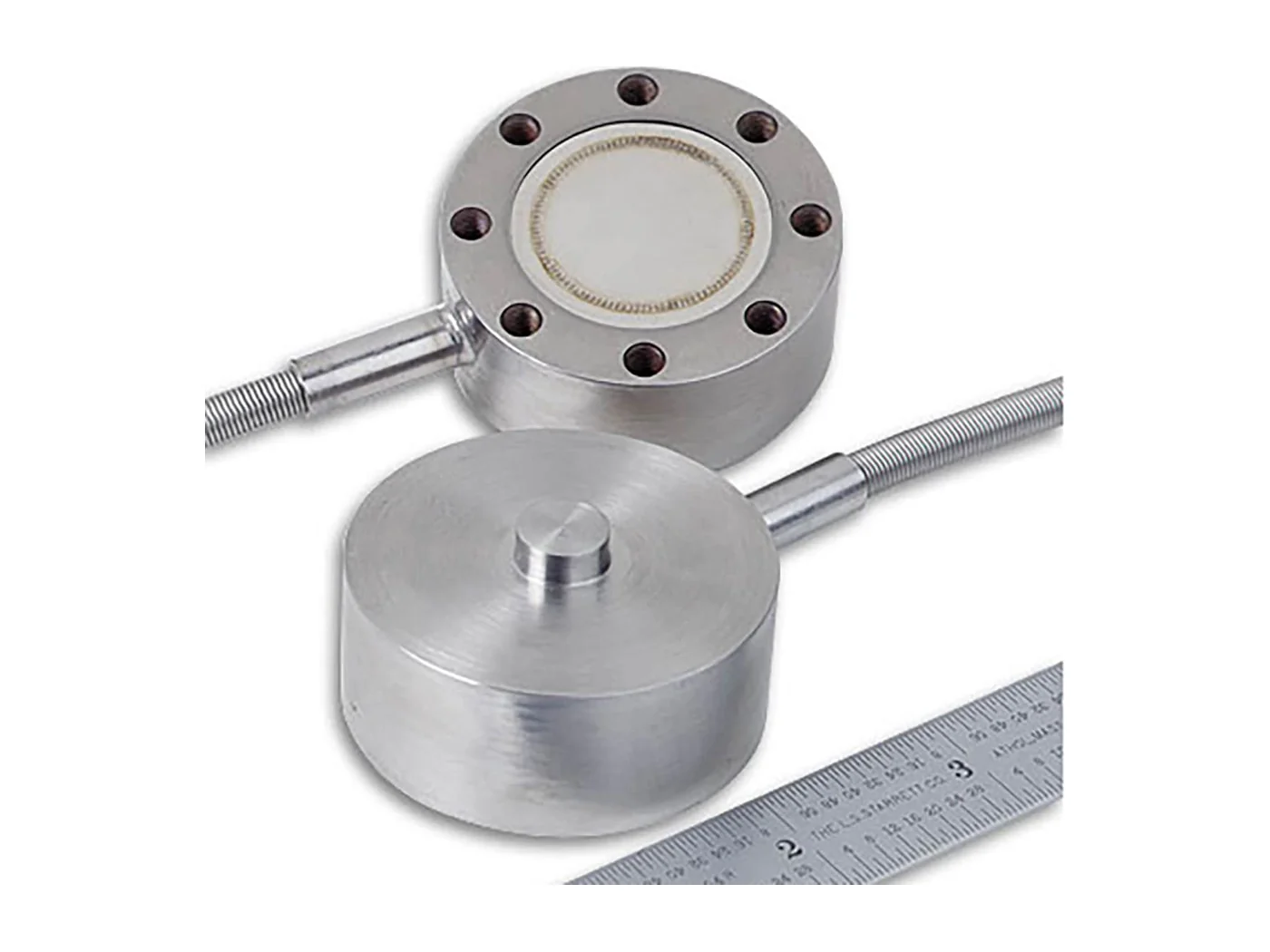
The LC305 series are miniature compression load cells with a diameter of 51 mm and a very low profile. They are made for places where an ordinary load cell does not fit: under the feet of a test frame, between two plates of a press, inside a prototype structure or under a small weighing platform. A load button is built in, so force can be applied directly without an additional adapter.
The load cell is a strain gauge bridge in a stainless steel body sealed to IP65. With an excitation of 10 V DC, at most 15 V DC, it delivers a rated output of 2 mV/V. Input resistance is at least 360 Ω and output resistance 350 ±10 Ω, so the cell works with standard bridge amplifiers, weighing indicators and data acquisition systems. Linearity is ±0.15 % and hysteresis ±0.1 %. Interchangeability within 0.25 % allows a cell to be replaced without recalibrating the whole system in many applications.
Capacities span a wide range: from 25 lb to 20,000 lb in the standard series and from 100 N to 50,000 N in the metric LCM305 series. The operating temperature range is −46 to 107 °C, with compensation over the normal working range. Every cell is delivered with a 5-point traceable calibration and shunt calibration data, which simplifies setting up the measuring chain.
Two electrical versions are offered. LC305 has a 3 m four-conductor shielded PVC cable; LC315 has a twist-lock connector, which is practical when cells are moved between test set-ups, with the mating cable connector ordered separately. Mounting holes in the base allow secure fixing to a plate.
Typical applications are test benches, force measurement in assembly and pressing operations, prototype and structural testing, small industrial weighing systems and monitoring of clamping and pre-load forces. When requesting a quotation, please state the required capacity, the cable or connector version and the signal conditioner or indicator you intend to use.
LC305-25, LC305-50, LC305-100, LC305-200, LC305-300, LC305-500, LC305-1K, LC305-2K, LC305-2.5K, LC305-4K, LC305-5K, LC305-8K, LC305-10K, LC305-20K, LC315-25, LC315-50, LC315-100, LC315-200, LC315-300, LC315-500, LC315-1K, LC315-2K, LC315-2.5K, LC315-5K, LC315-8K, LC315-10K, LC315-20K, LCM305-100N, LCM305-200N, LCM305-500N, LCM305-1KN, LCM305-2KN, LCM305-5KN, LCM305-10KN, LCM305-20KN, LCM305-50KN, LCM315-100N, LCM315-200N, LCM315-500N, LCM315-1KN, LCM315-2KN, LCM315-5KN, LCM315-10KN, LCM315-20KN, LCM315-50KN
Include the sensing target, mounting clearance and direction of travel or force. Record the connector pinout from the existing device.
For an installed instrument, copy the complete ordering code and its suffixes from the nameplate. Identify the part that will remain in service and the part that needs to be replaced. A photograph of the connection face or terminal markings helps resolve differences between versions that share the same housing.
For a new installation, describe what the instrument must measure or control and where the reading will be used. Give the normal operating conditions separately from short peaks. Include units with every numerical value. A drawing with the available space, orientation and access for removal gives the supplier a practical starting point.
Add the quantity for each position and identify any accessories that belong with it. Where a particular drawing, material certificate or calibration record is required, mention it with the line item. Submit the list with the destination country so that the response can cover the requested configuration and delivery.