ifm electronic
VVB3
Mechanical & physical measurement
Position sensors & encoders
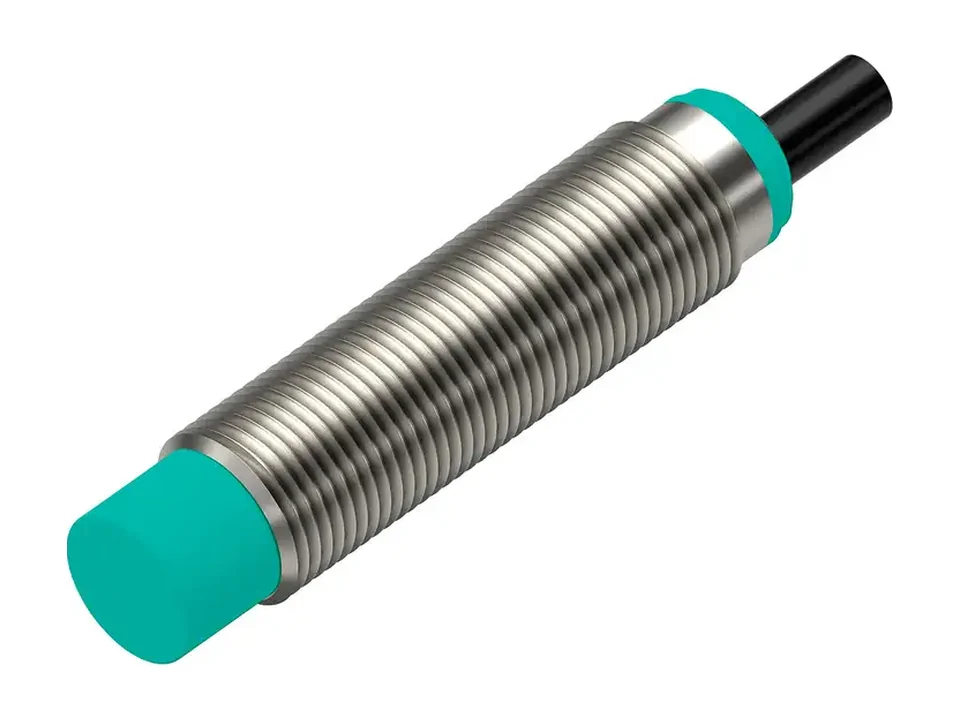
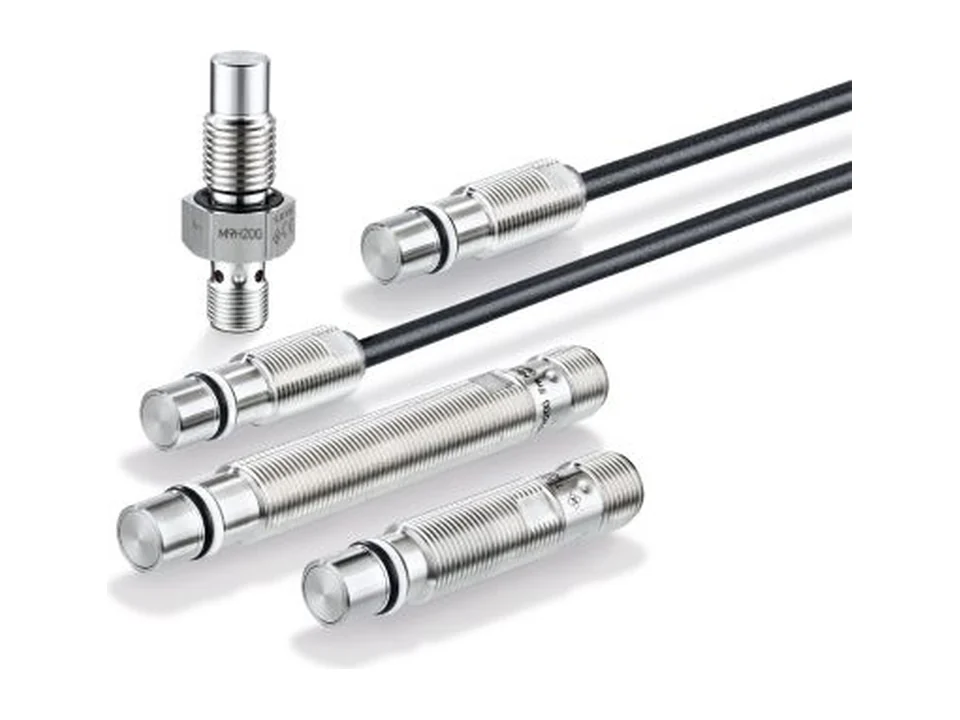
The MFH and M9H series are pressure-resistant position sensors designed to be installed directly in hydraulic cylinders, where they are typically used for piston detection and as end-position limit switches. They are built for harsh industrial environments and have a one-piece full-metal housing made of high-grade stainless steel.
The sensors work with an electronic magnetoresistive measuring cell (MR cell). The cell detects the permanent magnetic field adjacent to it. The stainless steel housing does not influence this magnetic field, so only ferromagnetic metal, i.e. the steel of the piston or piston rod, changes the field and triggers the switching signal. Other materials are not detected.
The pressure-rated design allows an operating pressure of up to 500 bar and a bursting pressure of up to 1000 bar. The life expectancy is stated as more than 10 million pressure cycles. The manufacturer also states a wide operating temperature range and a high protection rating for the series.
The switching outputs are DC PNP or NPN with normally open or normally closed contact function, and IO-Link communication is available. For electrical connection, versions with an M12 connector, a pigtail with M12 connector, a pigtail with AMP connector or a fixed cable can be selected.
The two series differ in the sealing concept. In the MFH series the sensor is sealed by an O-ring and a support ring. In the M9H series the O-ring is inserted radially and additionally provides a mechanical end stop during mounting. Both series share the same measuring principle, pressure ratings and output options.
Besides piston detection and limit switching in hydraulic cylinders, the sensors are used on other hydraulic components such as valves and pumps. Typical fields named for the series are mobile machines and forming technology – applications in which the sensor sits inside the pressurised space of the hydraulic system and its one-piece stainless steel housing is directly exposed to the operating pressure.
When sending an enquiry, please state the series (MFH or M9H), the output type and contact function, whether IO-Link is required, the connection type and the required quantity.
Include the sensing target, mounting clearance and direction of travel or force. Record the connector pinout from the existing device.
For an installed instrument, copy the complete ordering code and its suffixes from the nameplate. Identify the part that will remain in service and the part that needs to be replaced. A photograph of the connection face or terminal markings helps resolve differences between versions that share the same housing.
For a new installation, describe what the instrument must measure or control and where the reading will be used. Give the normal operating conditions separately from short peaks. Include units with every numerical value. A drawing with the available space, orientation and access for removal gives the supplier a practical starting point.
Add the quantity for each position and identify any accessories that belong with it. Where a particular drawing, material certificate or calibration record is required, mention it with the line item. Submit the list with the destination country so that the response can cover the requested configuration and delivery.