Bürkert Fluid Control Systems
Type 8203
Liquid analysis
Conductivity & resistivity sensors
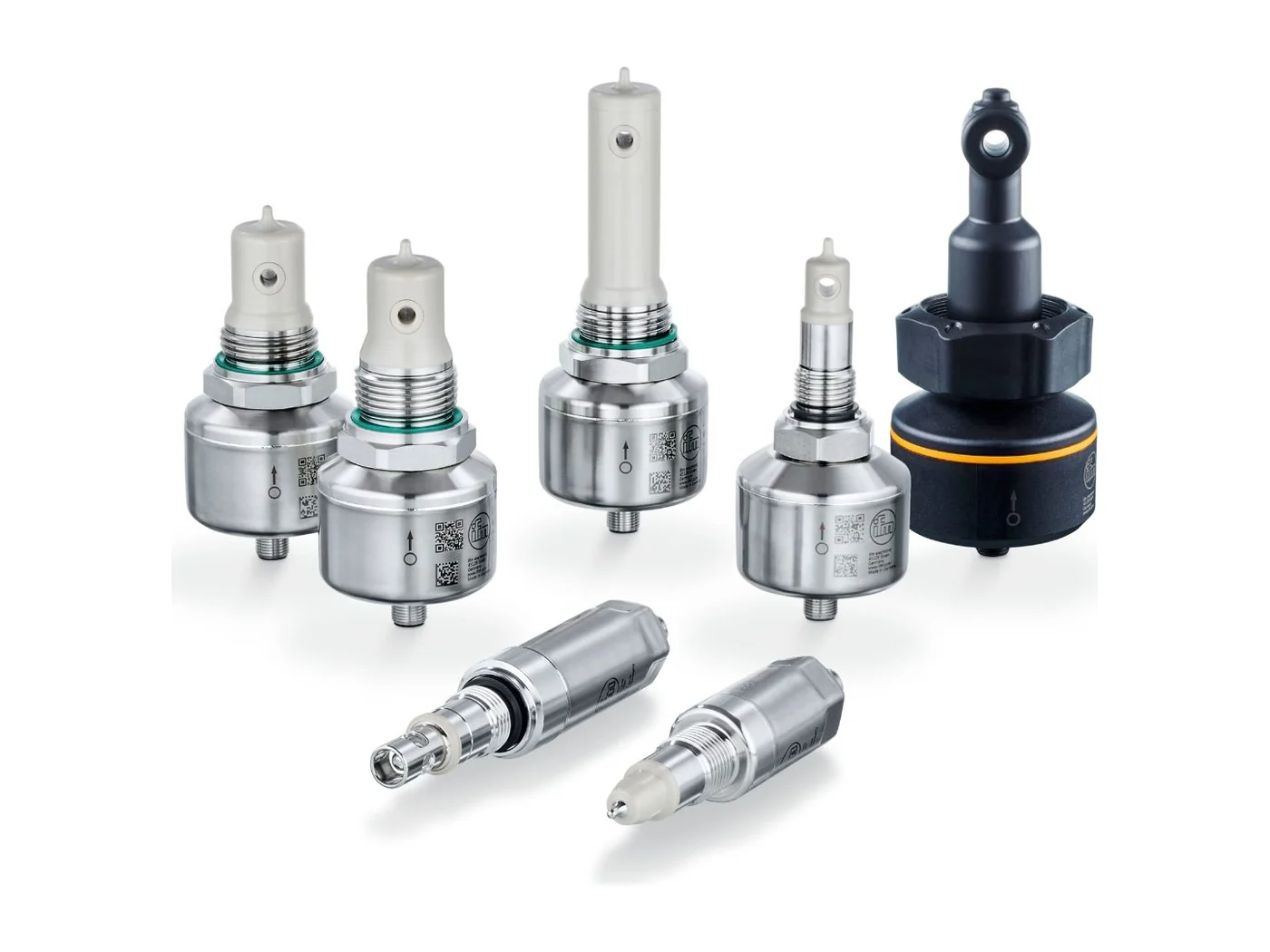
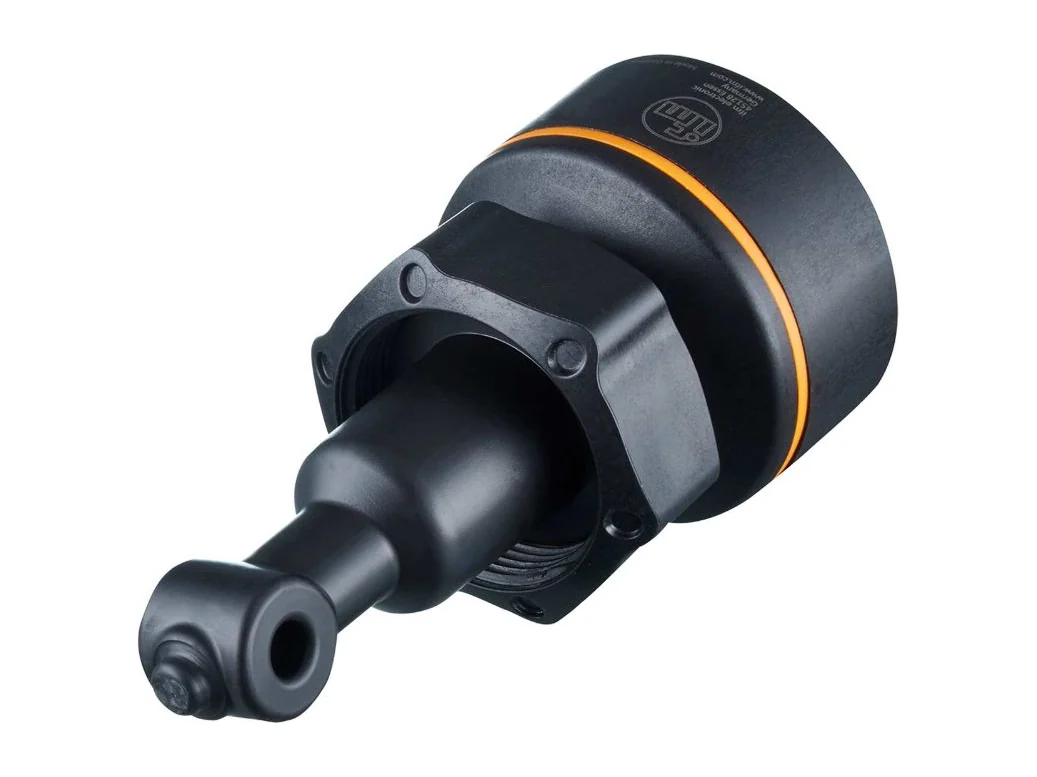
LDL400 is a compact conductivity sensor in which the sensing element and the evaluation unit are combined in a single polypropylene housing. It is intended for installations where metallic sensors would corrode: aggressive, acidic or alkaline media, and locations with salty ambient air. Because no separate transducer is required, the sensor saves space in the installation and reduces wiring.
The sensor works on the inductive measuring principle and measures the conductivity of the medium continuously. Conductivity is covered over a very wide range, from 100 to 2,000,000 µS/cm, with a stated accuracy of 2 % of the measured value ± 25 µS/cm. The temperature of the medium is measured from −25 to 100 °C and used to output temperature-compensated values. In addition, an NaCl concentration value in the range 0 to 25 % can be read acyclically over IO-Link.
Measured values are available in two ways: digitally over IO-Link and as an analogue 4–20 mA signal. IO-Link is also used for configuration, which can be done quickly, remotely or while the process is running, and it provides a backup and restore function for the sensor parameters, so a replacement unit can take over the settings of the previous one.
The process connection is a G 1½ coupling nut with an installation depth of 81 mm, and the electrical connection is an M12 connector. The pressure rating is 10 bar at 20 °C and 6 bar at 60 °C; under UL conditions the permissible medium temperature is −25 to 80 °C, and the permitted ambient temperature is −25 to 50 °C. The housing is protected to IP68 and IP69K. The sensor carries DNV certification for the marine industry.
The polypropylene version is chosen where the housing material must resist the medium itself. Stated applications include water treatment with filtration and desalination, ecosystem control in fish farming and monitoring of mineral concentration in vertical farming.
When requesting a quotation, please state the medium, its temperature and pressure, the expected conductivity range and whether the signal will be read over IO-Link or 4–20 mA.
LDL400
Record the sample temperature, expected concentration and how the probe is mounted. Identify the mating transmitter when replacing a sensor.
For an installed instrument, copy the complete ordering code and its suffixes from the nameplate. Identify the part that will remain in service and the part that needs to be replaced. A photograph of the connection face or terminal markings helps resolve differences between versions that share the same housing.
For a new installation, describe what the instrument must measure or control and where the reading will be used. Give the normal operating conditions separately from short peaks. Include units with every numerical value. A drawing with the available space, orientation and access for removal gives the supplier a practical starting point.
Add the quantity for each position and identify any accessories that belong with it. Where a particular drawing, material certificate or calibration record is required, mention it with the line item. Submit the list with the destination country so that the response can cover the requested configuration and delivery.