Landis+Gyr
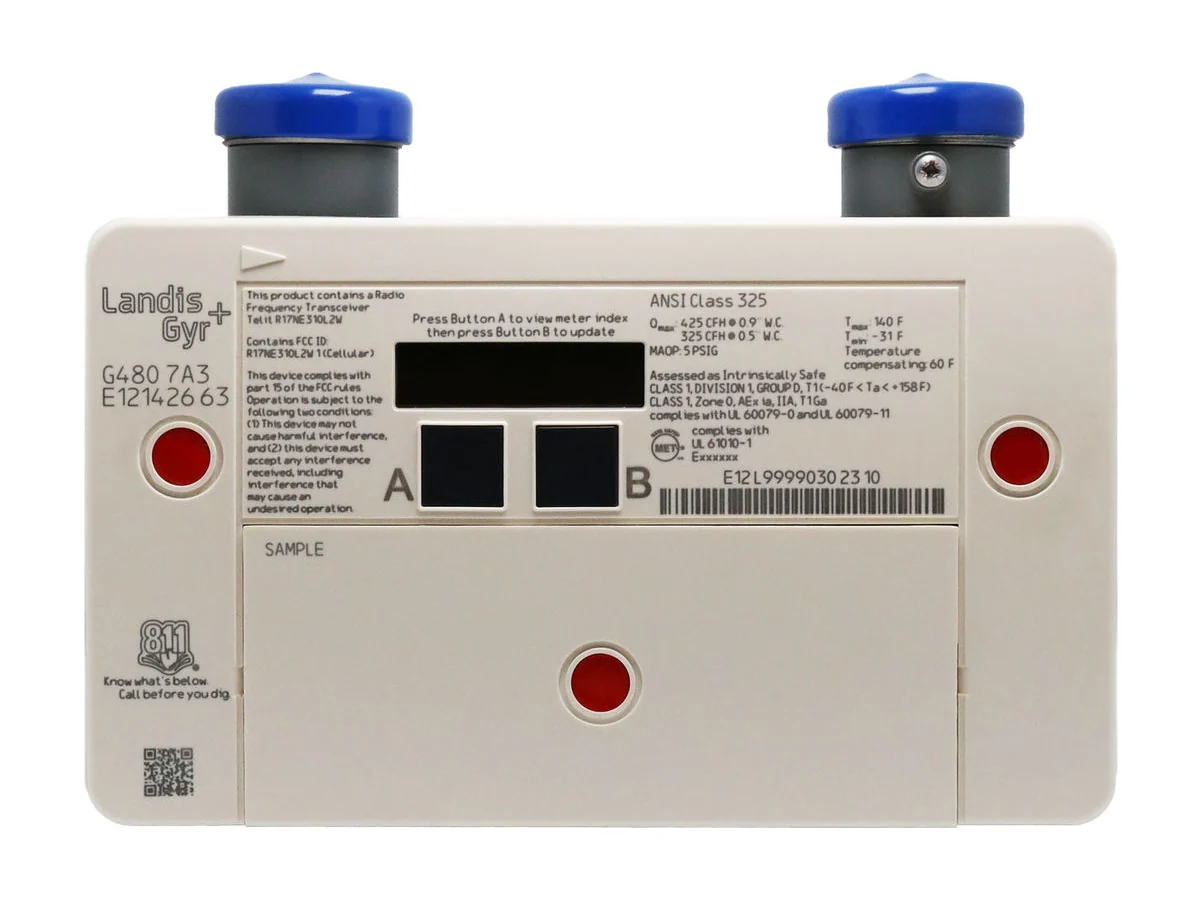
Surent G480
Flow
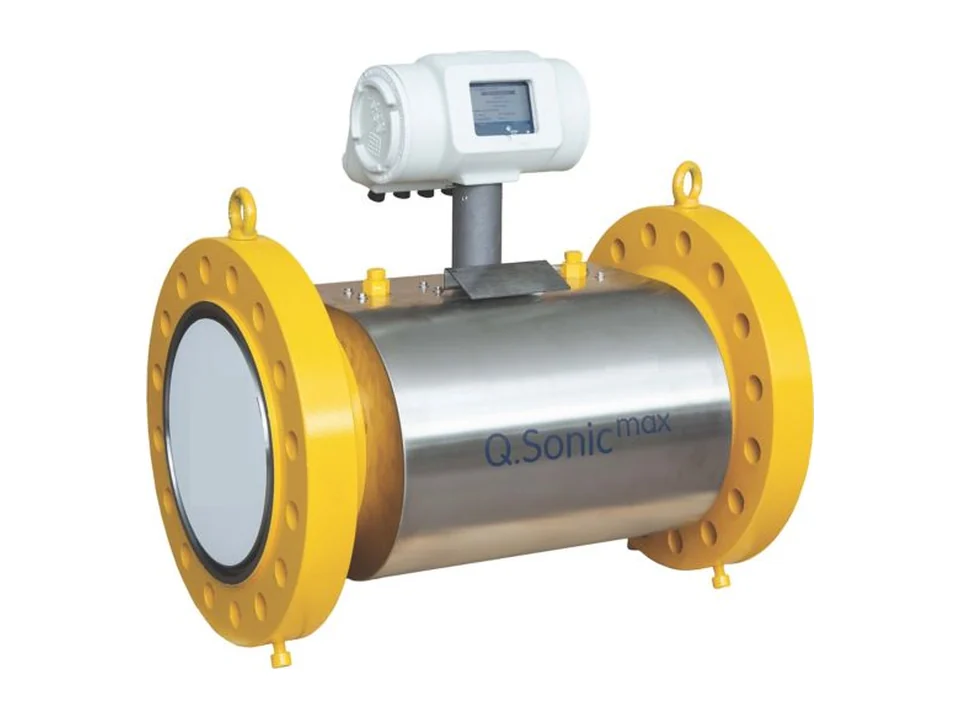
Ultrasonic flowmeters
The Q.Sonic-max is an eight-path ultrasonic gas flow meter for custody transfer and non-custody transfer of natural gas and other gases. It is built in sizes from 4 to 24 inches (DN 100 to DN 600), with larger sizes up to 36 inches on request, and for ASME pressure classes 300 to 600.
Ultrasonic gas meters determine the flow velocity from the difference in transit times of ultrasonic pulses sent with and against the flow along several measuring paths. The Q.Sonic-max uses a path configuration that combines direct paths with reflection paths: six direct paths and two swirl reflection paths. This combination gives low measurement uncertainty and extensive diagnostic capabilities, including identification of swirl, fouling or the presence of liquid in the meter.
Typical uncertainty is 0.1 % after linearisation, 0.2 % with high-pressure calibration and 0.5 % with zero-flow calibration, and repeatability is ≤ 0.05 %. The meter complies with OIML R137 and ISO 17089 accuracy class 0.5 and with AGA 9, and it carries MID approval for legal metrology. Process temperature ranges are −40 to +60 °C in the standard version, −40 to +80 °C in the extended version and −40 to +55 °C in the MID version; ambient temperature ranges are similar.
The electronics offer two 4–20 mA analogue outputs, two frequency outputs and two digital outputs, as well as two serial ports (RS-232/485), an Ethernet port and a USB port. Supported protocols are Modbus RTU, UNIFORM and MMS, and a web server is integrated. A cyber security package with TLS encryption is provided, developed in line with IEC 62443-4-1. The meter is powered with 24 VDC (18 to 30 V) and consumes 10 to 20 W.
The meter body is made of low-temperature carbon steel (LTCS); a stainless steel body is available as an engineered-to-order option. The electronics are protected to IP66 (NEMA 4X). Approvals for hazardous areas include ATEX, IECEx and FM.
Applications named for the meter are custody transfer and non-custody transfer of natural gas, offshore production and mining.
To prepare an offer, please send the line size, pressure class, operating pressure and temperature range, gas composition, flow range, and whether custody-transfer (MID) approval is required.
State the minimum, normal and peak flow with units. Pipe bore, fluid properties and the available straight run affect the choice of measuring principle.
For an installed instrument, copy the complete ordering code and its suffixes from the nameplate. Identify the part that will remain in service and the part that needs to be replaced. A photograph of the connection face or terminal markings helps resolve differences between versions that share the same housing.
For a new installation, describe what the instrument must measure or control and where the reading will be used. Give the normal operating conditions separately from short peaks. Include units with every numerical value. A drawing with the available space, orientation and access for removal gives the supplier a practical starting point.
Add the quantity for each position and identify any accessories that belong with it. Where a particular drawing, material certificate or calibration record is required, mention it with the line item. Submit the list with the destination country so that the response can cover the requested configuration and delivery.