ELGAS s.r.o.
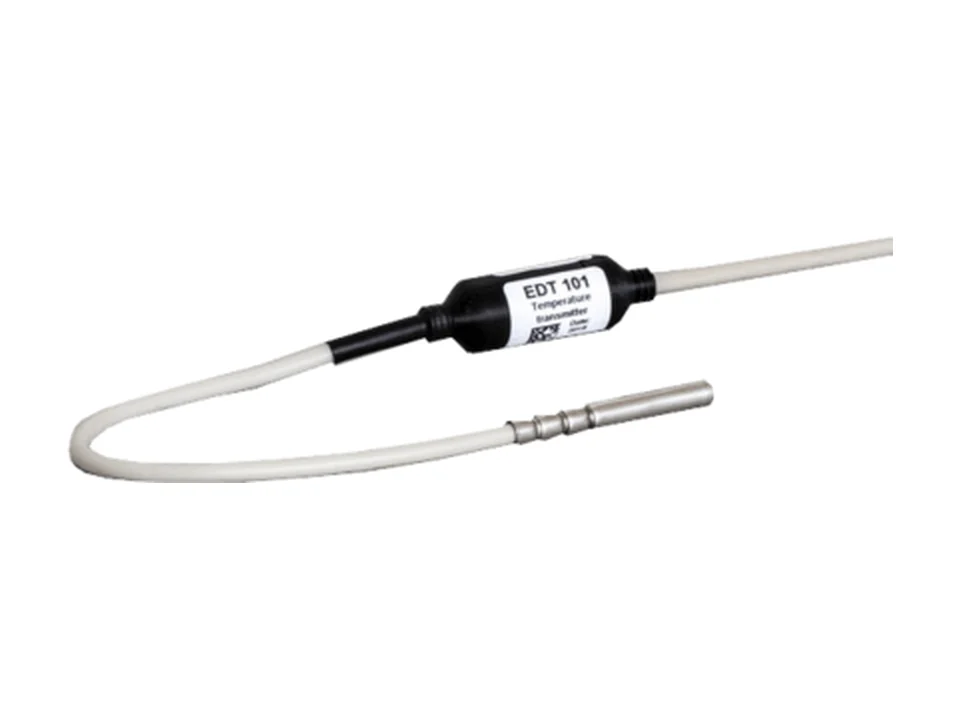
EDT 101
Temperature
Thermocouples
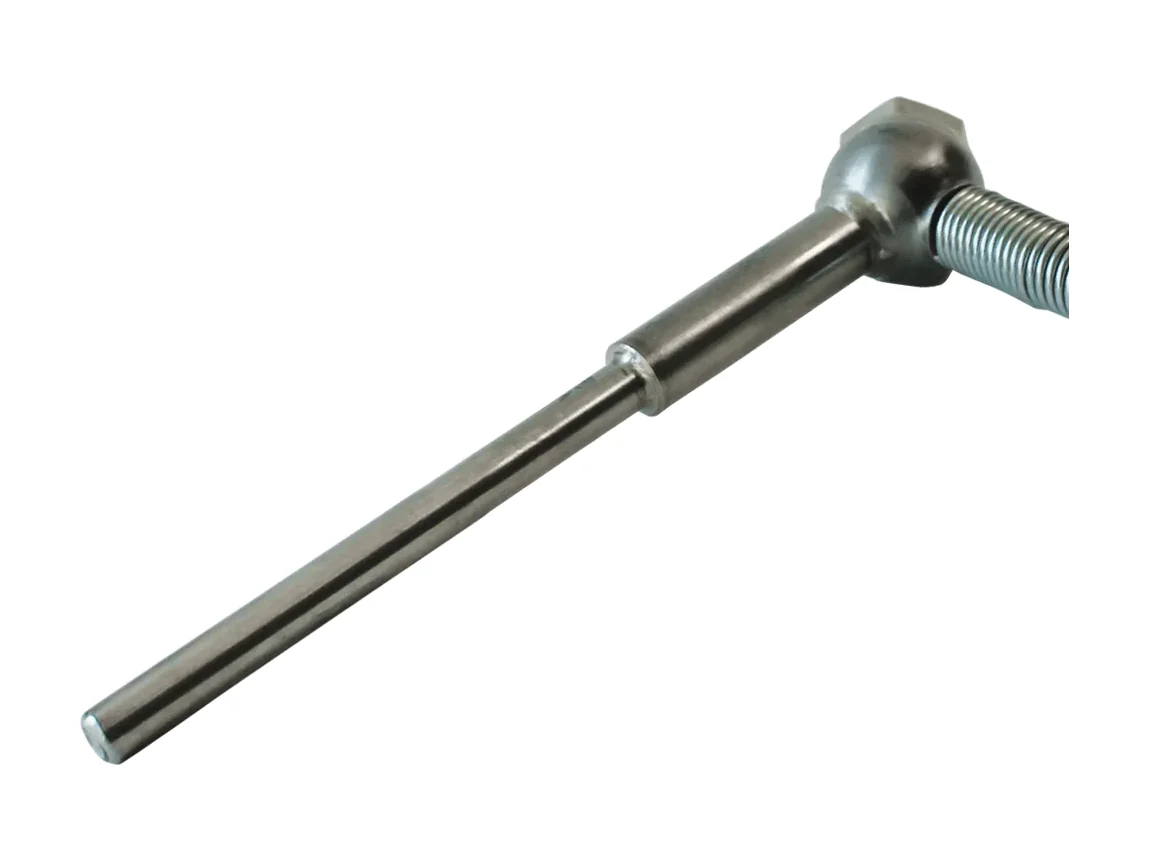
The T.4.-1 is a compact and robust stick-in temperature sensor for industrial and maritime use. It is inserted into a protection tube at the measuring point and secured with a compression fitting, and it has a 90° lateral cable outlet with a fixed connection cable.
The sensor can be fitted with a Pt100 resistance element or with a type J (Fe-CuNi) or type K (NiCr-Ni) thermocouple. Versions with two Pt100 elements or two thermocouples in one sensor are available. The maximum measuring temperature is 800 °C; the usable range in each case depends on the selected element.
The standard tolerance class is class B to DIN EN 60571, and other accuracy classes are available on request. Standard immersion depths are 100, 150, 200 and 250 mm, with other lengths on request, and the connection cable is available in various lengths.
Both the sensor tube and the protection tube are made of stainless steel. The sensor has IP65 protection; installed in a protection tube at the measuring point, IP68 is achieved. Robust protection tubes and a reduced-weight design are available as options. The sensor holds DNV and LR certificates, which makes it suitable for classified installations on board ships.
The sensor is specified by a small set of parameters: the type of sensor element (Pt100, type J or type K thermocouple), the number of elements (one or two), the immersion depth of 100, 150, 200 or 250 mm or a special length, the cable length and the tolerance class, with class B to DIN EN 60571 as the standard. Optional robust protection tubes and the reduced-weight design complete the configuration. The thermocouple types are designated J (Fe-CuNi) and K (NiCr-Ni), and with either element the sensor stays within the maximum measuring temperature of 800 °C.
The listed fields of application are shipbuilding, megayachts, transport technology, defence, machinery and equipment, and meteorology.
To prepare a quotation, please send the sensor element (Pt100, type J or type K; single or double), the immersion depth, the cable length, the tolerance class and whether a protection tube should be supplied.
Match the sensing element, insertion length and wiring to the existing input. Separate the process temperature from the ambient temperature at the connection head.
For an installed instrument, copy the complete ordering code and its suffixes from the nameplate. Identify the part that will remain in service and the part that needs to be replaced. A photograph of the connection face or terminal markings helps resolve differences between versions that share the same housing.
For a new installation, describe what the instrument must measure or control and where the reading will be used. Give the normal operating conditions separately from short peaks. Include units with every numerical value. A drawing with the available space, orientation and access for removal gives the supplier a practical starting point.
Add the quantity for each position and identify any accessories that belong with it. Where a particular drawing, material certificate or calibration record is required, mention it with the line item. Submit the list with the destination country so that the response can cover the requested configuration and delivery.