ELGAS s.r.o.
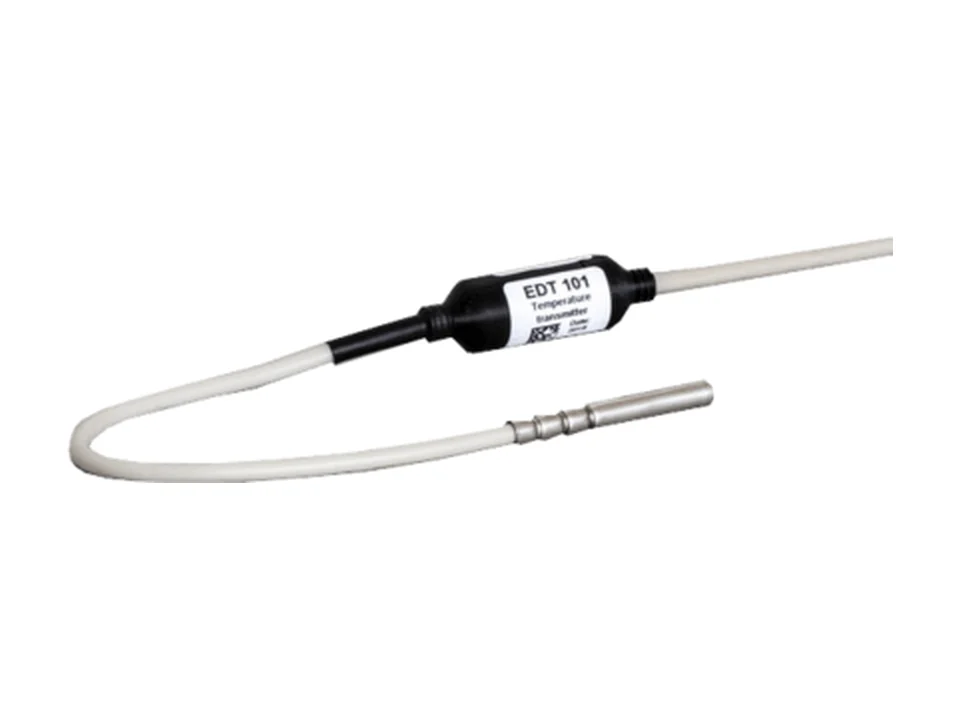
EDT 101
Temperature
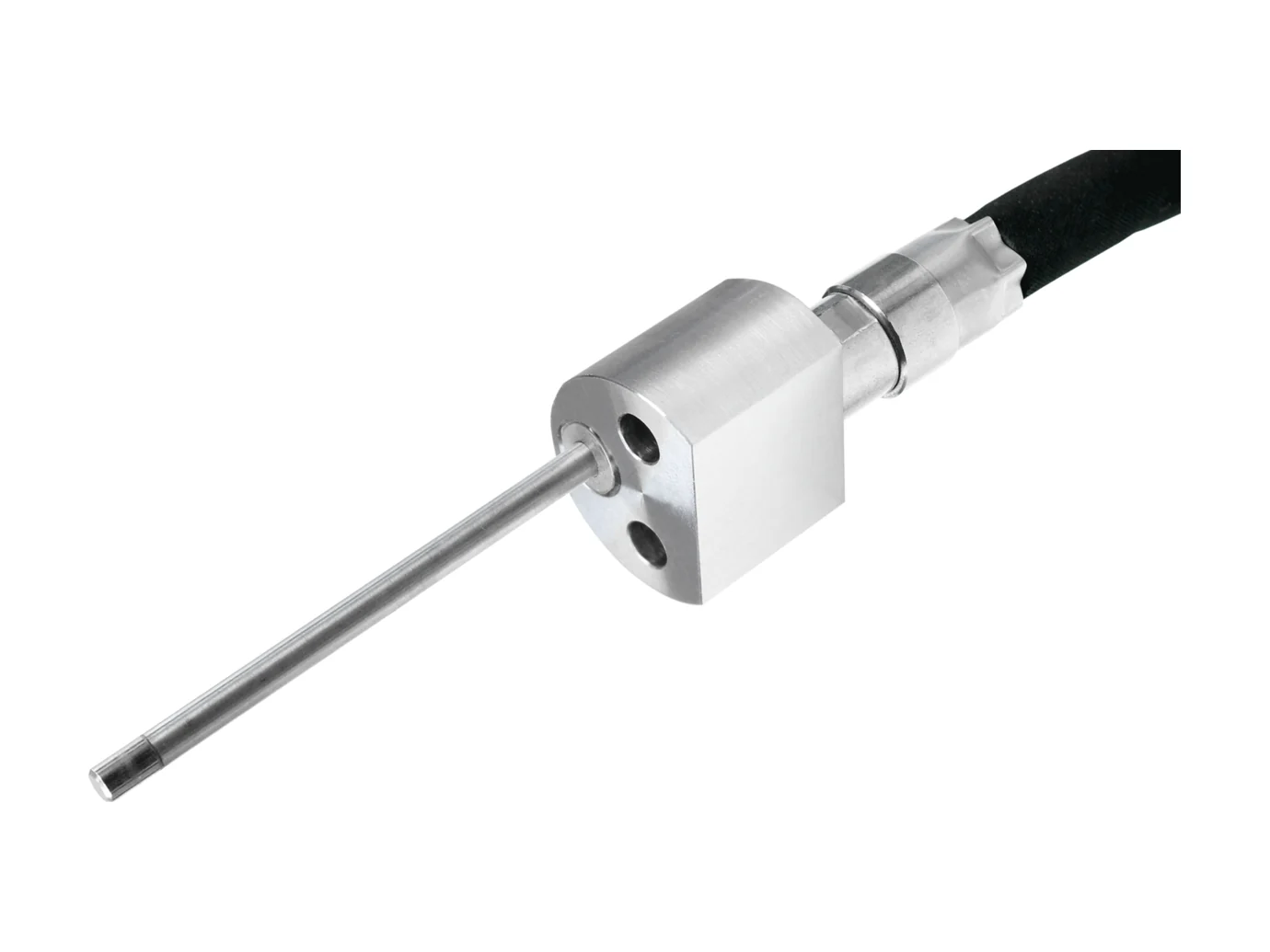
RTD sensors
The TA18 is a resistance temperature sensor in a flange housing with a straight cable outlet, available with Pt100 or Pt1000 measuring elements. Its robust, vibration-resistant construction is designed for transport technology, where it is used to monitor traction motors, gearboxes, wheelset bearings, and compressor and air-conditioning systems.
The sensor uses a platinum measuring element whose electrical resistance changes with temperature. Pt100 elements can be connected in 2-, 3- or 4-wire circuits, Pt1000 elements in a 2-wire circuit. The temperature range at the probe tip is −40 to 250 °C, and the standard accuracy is tolerance class F0.3 (B) to IEC 60751; other accuracy classes are available on request.
The sensor tube is stainless steel with a diameter of 5 mm, and the housing is anodised aluminium. Standard immersion depths are 75 mm and 100 mm, with other lengths on request. Connection is by a fixed, shielded, halogen-free cable with 0.33 mm² conductors; other cables can be supplied on request. The degree of protection is IP66 and IP68. In a version with 2 m cable, special protection hose and HAN 3 HPR connector, the sensor weighs approximately 400 g.
The design complies with the railway standards EN 50155 and EN 45545 (fire protection), DIN EN 60571, DIN EN 61373 (shock and vibration), DIN 5510 and NF F 16-101.
Options include polyamide or textile protective tubing for the cable, an increased insulation voltage above 2 kV AC, 90° or 45° cable outlets instead of the straight outlet, custom immersion depths and two integrated measuring elements in one sensor. The variant is defined by a type code, for example TAP114-1411-X05L3S0.
The device is maintenance-free; regular checks as part of system maintenance are recommended.
For an offer, please state the measuring element and circuit, immersion depth, cable length and type, connector and any required options such as a second measuring element.
Match the sensing element, insertion length and wiring to the existing input. Separate the process temperature from the ambient temperature at the connection head.
For an installed instrument, copy the complete ordering code and its suffixes from the nameplate. Identify the part that will remain in service and the part that needs to be replaced. A photograph of the connection face or terminal markings helps resolve differences between versions that share the same housing.
For a new installation, describe what the instrument must measure or control and where the reading will be used. Give the normal operating conditions separately from short peaks. Include units with every numerical value. A drawing with the available space, orientation and access for removal gives the supplier a practical starting point.
Add the quantity for each position and identify any accessories that belong with it. Where a particular drawing, material certificate or calibration record is required, mention it with the line item. Submit the list with the destination country so that the response can cover the requested configuration and delivery.