Landis+Gyr
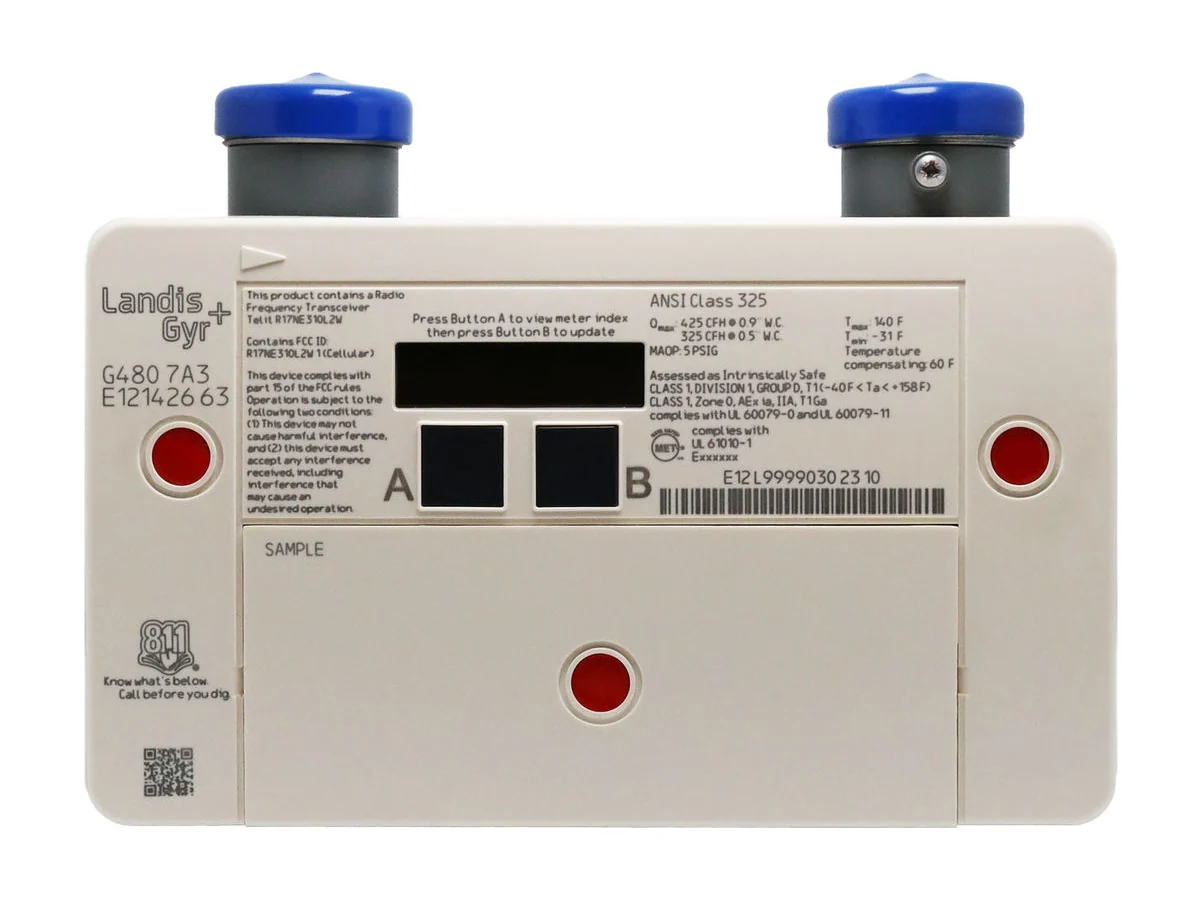
Surent G480
Flow
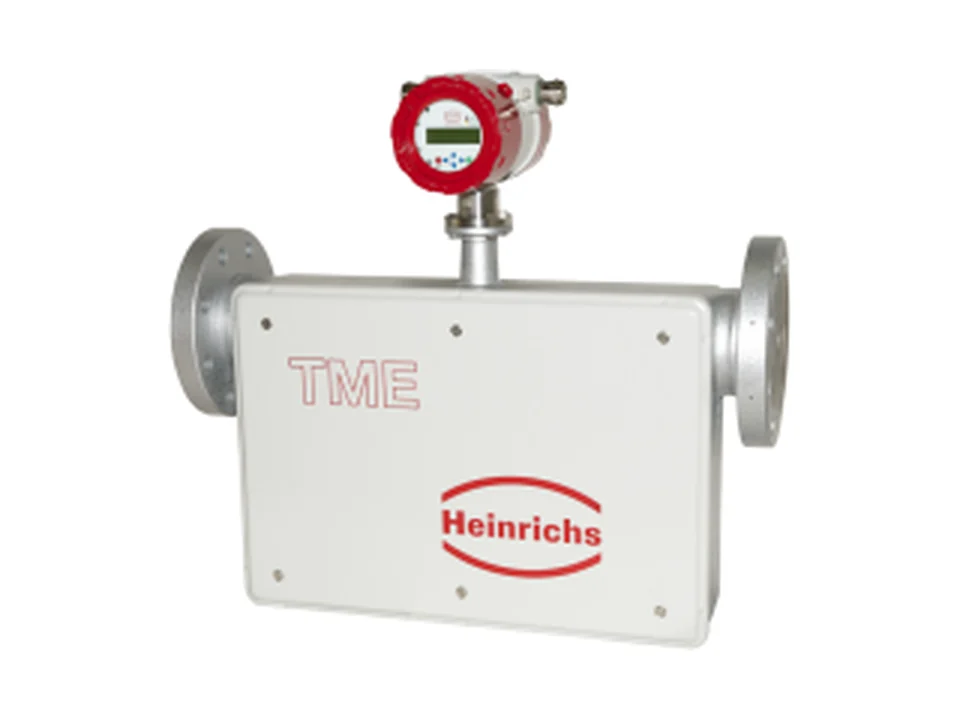
Coriolis flowmeters
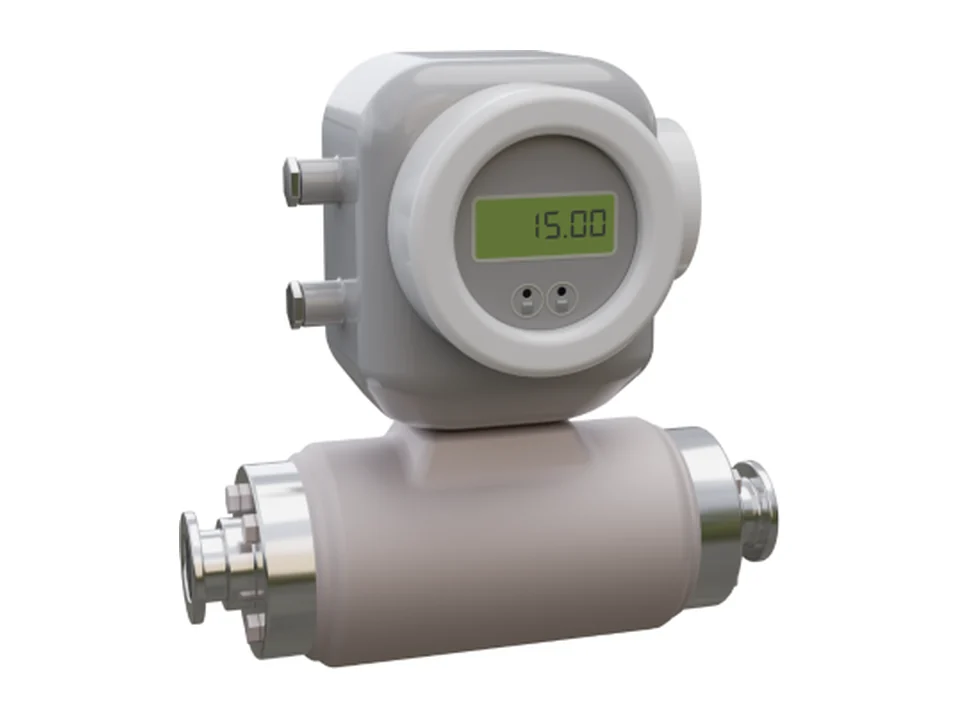
The Economy Line Coriolis mass flow meter measures mass flow, density, temperature and volume flow of liquids and gases simultaneously. It consists of a TME sensor and a UMC3 or UMC4 transmitter, mounted together as a compact unit or separately as a remote version. Media include chemical fluids, suspensions, molasses, paint, varnish and lacquer, and pastes; the meter is suitable for custody transfer and for use in potentially explosive atmospheres.
The measurement is based on the Coriolis force, which acts on a mass moving towards or away from the centre of a rotating or oscillating system. The transmitter makes the flow tubes of the sensor oscillate and picks up measuring signals that are proportional to the mass flow; the oscillation frequency is used to determine density. The meter is insensitive to vibration.
The measuring range extends from 60 kg/h to 60,000 kg/h. For liquids, mass flow accuracy is ±0.15 % or ±0.05 % of measured value, depending on the version, and for gases ±0.5 %, in each case plus zero point stability. Volume flow accuracy is ±0.2 %, and liquid density is measured to ±0.005 g/cm³ or ±0.003 g/cm³. Process temperatures from −40 to +180 °C are permissible, and pressure ratings are PN40 or ASME Class 150 / 300.
The transmitters provide two 0/4–20 mA analogue outputs, an active binary output (24 V, max. 200 mA), a passive optocoupler binary output (30 V, 200 mA, 3 W) and a 1 kHz frequency output. Digital communication is available with HART, PROFIBUS PA, PROFIBUS DP and Modbus RTU. Power supply options are 19–36 V DC, 24 V AC ±20 % and 90–265 V AC.
Wetted parts are stainless steel 1.4404 (316L) or 1.4571 (316Ti), and the sensor body is cast iron GGG 40.3, with flanged connections to EN 1092, ASME B16.5 or DIN 2512. The sensor is protected to IP65. Explosion-proof versions use flameproof enclosure, increased safety and intrinsic safety in temperature classes T6 to T3, with ATEX, IECEx, CSA, NEPSI, KC, UKEX and PTB approvals and NEC hazardous location ratings. Further options are sensor types TM, TMU and TM-SH, high-temperature versions, integrated heating for steam or liquid heating, remote versions with connection box or permanently connected cable, and an extended ambient temperature range.
The mounting length must match the inlet section, the sensor must not support the pipe, and quick-closing valves should be installed downstream; cable glands are not included. Please send the medium, flow range, pressure, temperature and required outputs with your enquiry.
TME, UMC3, UMC4, TME008, TME010, TME020, TME025, TME080
State the minimum, normal and peak flow with units. Pipe bore, fluid properties and the available straight run affect the choice of measuring principle.
For an installed instrument, copy the complete ordering code and its suffixes from the nameplate. Identify the part that will remain in service and the part that needs to be replaced. A photograph of the connection face or terminal markings helps resolve differences between versions that share the same housing.
For a new installation, describe what the instrument must measure or control and where the reading will be used. Give the normal operating conditions separately from short peaks. Include units with every numerical value. A drawing with the available space, orientation and access for removal gives the supplier a practical starting point.
Add the quantity for each position and identify any accessories that belong with it. Where a particular drawing, material certificate or calibration record is required, mention it with the line item. Submit the list with the destination country so that the response can cover the requested configuration and delivery.