Landis+Gyr
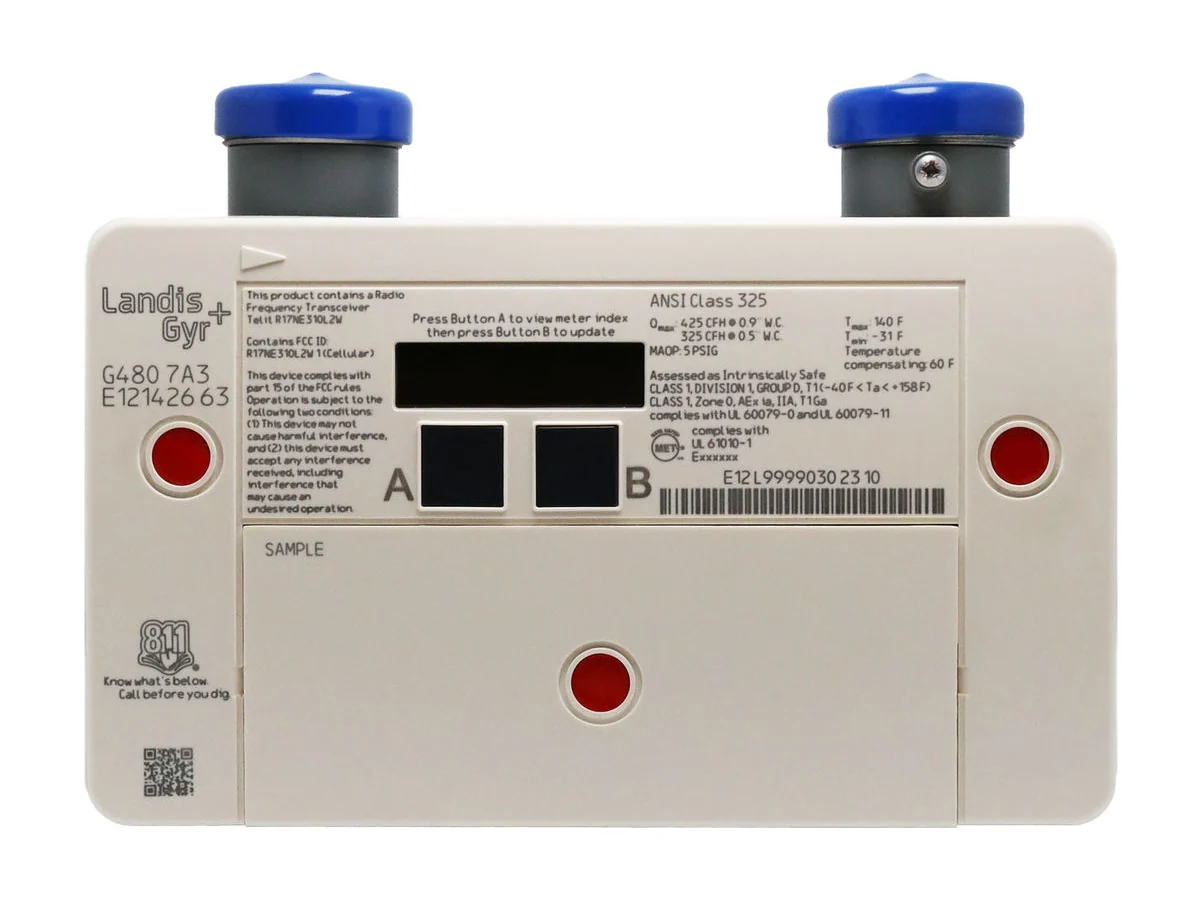
Surent G480
Flow
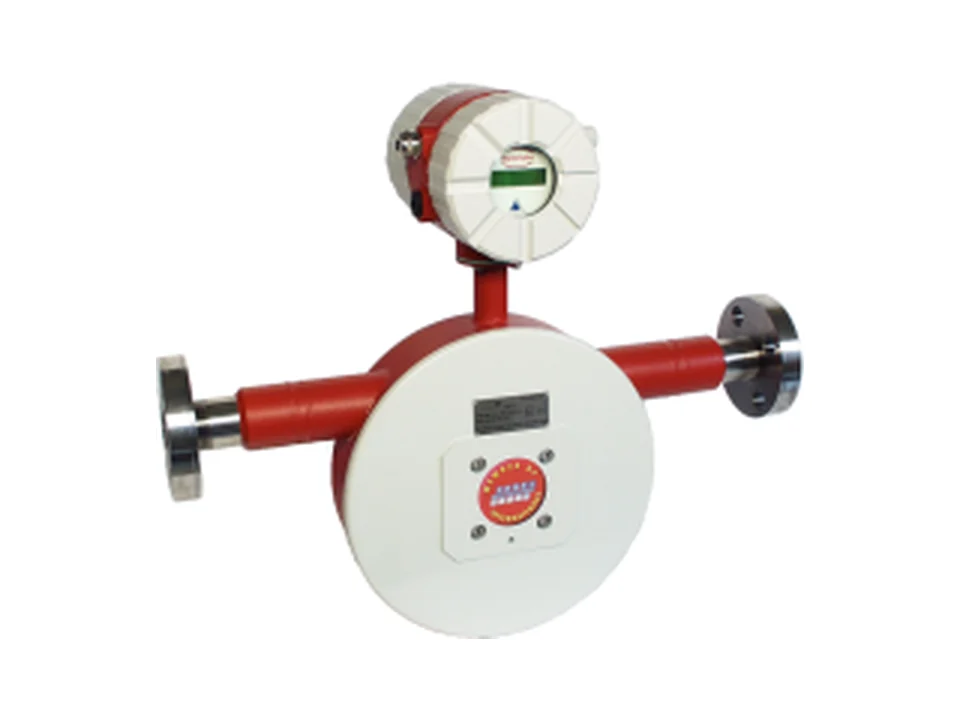
Coriolis flowmeters
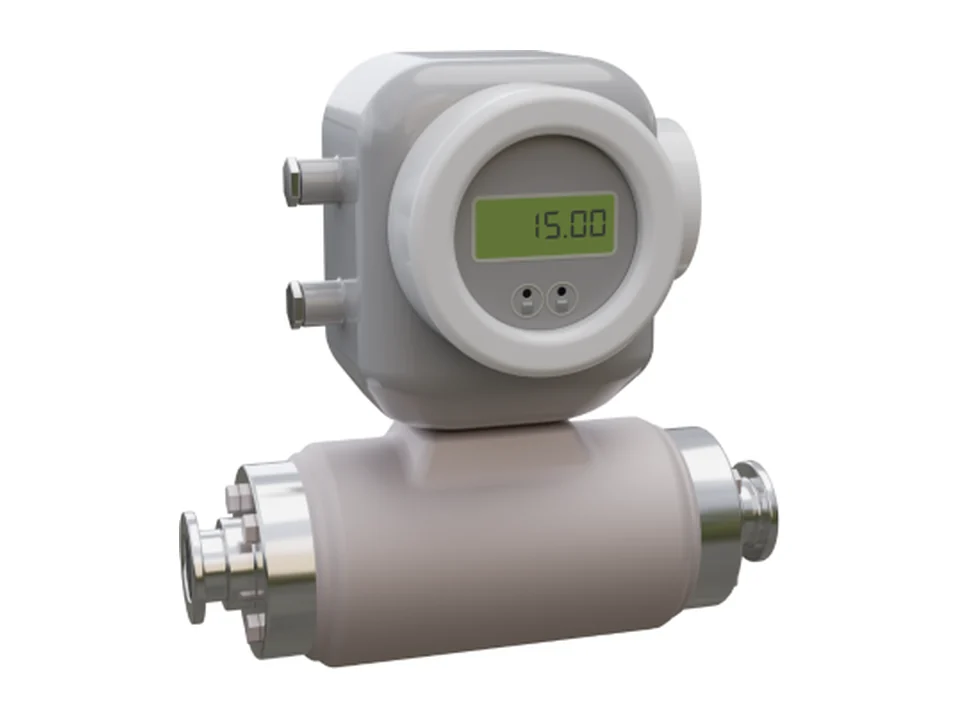
The Universal Line is a Coriolis mass flow meter system for liquids and gases, including viscous and corrosive media. It consists of TM sensors – in standard, thermally insulated (TMU) or heated (TM-SH) design – and UMC transmitters, and it measures mass flow rate, density, temperature and volume flow rate simultaneously. The sensor range covers nominal sizes from DN 10 upwards.
The measurement uses the Coriolis principle. The measuring tubes are made to vibrate; when the medium flows through them, Coriolis forces cause a phase shift between the inlet and outlet sections of the tubes, which is proportional to the mass flow. The resonant frequency of the tubes gives the density, and an integrated temperature measurement completes the data. The transmitter calculates mass flow, volume flow, density and temperature from these signals.
Measuring ranges extend from 0.0008 kg/h for the smallest sensors to 1,000,000 kg/h for the largest; for example the TM002 covers 0–8 kg/h and the TM020 0–6000 kg/h. Accuracy is ±0.1 % of reading for liquids (±0.05 % available) and ±0.5 % for gases, each plus zero-point stability; repeatability is ±0.05 % for liquids and ±0.25 % for gases. Density accuracy reaches ±0.002 g/cm³ depending on version, temperature accuracy is ±0.5 °C and long-term drift is ±0.02 % of upper range value per year. Media with viscosities from 0.3 to 50,000 mPa·s and up to 5 % gas content can be measured.
The transmitter provides two 0/4–20 mA outputs, an active and a passive binary output and a 1 kHz frequency output, with HART, PROFIBUS PA and DP, Modbus RTU, Foundation Fieldbus (UMC3-FF) or CAN as options. Supply versions are 19–36 VDC, 24 VAC and 90–265 VAC. The transmitter can be mounted on the sensor or remotely, with cable lengths up to 300 m.
Wetted parts are available in 1.4404 (316L), 1.4571 (316Ti), Hastelloy C-22 and B-2, Monel, nickel and tantalum. Standard ratings are PN 40 and ASME Class 150/300/600, with special versions up to 1000 bar and process temperatures from −90 °C to +260 °C. Protection is up to IP66/IP68. Explosion-proof versions carry ATEX, IECEx, CSA, FM, NEPSI, KC and GOST R approvals, and PTB and FM/FMC certification is available for custody transfer. Heating by liquid, steam or electrical tracing is offered.
Applications include the chemical and petrochemical industries, oil and gas, food and pharmaceutical production, dosing and loading systems and custody transfer.
For an offer, please send the medium, flow range, pressure and temperature, required material, connection, outputs and any Ex or custody-transfer requirement.
TM, TMU, TM-SH, TM002, TM003, TM004, TM005, TM006, TM008-S/H, TM010-S/H, TM015-S/H, TM020-S/H, TM025-S/H, TM050-S, TM050-H, TM010-T, TM015-T, TM020-T, TM025-T, TM050-T, TM080-T, TM008, TM010, TM015, TM020, TM025, TM050, TM080, EURO-TM, TME, UMC.2
State the minimum, normal and peak flow with units. Pipe bore, fluid properties and the available straight run affect the choice of measuring principle.
For an installed instrument, copy the complete ordering code and its suffixes from the nameplate. Identify the part that will remain in service and the part that needs to be replaced. A photograph of the connection face or terminal markings helps resolve differences between versions that share the same housing.
For a new installation, describe what the instrument must measure or control and where the reading will be used. Give the normal operating conditions separately from short peaks. Include units with every numerical value. A drawing with the available space, orientation and access for removal gives the supplier a practical starting point.
Add the quantity for each position and identify any accessories that belong with it. Where a particular drawing, material certificate or calibration record is required, mention it with the line item. Submit the list with the destination country so that the response can cover the requested configuration and delivery.