Landis+Gyr
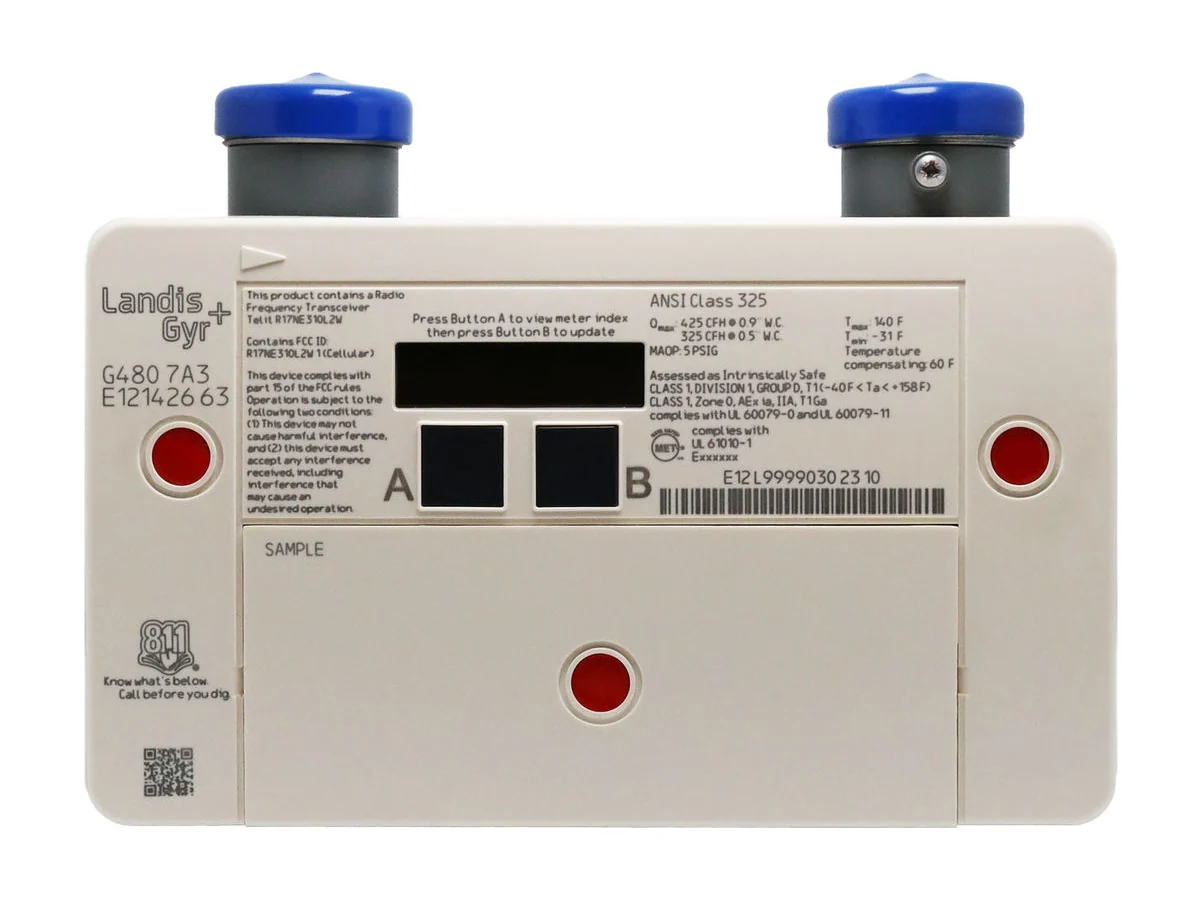
Surent G480
Flow
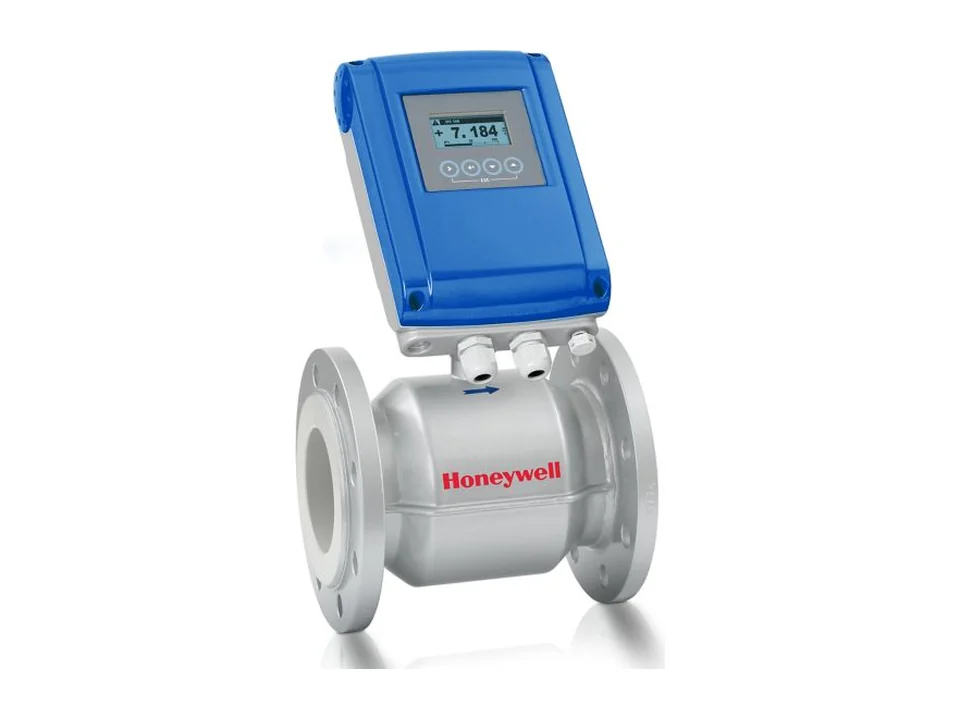
Electromagnetic flowmeters
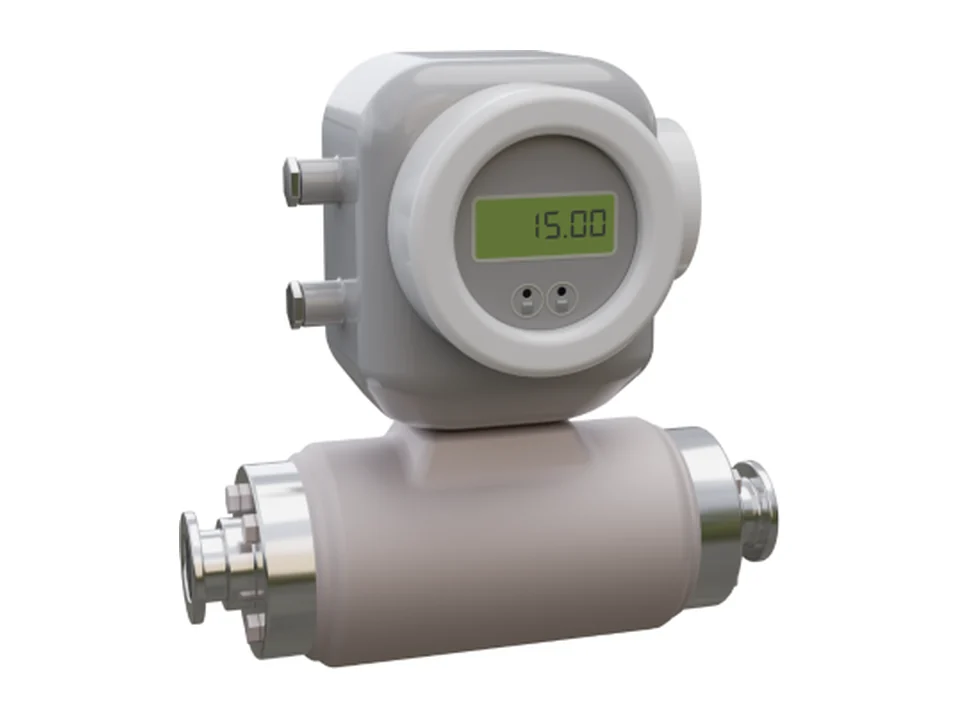
VersaFlow Mag is a family of electromagnetic flowmeters for precise measurement of electrically conductive liquids, pastes and slurries. A measuring system consists of a flow sensor and a signal converter. According to Faraday's law, a conductive liquid flowing through the magnetic field of the sensor induces a voltage proportional to its velocity; the converter evaluates this signal and calculates flow velocity and volume flow. The sensor is fully welded and maintenance-free.
Four sensor variants cover different applications. Mag 100 is an economical sensor from DN 10 to DN 150. Mag 1000 is designed for water and wastewater from DN 25 up to DN 2000; submersible and tropicalised versions are available. Mag 3000 is the food and beverage version with FDA-compliant materials. Mag 4000 is intended for demanding industrial applications from DN 10 to DN 600. Overall the family spans sizes from 3/8 inch to 120 inches.
Accuracy is ±0.2 to 0.3 % of measured value plus 1 mm/s for Mag 1000 and Mag 4000, and ±0.3 to 0.4 % plus 1 mm/s for Mag 100; repeatability is ±0.1 %. The velocity range is −12 to +12 m/s, with bidirectional measurement. Liquids with a conductivity from 1 µS/cm can be measured; for water at least 20 µS/cm is required. Selected versions meet ISO 4064, EN 14154 and OIML R49 and are offered with custody transfer options.
The TWM9000 and TWM1000 converters are mounted directly on the sensor or remotely in field, wall or 19-inch rack housings. They provide current, pulse, frequency and status outputs and communication via HART, Modbus, Foundation Fieldbus or Profibus. Extensive diagnostics and the in-situ verification function MagCheck confirm meter performance without removal from the line.
Electrodes and wetted parts are available in stainless steel, Hastelloy C4 and C22, titanium and other materials, with wafer, welded or flanged connections to EN 1092-1 and ASME B16.5 as well as hygienic connections. Protection is IP66, IP67 or IP68. Approvals include ATEX zone 1, FM, CSA and NEPSI for hazardous areas, drinking water approvals KTW, WRc, KIWA and ACS, and EHEDG for hygienic design.
Typical applications are found in chemicals, petrochemicals, food and beverage, mining, oil and gas, pharmaceuticals, power plants, pulp and paper, water and wastewater and metals. Please send size, medium, conductivity, pressure, temperature and required approvals.
MM11 - MAG 1000 (36-MM-16-15 Issue 29), MM90 - TWM 9000 (36-MM-16-05 Issue 23), MM92 - TWM 9000 (36-MM-16-07 Issue 27), MM12 - MAG 1000 (36-MM-16-16 Issue 25), MM42 - MAG 4000 (36-MM-16-03 Issue 29), MM95 - TWM 1000 (36-MM-16-12 Issue 18), MM10 - MAG 1000 (36-MM-16-14 Issue 28), MM41 - MAG 4000 (36-MM-16-02 Issue 32), MM30 - MAG 3000 (36-MM-16-13 Issue 20), MM01-MAG-100-36-MM-16-08-Issue-28, TWM9000C, TWM9000F, TWM9000W, TWM9000R, TWM1000C, TWM1000W, MM30, MM01, MM41, MM10, MM11, MM12, MM42, MM90, MM92, MM95, 36-MM-16-15
State the minimum, normal and peak flow with units. Pipe bore, fluid properties and the available straight run affect the choice of measuring principle.
For an installed instrument, copy the complete ordering code and its suffixes from the nameplate. Identify the part that will remain in service and the part that needs to be replaced. A photograph of the connection face or terminal markings helps resolve differences between versions that share the same housing.
For a new installation, describe what the instrument must measure or control and where the reading will be used. Give the normal operating conditions separately from short peaks. Include units with every numerical value. A drawing with the available space, orientation and access for removal gives the supplier a practical starting point.
Add the quantity for each position and identify any accessories that belong with it. Where a particular drawing, material certificate or calibration record is required, mention it with the line item. Submit the list with the destination country so that the response can cover the requested configuration and delivery.