Bürkert Fluid Control Systems
Type 8203
Liquid analysis
pH & ORP electrodes
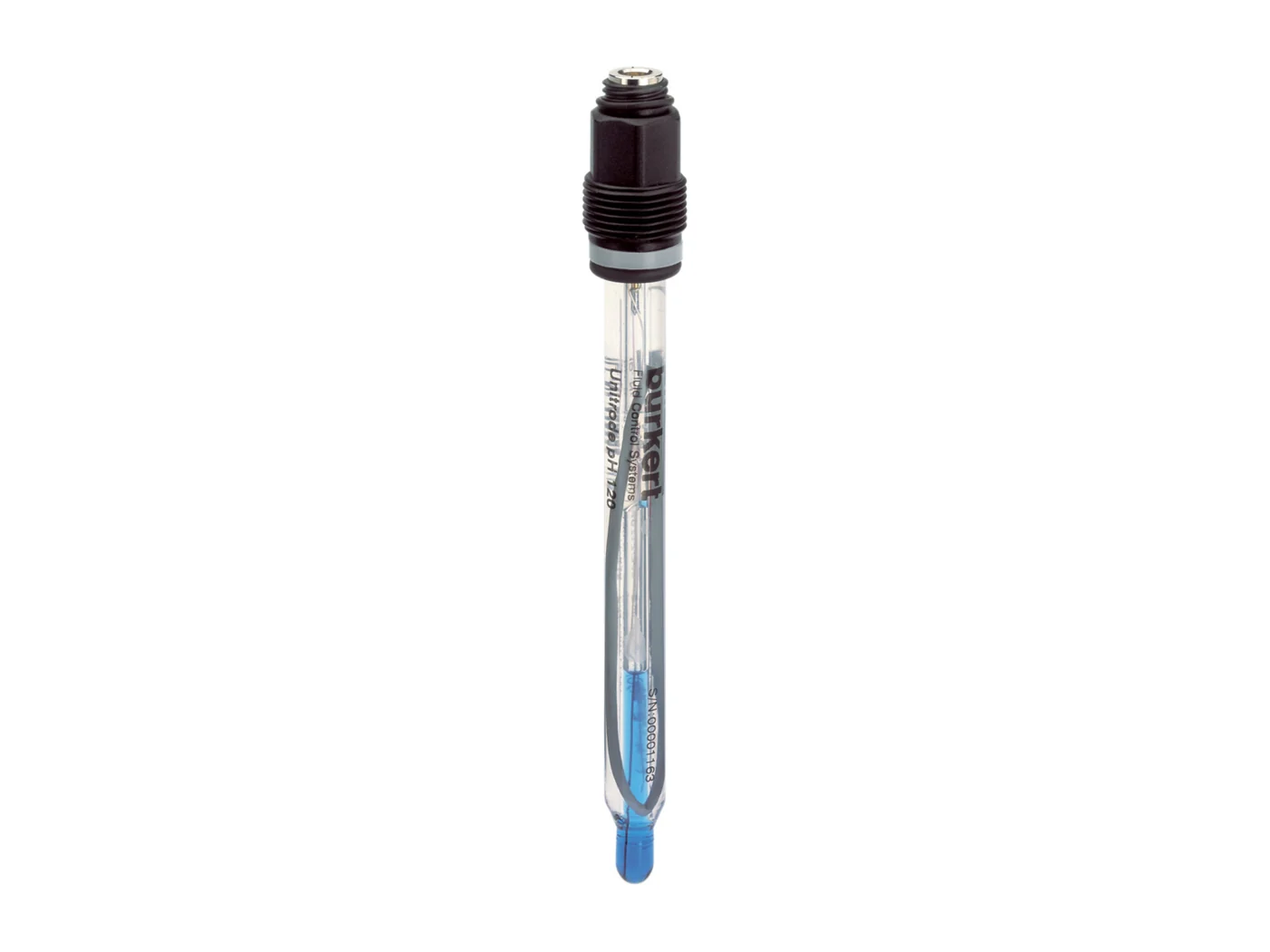
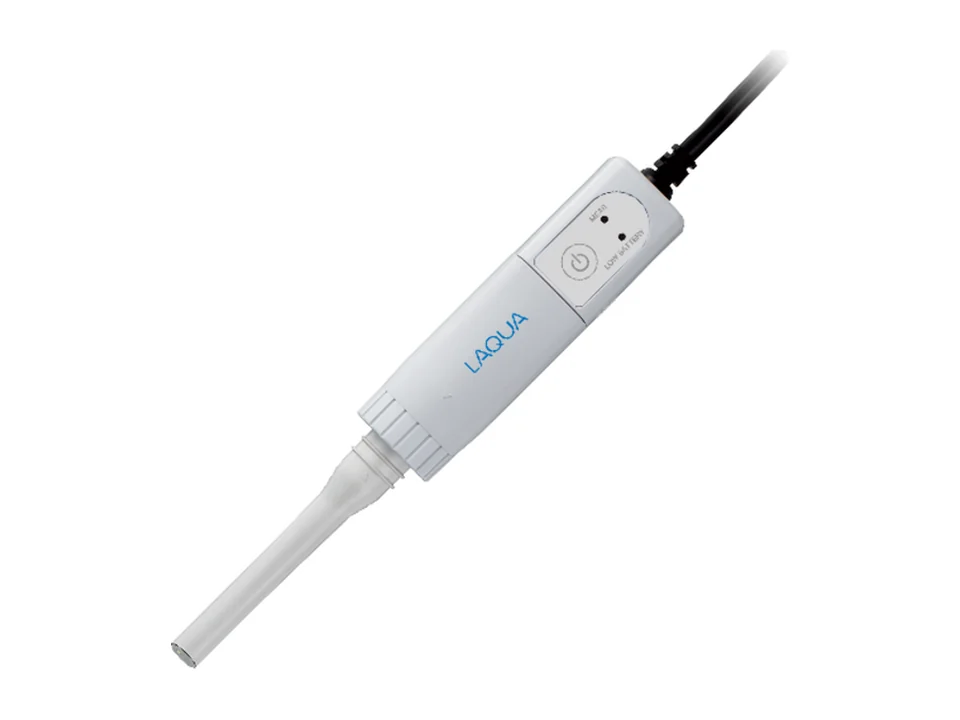
The 0040N-10D is a pH electrode based on an ion-sensitive field-effect transistor (ISFET) for use with portable pH meters of the D-50, D-70, D-200, F-50 and F-70 series. Because the sensor is a semiconductor rather than glass, it is suited to environments where glass materials cannot be used, and it cannot crack or break like a glass membrane.
The ISFET sensor is located at the flat tip of the electrode; the sensing part is 1 mm high from the tip. This allows pH to be measured from a single drop of liquid, from the minute amount of moisture on the surface of a solid or semi-solid sample, or from pure water applied to a dry sample. The diagonal cut structure of the tip prevents bubble formation and supports reliable calibration. The electrode also contains a temperature sensor.
The measuring range is pH 0 to 14. The sensor can be used from 0 to 60 °C and the converter from 0 to 40 °C; storage temperature is 0 to 40 °C. The reference system uses an Ag/AgCl internal electrode with an internal solution of carboxymethyl cellulose (CMC), glycerine and saturated KCl, and the liquid junction is porous sintered polyethylene. Sensor materials are tantalum pentoxide, LCP, epoxy resin, polyethylene resin, gold and titanium.
The electrode has its own power supply of 6 V DC from two CR2032 cells, with automatic power-off after one hour and LED indicators for measurement and low battery. It connects to the meter with a 1 m cable fitted with a BNC connector and a phono jack. The electrode is 190 mm long, excluding the cable, and is waterproof. It complies with RoHS, REACH and EMC.
The sensor can be replaced; the replacement sensor is model 0141N.
Listed applications are environments where glass cannot be used, pH measurement of gelatinous materials in shallow containers such as nutrient agar in Petri dishes, and surface measurement of skin, meat, cloth and paper.
Please state the meter model you use and whether replacement sensors 0141N are required.
0040N-10D, 0141N
Record the sample temperature, expected concentration and how the probe is mounted. Identify the mating transmitter when replacing a sensor.
For an installed instrument, copy the complete ordering code and its suffixes from the nameplate. Identify the part that will remain in service and the part that needs to be replaced. A photograph of the connection face or terminal markings helps resolve differences between versions that share the same housing.
For a new installation, describe what the instrument must measure or control and where the reading will be used. Give the normal operating conditions separately from short peaks. Include units with every numerical value. A drawing with the available space, orientation and access for removal gives the supplier a practical starting point.
Add the quantity for each position and identify any accessories that belong with it. Where a particular drawing, material certificate or calibration record is required, mention it with the line item. Submit the list with the destination country so that the response can cover the requested configuration and delivery.