Bürkert Fluid Control Systems
Type 8203
Liquid analysis
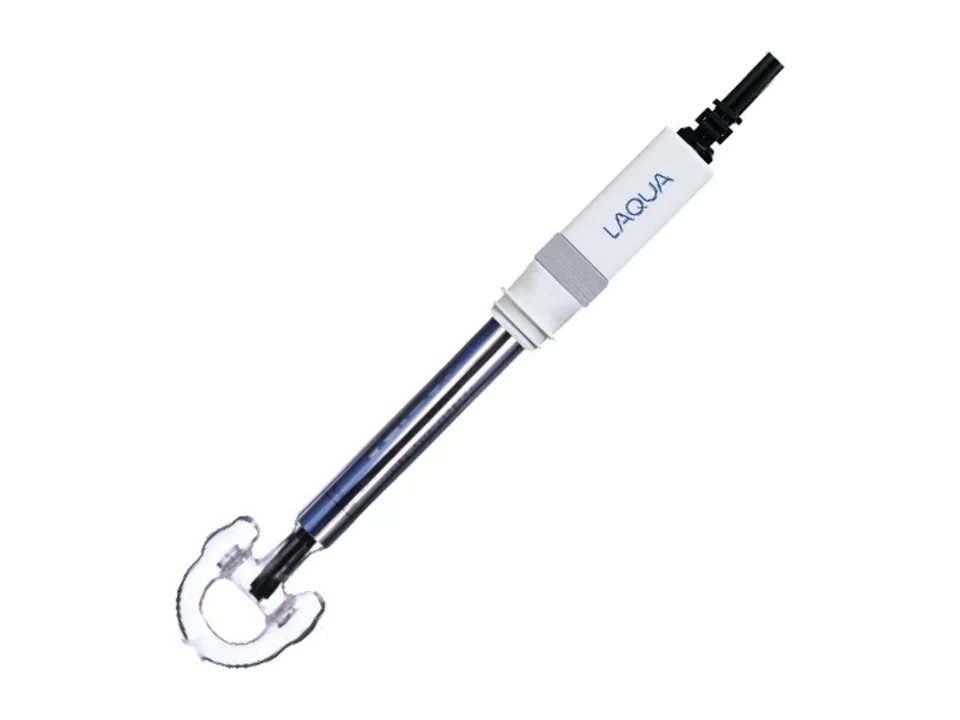
Conductivity & resistivity sensors
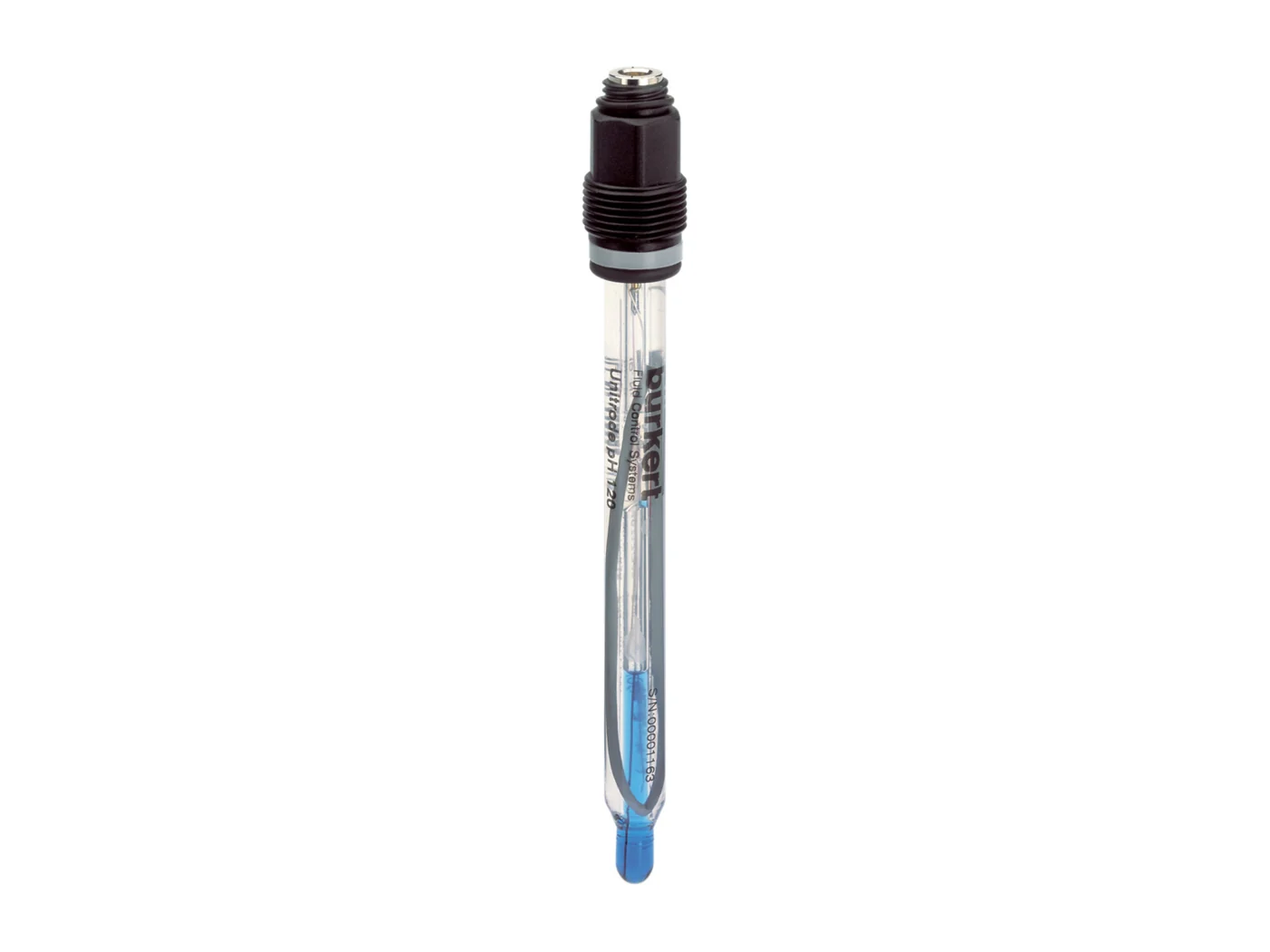
The 3553-10D is a submersible conductivity cell designed for measuring high-conductivity water. It contains an integrated temperature sensor, so that conductivity and sample temperature are measured together by one probe connected to the meter.
The cell has a cell constant of 10 cm⁻¹. A high cell constant suits samples with high conductivity, and the measuring range of the 3553-10D is 10 µS/cm to 1 S/cm. The electrodes are made of platinum coated with platinum black and are housed in a glass body.
The cell is used at sample temperatures from 0 to 60 °C and needs a sample volume of at least 50 ml. It is 175 mm long and 28 mm in diameter. Connection to the meter is via a 1-metre cable with a BNC connector for the conductivity signal and a phono jack for the temperature sensor.
The cell complies with RoHS requirements according to EN IEC 63000 and BS EN IEC 63000.
The 3553-10D is a submersible type: it is immersed directly in the sample, and the integrated temperature sensor measures the temperature at the same point as the conductivity. The 10 cm⁻¹ cell constant is what allows the cell to measure samples up to 1 S/cm.
Because the cell is submersible, it is used by immersing it in the sample vessel; the 50 ml minimum sample volume should be available so that the electrodes and the temperature sensor are fully covered by the liquid.
The listed fields of use are water quality measurement, scientific work and high-conductivity water. When choosing a cell from the series, the expected conductivity of the sample determines which cell constant is appropriate; for samples whose conductivity reaches into the range of hundreds of mS/cm, the 3553-10D is the relevant model.
To request a quotation, please send the quantity required and the meter to which the cell will be connected.
3553-10D
Record the sample temperature, expected concentration and how the probe is mounted. Identify the mating transmitter when replacing a sensor.
For an installed instrument, copy the complete ordering code and its suffixes from the nameplate. Identify the part that will remain in service and the part that needs to be replaced. A photograph of the connection face or terminal markings helps resolve differences between versions that share the same housing.
For a new installation, describe what the instrument must measure or control and where the reading will be used. Give the normal operating conditions separately from short peaks. Include units with every numerical value. A drawing with the available space, orientation and access for removal gives the supplier a practical starting point.
Add the quantity for each position and identify any accessories that belong with it. Where a particular drawing, material certificate or calibration record is required, mention it with the line item. Submit the list with the destination country so that the response can cover the requested configuration and delivery.