ELGAS s.r.o.
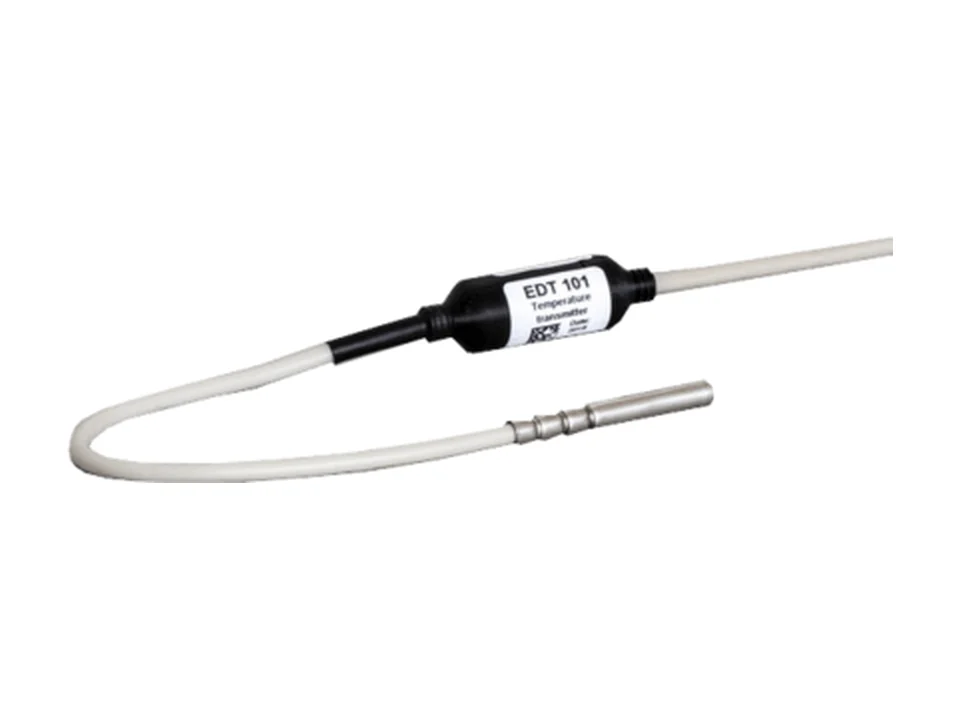
EDT 101
Temperature
Thermostats & temperature switches
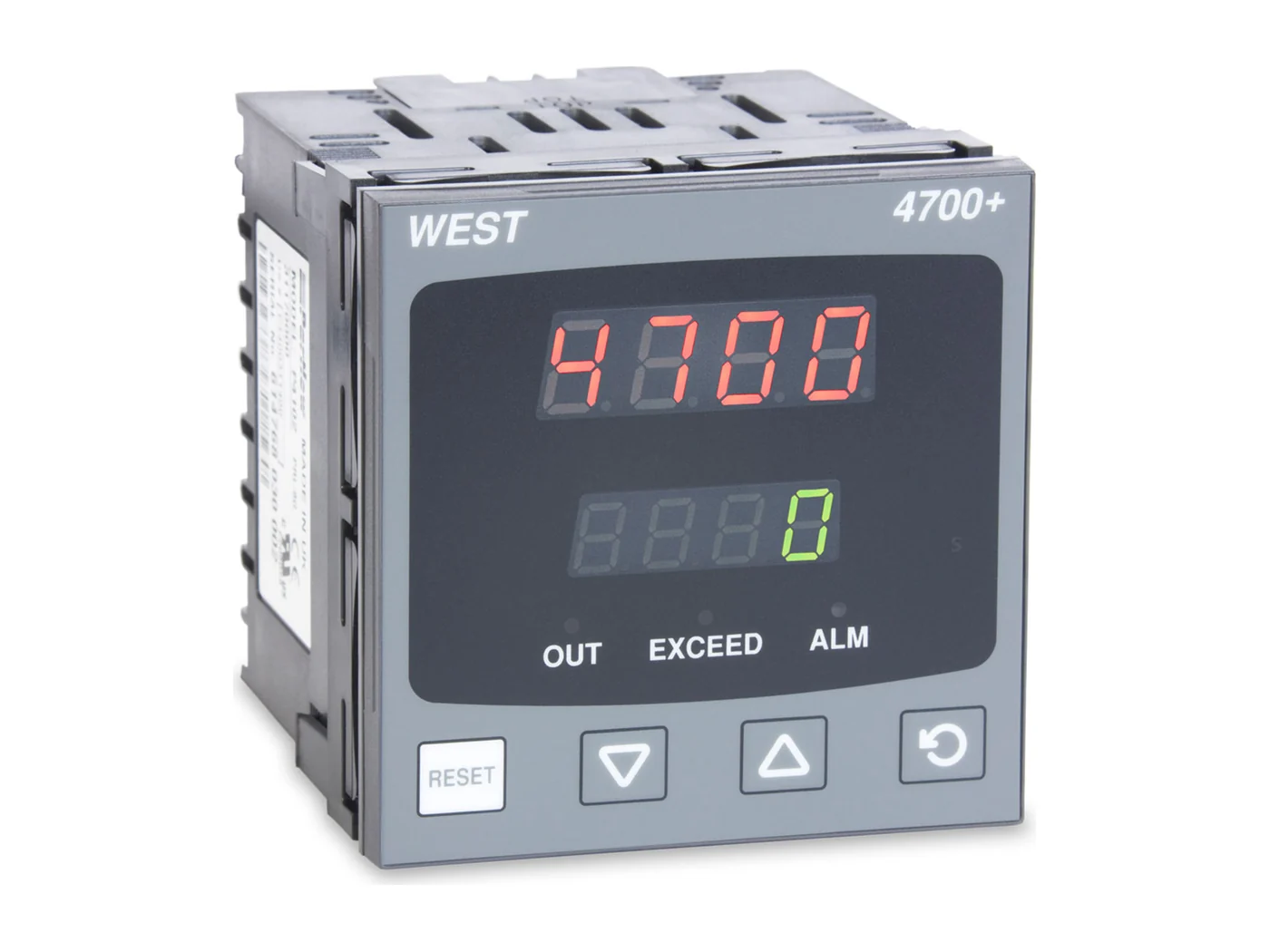
The 4700+ is a limit controller that provides fail-safe protection for industrial and process control systems. It works independently of the main controller: if the process value rises above or falls below the preset limit, its latching relay opens and shuts the process down. The relay stays latched until the operator resets it manually on the front panel or remotely, so the process cannot restart on its own after a fault.
The controller is FM approved as a limit device and has a universal sensor input, so it acts as a dependable watchdog for a wide range of applications. A 5 A latching limit relay is fitted as standard. Clear LED indicators show when the limit has been exceeded and when the relay is latched, which helps the operator to understand the state of the plant at a glance.
Additional process alarms provide early warning before the limit trips. Options include a digital input for remote reset, further relay outputs, a linear output with 4–20 mA as default for retransmission of the process value, and a 10 V SSR driver output. With the optional RS-485 interface, the controller communicates via Modbus with supervisory systems and data loggers.
Set-up is simple. Hardware options are detected automatically, and configuration is jumperless. The operator interface has a customisable menu, so only the parameters needed on site are shown, and the full configuration can be prepared on a PC and transferred to the controller. The 1/4 DIN housing, panel cutout and terminal wiring are backward-compatible with previous generations, which makes replacement in existing panels easy.
The controller is available for 100–240 V AC supply or for 24–48 V AC/DC. Please indicate the input type, the required outputs, supply voltage and whether you need remote reset or Modbus communication, and we will give you the correct ordering code.
P4701Z2110002, P4701Z2100000, P4701Z2100002, P4701Z2111100, P4701Z1100000, P4701Z2100001, P4701Z2101002, P4701Z2111103, P4701Z2122002, P4701Z2100003, P4701Z2110102, P4701Z2117300, P4701Z2111002, P4701Z2100020, P4701Z2110023, P4701Z2110001, P4701Z2117000, P4701Z2100021, P4701Z2110000, P4701Z2171000, P4701Z2107002, P4701Z2107000, P4701Z2100022, P4701Z2170322, P4701Z2110022
Match the sensing element, insertion length and wiring to the existing input. Separate the process temperature from the ambient temperature at the connection head.
For an installed instrument, copy the complete ordering code and its suffixes from the nameplate. Identify the part that will remain in service and the part that needs to be replaced. A photograph of the connection face or terminal markings helps resolve differences between versions that share the same housing.
For a new installation, describe what the instrument must measure or control and where the reading will be used. Give the normal operating conditions separately from short peaks. Include units with every numerical value. A drawing with the available space, orientation and access for removal gives the supplier a practical starting point.
Add the quantity for each position and identify any accessories that belong with it. Where a particular drawing, material certificate or calibration record is required, mention it with the line item. Submit the list with the destination country so that the response can cover the requested configuration and delivery.