ELGAS s.r.o.
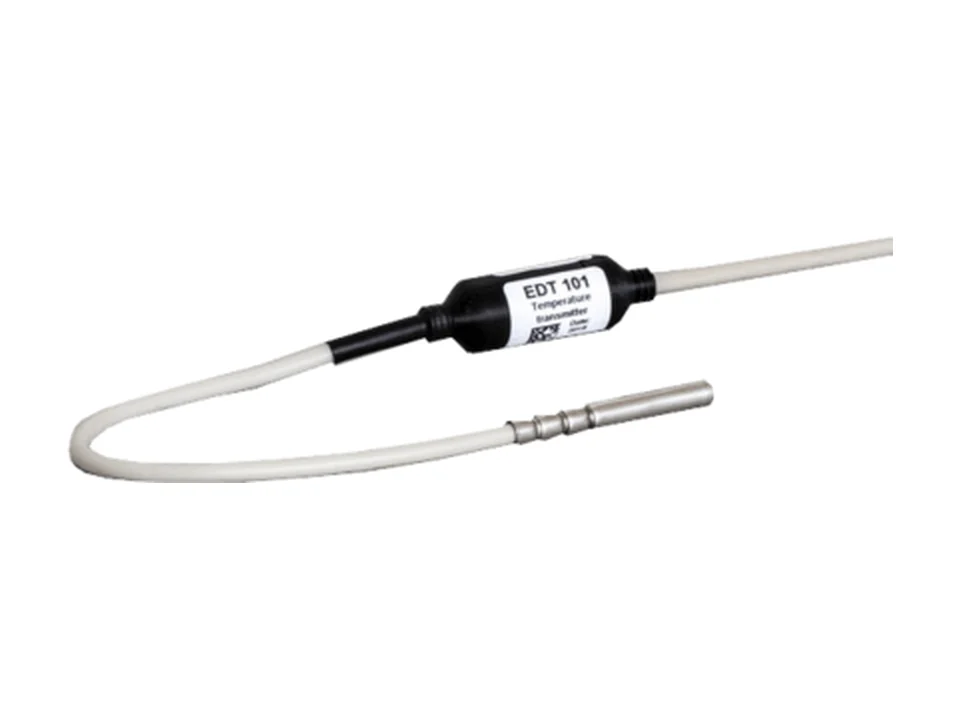
EDT 101
Temperature
Pyrometers & thermal cameras
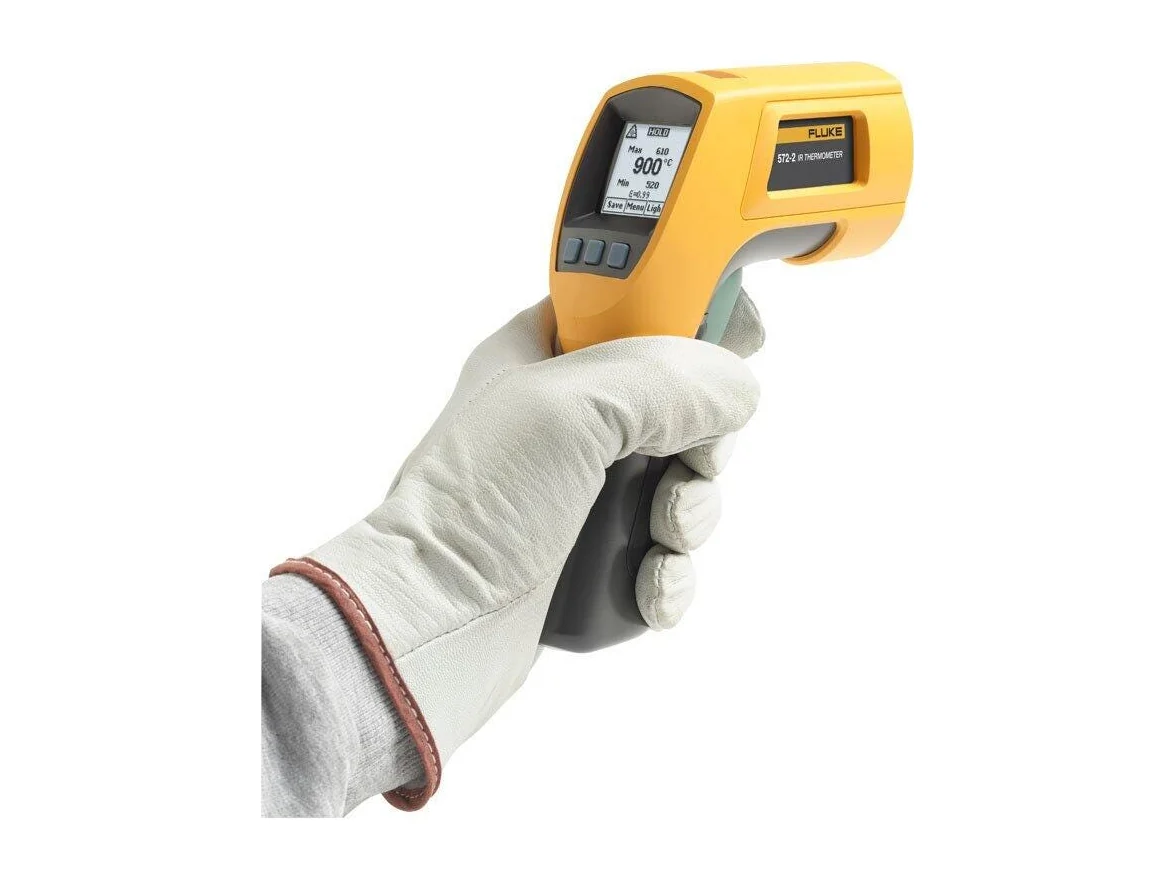
The 572-2 is a high-temperature handheld infrared thermometer for industrial environments. It combines non-contact infrared measurement with a K-type thermocouple input, so surface temperatures can be read from a distance and, where needed, verified or supplemented with a contact probe using one instrument.
The thermometer determines the temperature of a surface from the infrared energy it radiates in the 8 to 14 µm spectral band. The optics have a distance-to-spot ratio of 60:1, calculated at 90 % energy, with a minimum spot size of 19 mm, and an offset dual laser marks the target. Emissivity is adjustable digitally from 0.10 to 1.00 in steps of 0.01, or can be taken from a built-in table of common materials.
The infrared range is −30 to 900 °C (−22 to 1652 °F). Accuracy is ±1 °C or ±1 % of reading, whichever is greater, at 0 °C and above; ±2 °C from −10 to 0 °C; and ±3 °C below −10 °C. Repeatability is ±0.5 % of reading or ±0.5 °C, and response time is below 500 ms. The K-type input covers −270 to 1372 °C, with an accuracy of ±1 % or 1 °C, whichever is greater, from −40 °C upwards. Display resolution is 0.1 °C or 0.1 °F, switchable between Celsius and Fahrenheit.
The backlit dot matrix display has two brightness levels for darker environments. The instrument shows minimum, maximum, average and difference values, and high and low alarms are signalled audibly and with two-colour visual indication. Up to 99 points can be stored and transferred to a PC through USB 2.0 using form-based reporting software.
Supplied items and accessories include a K-type bead probe, a hard case, a USB cable, a soft carrying case and further K-type probes; a calibration certificate is available on request. The device carries the CE mark; the laser complies with IEC 60825-1 and EMC with IEC 61326-1.
Applications named are power utilities, metal refining, glass, cement and petrochemical industries, HVAC duct and vent checks, hydronic system and refrigerant temperature monitoring, and checks of pipe insulation integrity and surface thermal contact. Contact us with the required quantity and any accessories or probes to include in the quotation.
572-2, 4307031, 4307046
Match the sensing element, insertion length and wiring to the existing input. Separate the process temperature from the ambient temperature at the connection head.
For an installed instrument, copy the complete ordering code and its suffixes from the nameplate. Identify the part that will remain in service and the part that needs to be replaced. A photograph of the connection face or terminal markings helps resolve differences between versions that share the same housing.
For a new installation, describe what the instrument must measure or control and where the reading will be used. Give the normal operating conditions separately from short peaks. Include units with every numerical value. A drawing with the available space, orientation and access for removal gives the supplier a practical starting point.
Add the quantity for each position and identify any accessories that belong with it. Where a particular drawing, material certificate or calibration record is required, mention it with the line item. Submit the list with the destination country so that the response can cover the requested configuration and delivery.