ELGAS s.r.o.
EDT 96
Pressure
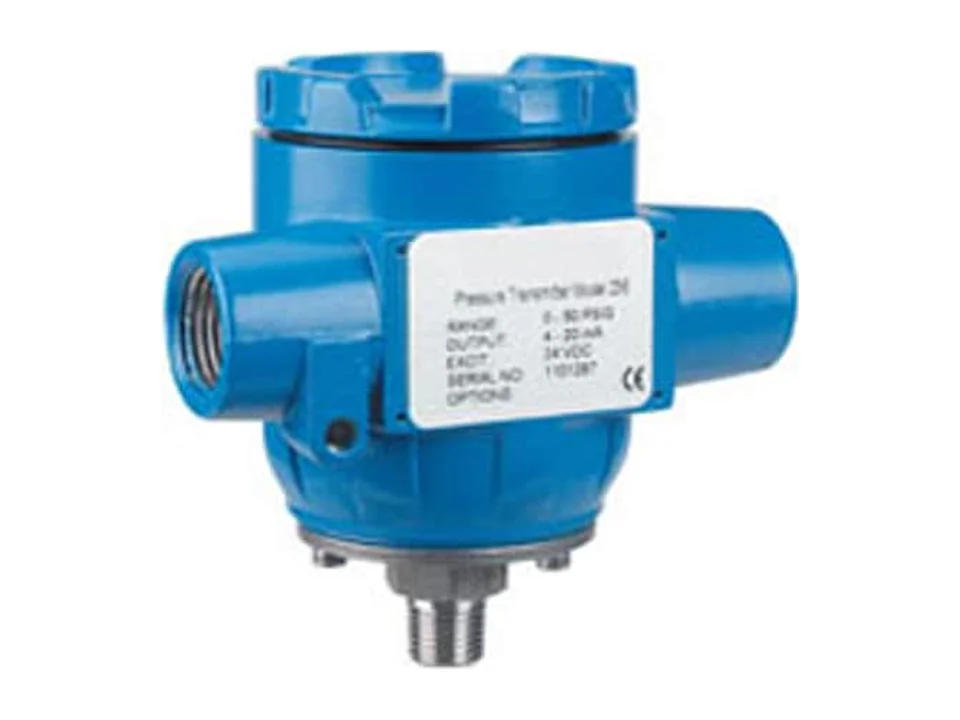
Pressure transmitters
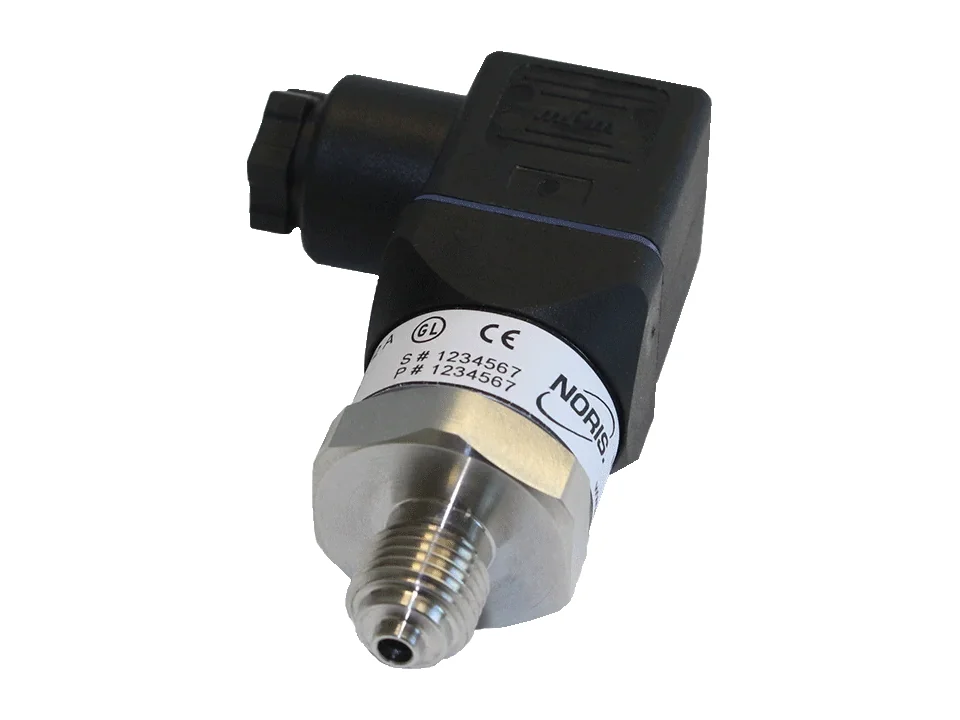
The 679 series is a factory-calibrated gauge pressure transmitter designed for weatherproof service in NEMA 4/IP56 environments. It senses gauge pressure of gases and liquids and converts it into a proportional analogue output. Because all wetted parts are made of 17-4 PH stainless steel, it is compatible with corrosive liquids and gases that are chemically resistant to this material.
The transmitter works as a true gauge transducer: the reference side of the sensing diaphragm is vented to atmosphere, so the output always represents pressure relative to ambient. Accuracy is ±0.25 % of full scale, including non-linearity, hysteresis and non-repeatability, and long-term stability is better than 0.5 % of full scale per year.
Nine models, 679-0 to 679-8, cover ranges up to 10,000 psi. The standard output is 4–20 mA in two-wire technology with a maximum loop resistance of 800 Ω; a voltage output of 0.1 to 5.1 V DC is available as an alternative. The supply voltage is 9 to 30 V DC. Zero and span can be adjusted by ±15 %, and the adjustments are non-interactive.
The compensated temperature range for ambient conditions is −4 to +176 °F, while the process temperature limits extend from −40 to +260 °F. The transmitter operates at 10 to 90 % relative humidity, non-condensing.
The housing is aluminium and rated NEMA 4 and IP56. The process connection is a 1/4 in NPT male thread, and the electrical connection is a 1/2 in NPS female conduit with a screw terminal block inside. The transmitter carries CE marking and is RoHS compliant. For recalibration or service the unit is returned to the factory; it is not field repairable.
Typical uses are pressure monitoring in processes with media suitable for 17-4 PH stainless steel, outdoor installations and harsh environments, and measurements on corrosive liquids and gases.
Please state the required pressure range, output signal and medium in your enquiry, and we will select the matching model.
679-0, 679-1, 679-2, 679-3, 679-4, 679-5, 679-6, 679-7, 679-8
Specify whether the reference is gauge, absolute or differential pressure. Include the normal span and the largest pressure the instrument may see.
For an installed instrument, copy the complete ordering code and its suffixes from the nameplate. Identify the part that will remain in service and the part that needs to be replaced. A photograph of the connection face or terminal markings helps resolve differences between versions that share the same housing.
For a new installation, describe what the instrument must measure or control and where the reading will be used. Give the normal operating conditions separately from short peaks. Include units with every numerical value. A drawing with the available space, orientation and access for removal gives the supplier a practical starting point.
Add the quantity for each position and identify any accessories that belong with it. Where a particular drawing, material certificate or calibration record is required, mention it with the line item. Submit the list with the destination country so that the response can cover the requested configuration and delivery.