Bürkert Fluid Control Systems
Type 8203
Liquid analysis
pH & ORP electrodes
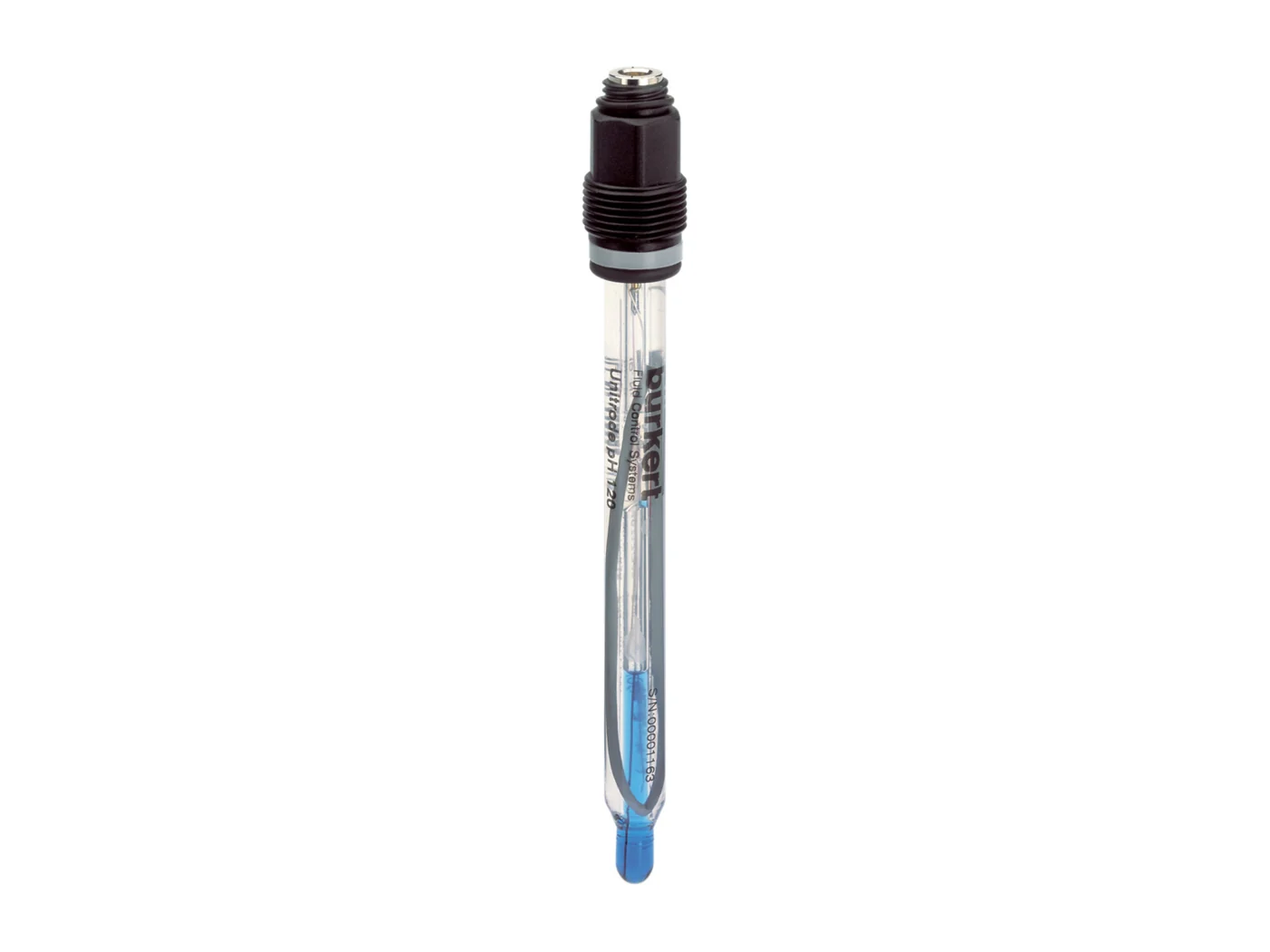
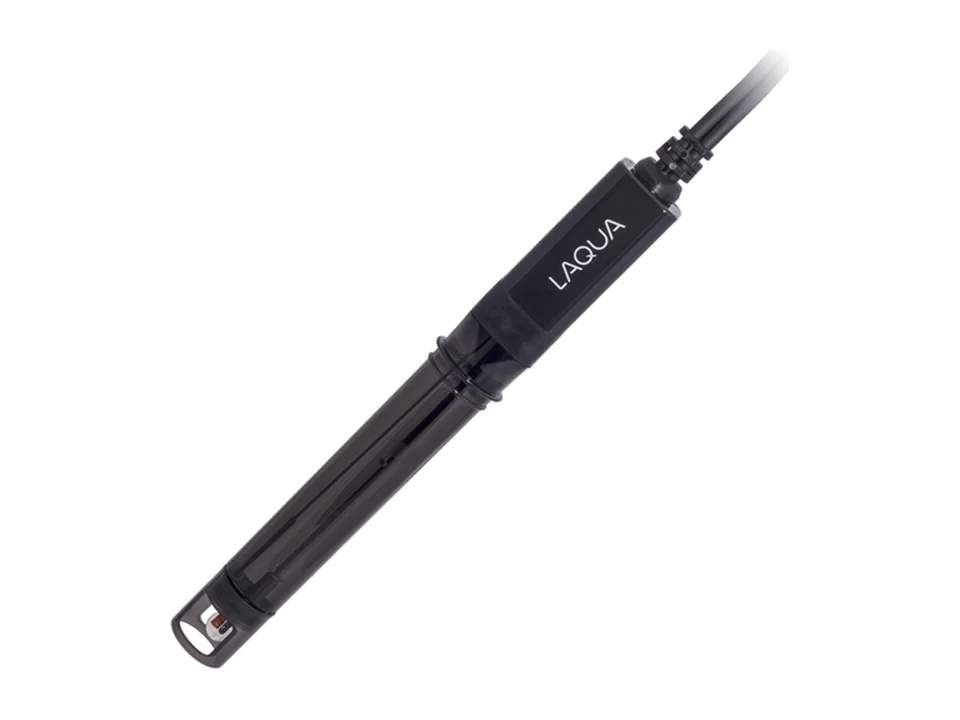
The 9652-10D is a gel-filled combination pH electrode with an integrated temperature sensor, designed for field testing. It has a durable plastic body and is filled with a polymer-gel electrolyte, so it does not need to be refilled. The electrode is intended for portable pH measurement and water quality checks.
A pH electrode measures the potential that develops across a pH-sensitive glass membrane in contact with the sample, against a reference electrode with a stable potential. In the 9652 the reference system is a silver/silver chloride internal electrode, and electrical contact between the reference electrolyte and the sample is made through a porous sintered polyethylene liquid junction. The gel electrolyte removes the need for maintenance of a liquid filling and makes handling in the field simpler.
Because the pH value of a solution and the electrode slope both depend on temperature, the electrode contains an integrated NTC temperature sensor. A compatible meter can therefore read the sample temperature with the same probe and apply temperature compensation, without a separate temperature probe.
The measuring range covers the full pH scale from 0 to 14, and the electrode can be used at sample temperatures from 0 to 80 °C. The electrode is 150 mm long with a diameter of 16 mm.
The electrode is connected with BNC and phono jack connectors. Two cable lengths are offered: the 9652-10D has a 1 m cable and the 9652-20D a 2 m cable; otherwise the two versions are identical.
The electrode complies with the RoHS directive, assessed according to EN 50581.
Listed applications are field testing and water quality monitoring.
When ordering, please state the required cable length (1 m or 2 m) and the meter with which the electrode will be used, so that connector compatibility can be confirmed.
9652-10D, 9652-20D
Record the sample temperature, expected concentration and how the probe is mounted. Identify the mating transmitter when replacing a sensor.
For an installed instrument, copy the complete ordering code and its suffixes from the nameplate. Identify the part that will remain in service and the part that needs to be replaced. A photograph of the connection face or terminal markings helps resolve differences between versions that share the same housing.
For a new installation, describe what the instrument must measure or control and where the reading will be used. Give the normal operating conditions separately from short peaks. Include units with every numerical value. A drawing with the available space, orientation and access for removal gives the supplier a practical starting point.
Add the quantity for each position and identify any accessories that belong with it. Where a particular drawing, material certificate or calibration record is required, mention it with the line item. Submit the list with the destination country so that the response can cover the requested configuration and delivery.