ELGAS s.r.o.
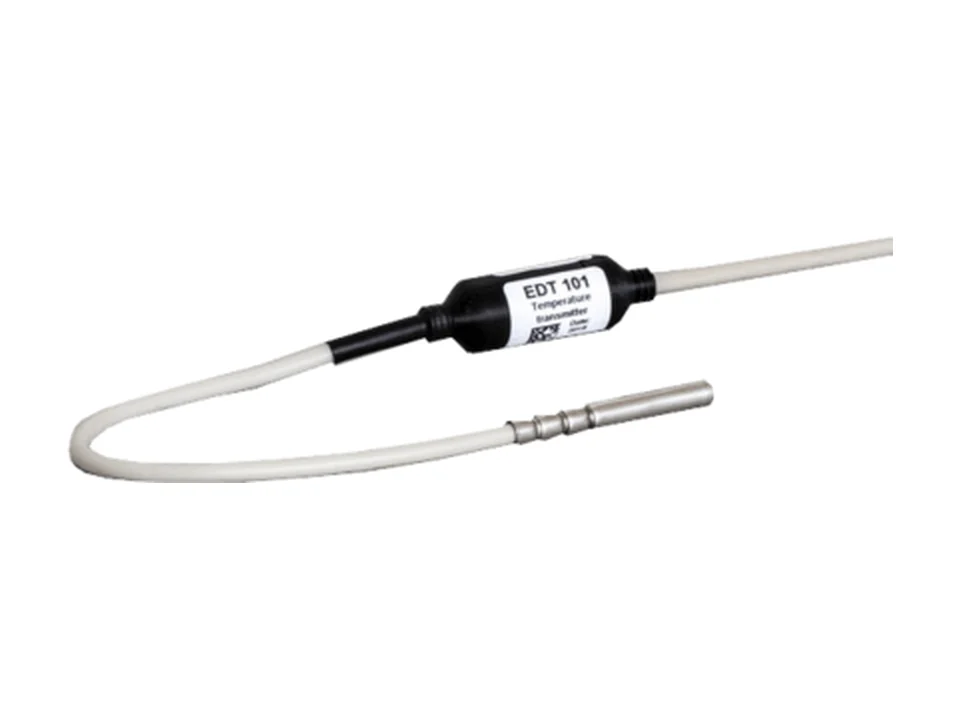
EDT 101
Temperature
Pyrometers & thermal cameras
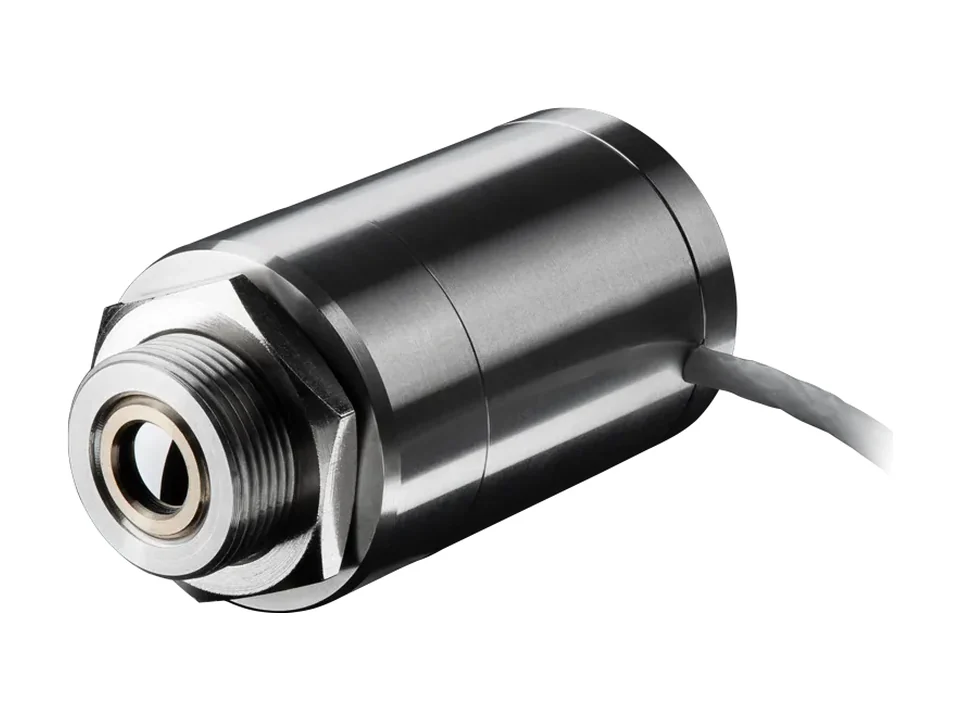
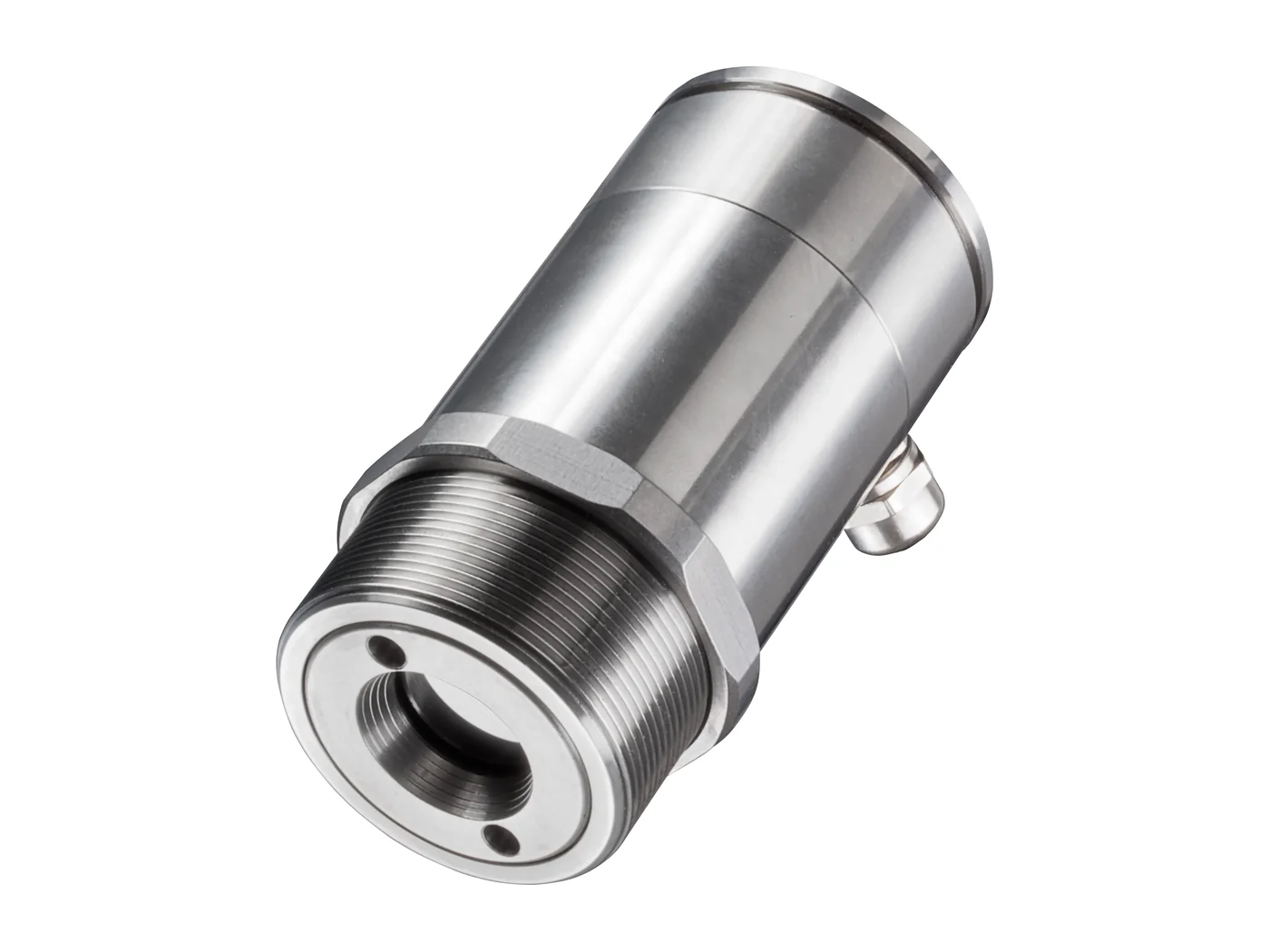
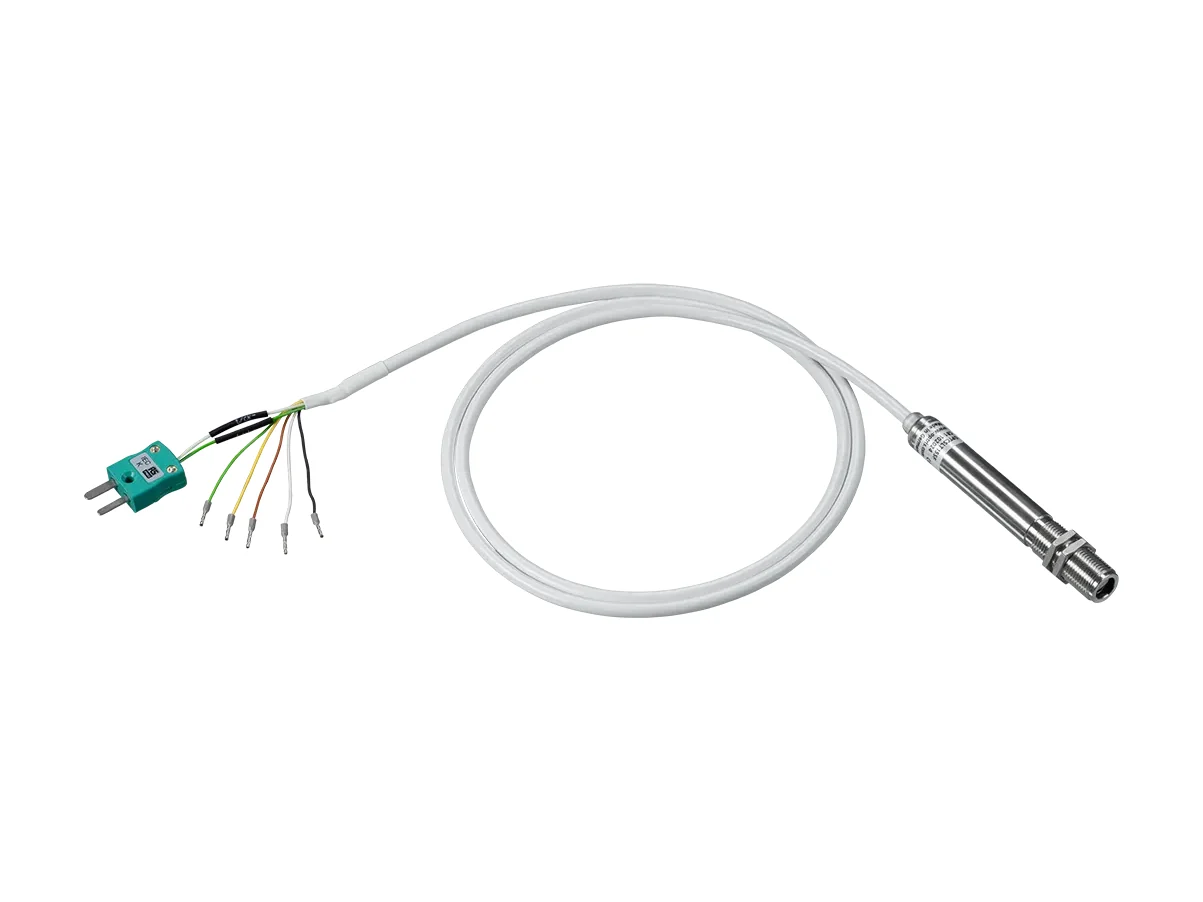
CS LT is a compact single-piece infrared pyrometer for non-contact temperature measurement, intended in particular for integration into machines and OEM equipment. The sensing head, optics and electronics are contained in a stainless steel housing of only Ø 12 × 85 mm with an M12 × 1 thread, so the sensor can be fitted into tight spaces with the supplied mounting nuts.
A thermopile detector working in the spectral range of 8 to 14 µm receives the infrared radiation emitted by the target and converts it into a temperature value. This long-wave single-colour measurement is suited to targets with high emissivity. The optical resolution of 15:1 means that the measured spot is one fifteenth of the measuring distance, so small spots can be measured from a distance.
The measuring range is −50 to 1030 °C. Accuracy is ±1.5 % or ±1.5 °C and repeatability ±0.75 % or ±0.75 °C; thermal sensitivity is 50 mK, and the temperature coefficient is ±0.05 K/K or ±0.05 %/K. Response time is 25 ms with an exposure time of 14 ms and a sampling frequency of 70 Hz. Emissivity, transmissivity and reflectivity can be adjusted from 0.100 to 1.100. A warm-up time of 10 minutes applies.
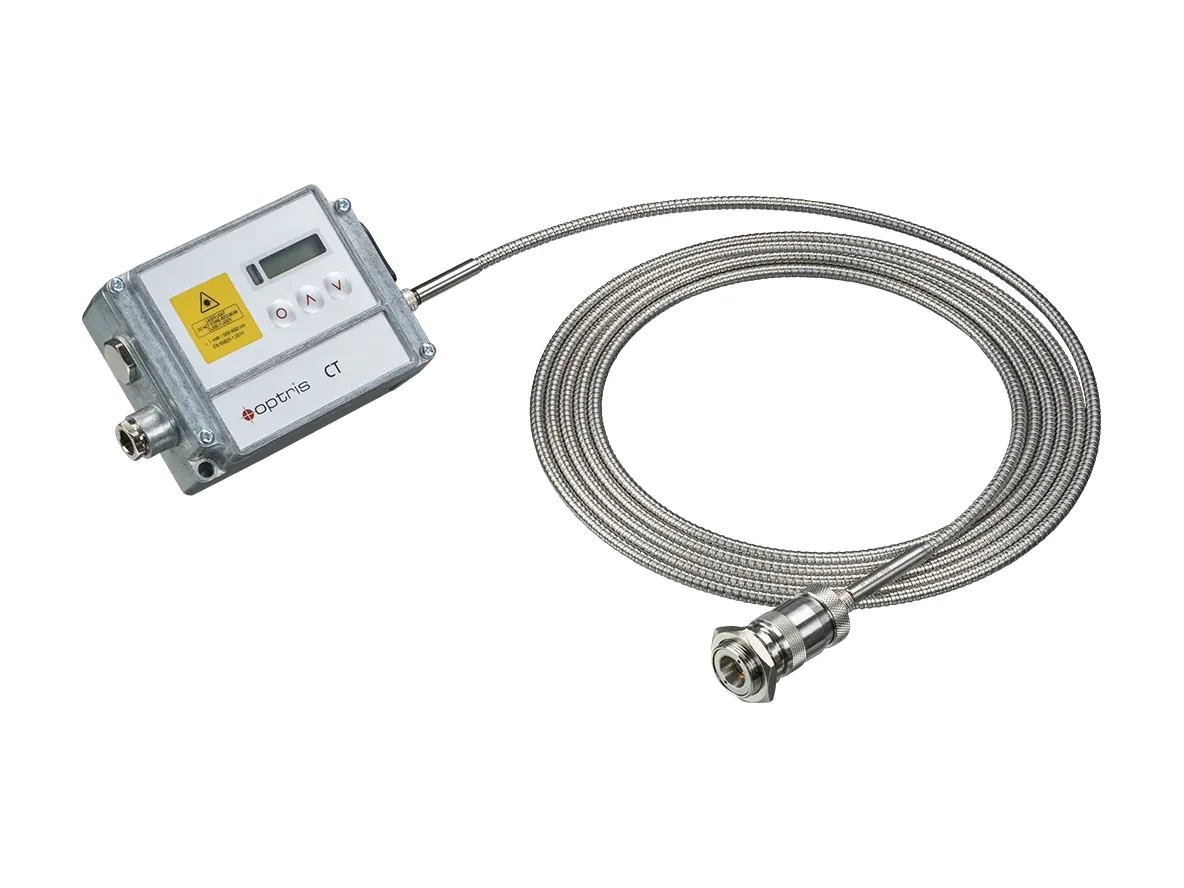
The pyrometer provides an analogue voltage output of 0–5 V or 0–10 V, a thermocouple type K output and a digital alarm output, which allows direct connection to controllers, PLCs or thermocouple inputs. Configuration is done over USB with a micro-USB kit and configuration software; a mobile app is also available. Cable lengths of 1, 3, 8 or 15 m can be ordered.
The housing is rated IP67 and NEMA 4 and has a thermal-shock-resistant design; it is tested for shock and vibration to IEC 60068-2-27, -2-6 and -2-64. Accessories include air purge collars, laser sighting, mounting brackets and flanges and close-focus optics. The sensor is CE, UKCA and RoHS compliant.
Stated applications include metal processing such as casting, forging and rolling, glass and plastics manufacturing, automotive and electronics, solar cell production, early fire detection and electrical system monitoring. Please send the target temperature, measuring distance, required output and cable length with your enquiry.
OPTCSLT15SFCB1
Match the sensing element, insertion length and wiring to the existing input. Separate the process temperature from the ambient temperature at the connection head.
For an installed instrument, copy the complete ordering code and its suffixes from the nameplate. Identify the part that will remain in service and the part that needs to be replaced. A photograph of the connection face or terminal markings helps resolve differences between versions that share the same housing.
For a new installation, describe what the instrument must measure or control and where the reading will be used. Give the normal operating conditions separately from short peaks. Include units with every numerical value. A drawing with the available space, orientation and access for removal gives the supplier a practical starting point.
Add the quantity for each position and identify any accessories that belong with it. Where a particular drawing, material certificate or calibration record is required, mention it with the line item. Submit the list with the destination country so that the response can cover the requested configuration and delivery.