Landis+Gyr
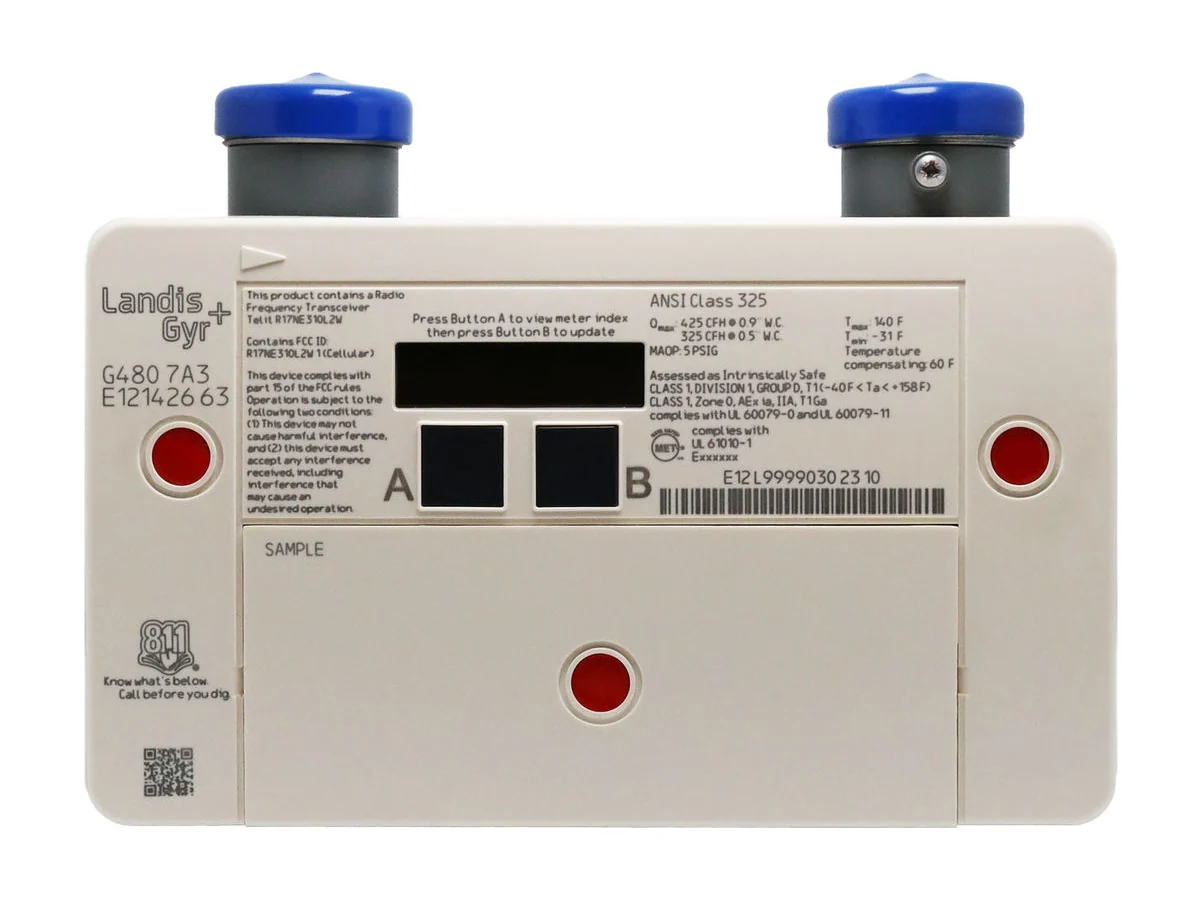
Surent G480
Flow
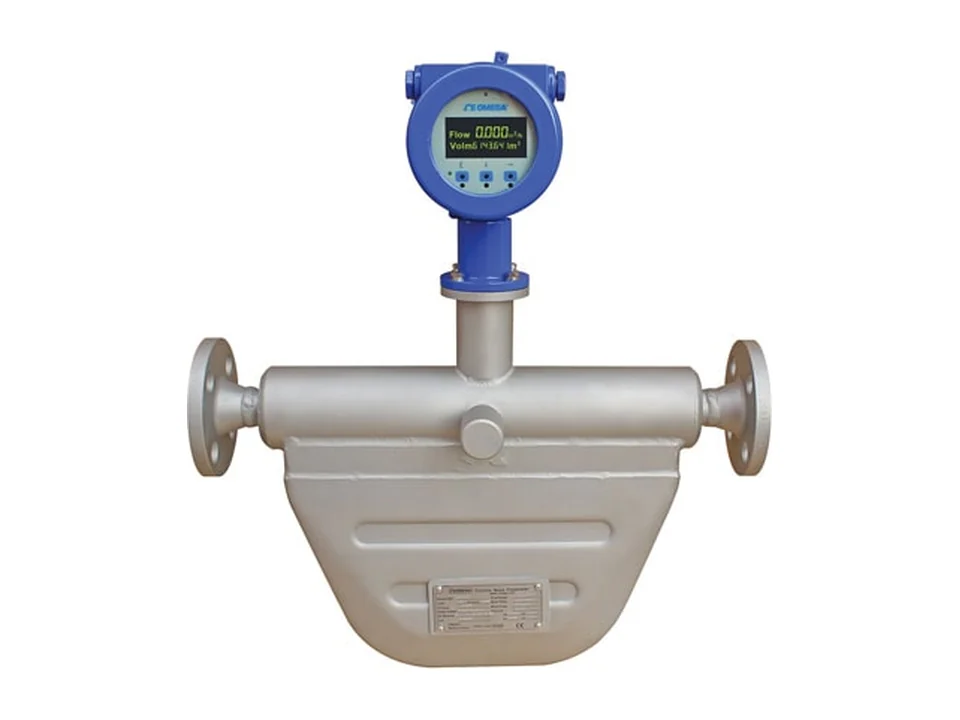
Coriolis flowmeters
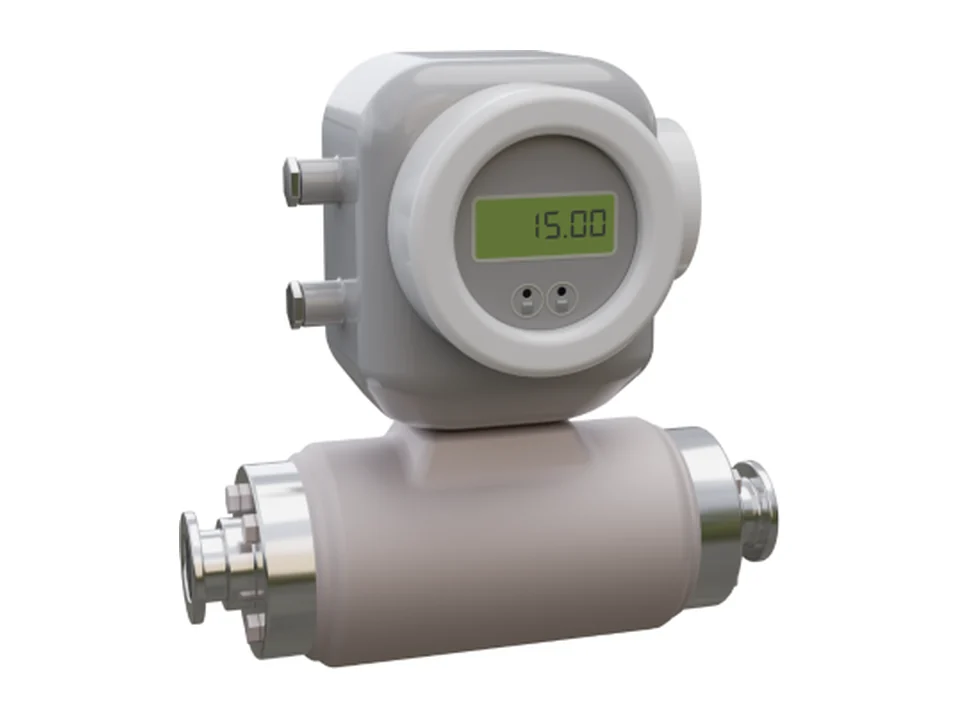
The FMC-5000 series is a Coriolis mass flowmeter for direct mass measurement of liquids, gases and slurries. It has no moving parts, which keeps maintenance to a minimum, and it requires no flow conditioning or straight pipe runs. One meter measures mass flow, volume, density and temperature simultaneously and covers a wide flow range.
The meter works on the Coriolis force principle. Electromagnetic coils make parallel measuring tubes vibrate. When fluid flows through the vibrating tubes, Coriolis forces cause a phase shift between the inlet and outlet sides of the tubes, and this phase shift is detected and used to calculate the mass flow rate. Volume, density and temperature are determined at the same time.
Three accuracy classes are available. The FMC-5100 achieves 0.1/0.05 %, the FMC-5200 0.2/0.1 % and the FMC-5500 0.5/0.25 %. Density is measured from 0.2 to 3 g/cm³ with an accuracy of ±0.002 g/cm³ and a repeatability of ±0.001 g/cm³, and temperature with ±1 °C. The maximum operating pressure is 230 psi, the minimum process temperature is −50 °C and the electronics operate from −40 to 55 °C.
Outputs include 4–20 mA and a 0–10 kHz frequency output, and communication is available via RS-485 with Modbus or via HART. The meter is supplied for 18–36 V DC or 85–265 V AC. The display can be integrated in the meter or mounted remotely.
Meter sizes range from 15 to 150 mm (1/2 to 6 in), with ANSI, DIN, JIS or sanitary flanges. Materials include 316L and 304 stainless steel, and the enclosure is rated IP65 and NEMA 4X. The meter is CE-marked; a typical weight is 26.5 lb. Models include FMC-5101LA to FMC-5107LA and FMC-5201LA.
Applications named for the series are food and beverage batching, pharma and chemical blending, petrochemical transfer, custody transfer, and batch control and dosing. When you send an enquiry, please state the medium, the flow range, density, pressure and temperature, the line size and flange standard, the accuracy class, the communication protocol and the power supply.
FMC-5101LA, FMC-5102LA, FMC-5103LA, FMC-5104LA, FMC-5105LA, FMC-5106LA, FMC-5107LA, FMC-5201LA, FMC-5202LA, FMC-5203LA, FMC-5204LA, FMC-5205LA, FMC-5206LA, FMC-5207LA, FMC-5501LA, FMC-5502LA, FMC-5503LA, FMC-5504LA, FMC-5505LA, FMC-5506LA, FMC-5507LA, FMC-5501GA, FMC-5502GA, FMC-5503GA, FMC-5504GA, FMC-5505GA, FMC-5506GA, FMC-5507GA
State the minimum, normal and peak flow with units. Pipe bore, fluid properties and the available straight run affect the choice of measuring principle.
For an installed instrument, copy the complete ordering code and its suffixes from the nameplate. Identify the part that will remain in service and the part that needs to be replaced. A photograph of the connection face or terminal markings helps resolve differences between versions that share the same housing.
For a new installation, describe what the instrument must measure or control and where the reading will be used. Give the normal operating conditions separately from short peaks. Include units with every numerical value. A drawing with the available space, orientation and access for removal gives the supplier a practical starting point.
Add the quantity for each position and identify any accessories that belong with it. Where a particular drawing, material certificate or calibration record is required, mention it with the line item. Submit the list with the destination country so that the response can cover the requested configuration and delivery.