ifm electronic
LDH313
Gas analysis
Gas detectors & alarms
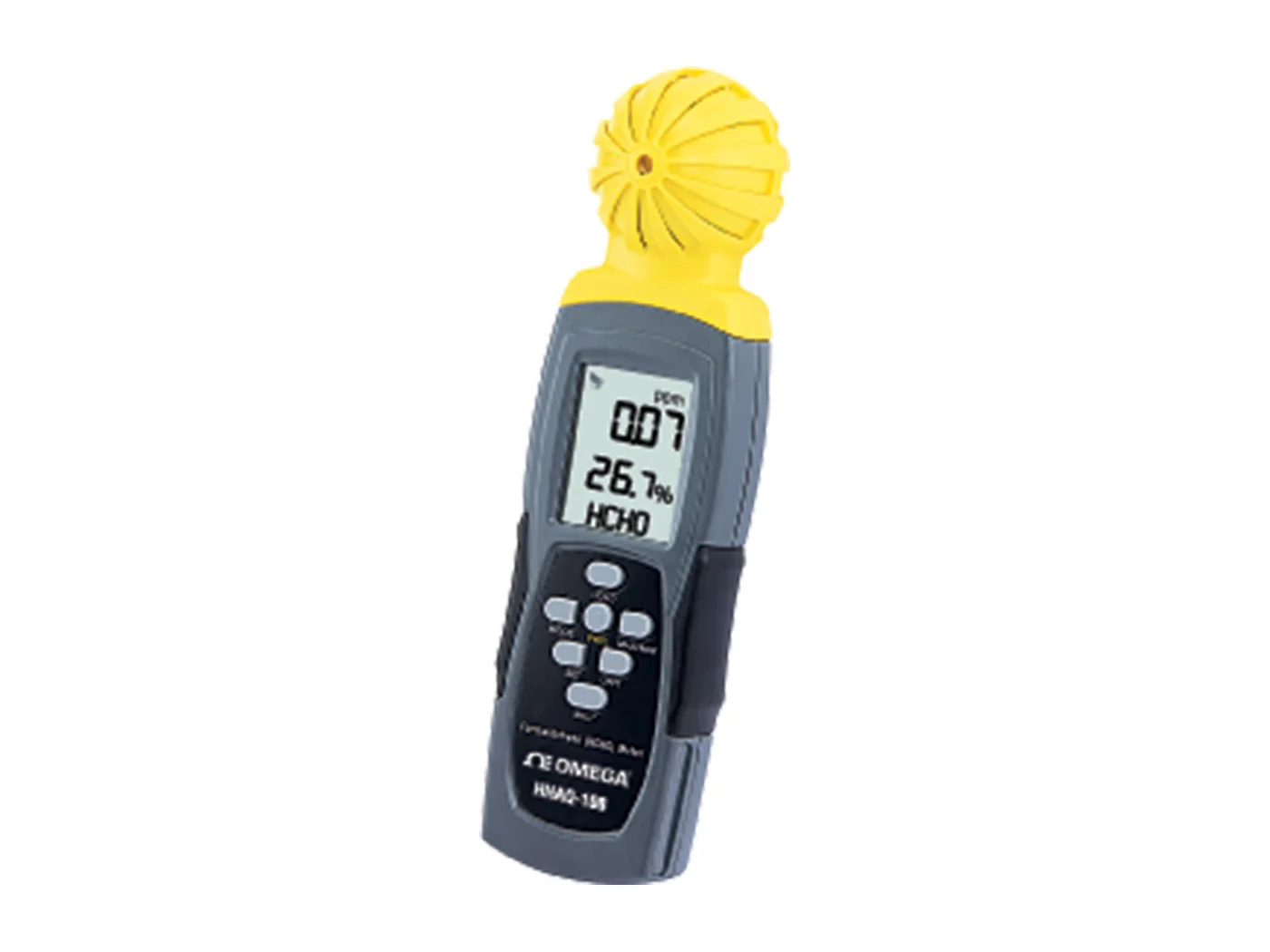
HHAQ-108 is a handheld meter for measuring the concentration of gaseous formaldehyde (HCHO) in air. It is designed for maintaining indoor air quality at the workplace and for spot-checks in residential premises, and in addition to formaldehyde it measures relative humidity and air temperature, so the conditions of a measurement are recorded together with the gas reading.
Formaldehyde is detected by an electrochemical sensor that measures the gas concentration in real time. The measuring range is 0 to 5 ppm with a resolution of 0.01 ppm and an accuracy of ±5 % + 0.03 ppm. Depending on conditions, the sensor needs a warm-up time of 1 to 15 minutes. Beyond the instantaneous reading, the instrument tracks, calculates and displays three cumulative values: the 8-hour time-weighted average (TWA), the 1-hour average and the 15-minute short-term exposure limit value (STEL).
Temperature is measured from 0 to 50 °C with ±1 °C accuracy and 0.1 °C resolution, and relative humidity from 10 to 90 %RH with ±5 %RH accuracy. The instrument can be operated at 0 to 95 %RH.
Readings are shown on a large backlit dual-readout LCD with a size of 51 mm, so formaldehyde and a second value can be seen at the same time. Min/Max memory and a data hold function help when values have to be noted down, and a user-adjustable high alarm warns when a set concentration is exceeded. Zero calibration is done with one button in clean air, setting the formaldehyde reading to 0 ppm.
The meter is powered by four AAA batteries; replacement batteries (MN2400) and an optional 110 V AC adaptor (HHB400-AC) are available. It weighs 204 g and measures 210 × 60 × 25 mm. A tripod mount fitting allows the instrument to be fixed on a tripod for hands-free monitoring over a longer period.
The instrument is listed with a NIOSH reference among its approvals. Please let us know the number of instruments and whether the AC adaptor and spare batteries should be included in the quotation.
HHAQ-108, HHB400-AC, MN2400
Identify the target gas, background gas and concentration units. State whether the sampling system is already installed or belongs in the enquiry.
For an installed instrument, copy the complete ordering code and its suffixes from the nameplate. Identify the part that will remain in service and the part that needs to be replaced. A photograph of the connection face or terminal markings helps resolve differences between versions that share the same housing.
For a new installation, describe what the instrument must measure or control and where the reading will be used. Give the normal operating conditions separately from short peaks. Include units with every numerical value. A drawing with the available space, orientation and access for removal gives the supplier a practical starting point.
Add the quantity for each position and identify any accessories that belong with it. Where a particular drawing, material certificate or calibration record is required, mention it with the line item. Submit the list with the destination country so that the response can cover the requested configuration and delivery.