ifm electronic
LDH313
Gas analysis
Gas detectors & alarms
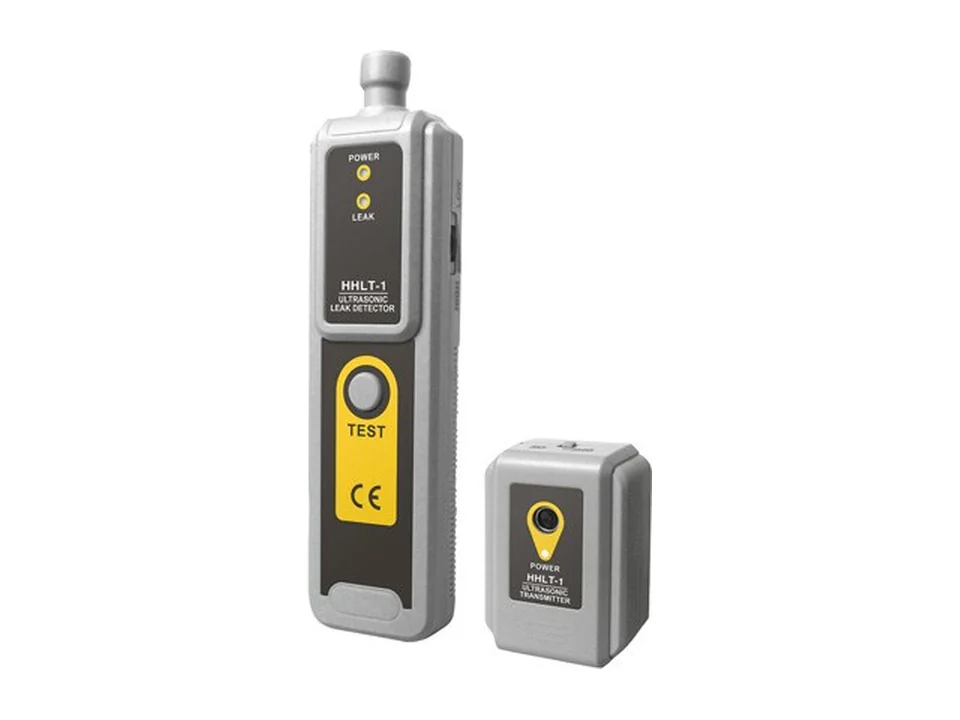
The HHLT-1 is a handheld ultrasonic leak detector for locating leaks of air or gas. It is intended for portable leak identification and is offered as a single model.
When pressurised air or gas escapes through a small opening, the turbulent flow produces sound in the ultrasonic range, above the frequencies audible to the human ear. These ultrasonic emissions typically lie between 20 kHz and 100 kHz. The HHLT-1 detects them in a frequency band of 36 to 44 kHz and indicates a leak with an LED alarm. Because the instrument responds to the sound of the leak rather than to the composition of the gas, it can be used for air as well as for other gases.
The set consists of a transmitter and a receiver. The transmitter measures 120 × 60 × 38 mm and weighs 93.5 g; the receiver measures 150 × 90 × 50 mm and weighs 125.5 g. Both units are designed for handheld use.
Detection is based on the ultrasonic emission itself, in the 36 to 44 kHz band stated above. Power is supplied by a 9 V alkaline battery, so no mains connection or cables are needed during inspection. The permitted operating temperature is 0 to 40 °C and storage temperature −10 to 40 °C. Operating humidity may be 0 to 80 % RH.
The HHLT-1 is offered as a single model variant, designated HHLT-1, and works without software or configuration; alarm indication is given by the LED on the instrument.
Applications named are air leak detection, gas leak detection and portable leak identification. Please state the required quantity in your enquiry and include spare batteries if needed, so that the instruments can be supplied ready for use on arrival.
HHLT-1
Identify the target gas, background gas and concentration units. State whether the sampling system is already installed or belongs in the enquiry.
For an installed instrument, copy the complete ordering code and its suffixes from the nameplate. Identify the part that will remain in service and the part that needs to be replaced. A photograph of the connection face or terminal markings helps resolve differences between versions that share the same housing.
For a new installation, describe what the instrument must measure or control and where the reading will be used. Give the normal operating conditions separately from short peaks. Include units with every numerical value. A drawing with the available space, orientation and access for removal gives the supplier a practical starting point.
Add the quantity for each position and identify any accessories that belong with it. Where a particular drawing, material certificate or calibration record is required, mention it with the line item. Submit the list with the destination country so that the response can cover the requested configuration and delivery.