Bürkert Fluid Control Systems
Type 8189
Level
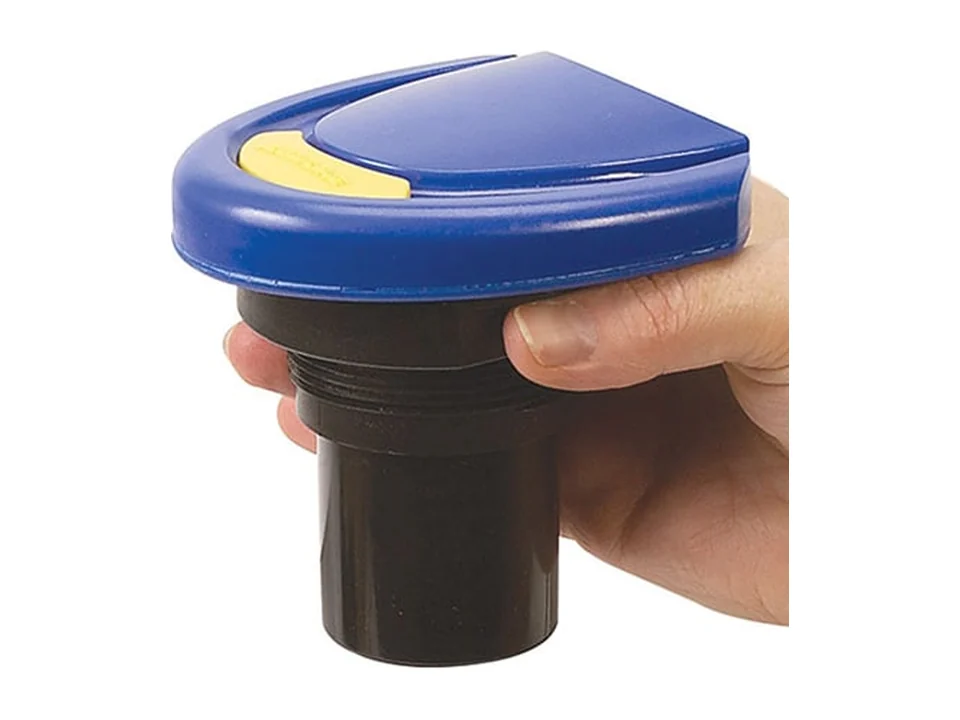
Ultrasonic level transmitters
The LVU2700 series is a general-purpose two-wire ultrasonic level transmitter for continuous measurement of liquid level in tanks and vessels. Because the sensor does not touch the liquid, it is suitable for corrosive, ultrapure, sticky or dirty liquids, and it is used on bulk storage tanks, day tanks, lift stations and process tanks. Level is delivered as a proportional 4–20 mA signal on the same two wires that supply the instrument.
The transmitter sends ultrasonic pulses towards the liquid surface and evaluates the returning echo to determine the distance and therefore the level. Automatic temperature compensation and auto-adaptive filters are built in, which gives plug-and-play operation in most installations. Configuration is done with free PC software through a USB connection; the settings are stored in non-volatile memory.
Four models differ in maximum measuring range: LVU2710 up to 3 m, LVU2718 up to 5.5 m, LVU2726 up to 8 m and LVU2732 up to 10 m (9.8 to 32.8 ft). Accuracy is ±0.2 %. The loop-powered 4–20 mA output allows a loop resistance of up to 500 Ω at 24 V DC.
The wetted parts are made of PVDF, polycarbonate and FKM fluoroelastomer. The housing is rated IP65 and NEMA 4X, and the unit is about 5.5 in high and 5.2 in long. Operating temperature is −35 to 60 °C, with a maximum process temperature of 60 °C and a maximum operating pressure of 30 psi. Connection is made with a 4-conductor shielded cable with polyurethane insulation. The transmitter is CE marked and RoHS compliant.
The sensor mounts with a 1″ or 2″ NPT thread; models with the -G suffix have a G thread. Models with the -B suffix are supplied without the USB connector and are configured with the LVCN414-USB adapter, which is convenient when several transmitters are set up with one adapter.
For a quotation, please send the tank height, the required measuring range, the liquid and the preferred mounting thread.
LVU2710, LVU2718, LVU2726, LVU2732, LVU2710-B, LVU2718-B, LVU2726-B, LVU2732-B, LVU2710-G, LVCN414-USB
Identify the vessel height, nozzle position and surface conditions. A point alarm and a continuous level reading require different outputs.
For an installed instrument, copy the complete ordering code and its suffixes from the nameplate. Identify the part that will remain in service and the part that needs to be replaced. A photograph of the connection face or terminal markings helps resolve differences between versions that share the same housing.
For a new installation, describe what the instrument must measure or control and where the reading will be used. Give the normal operating conditions separately from short peaks. Include units with every numerical value. A drawing with the available space, orientation and access for removal gives the supplier a practical starting point.
Add the quantity for each position and identify any accessories that belong with it. Where a particular drawing, material certificate or calibration record is required, mention it with the line item. Submit the list with the destination country so that the response can cover the requested configuration and delivery.