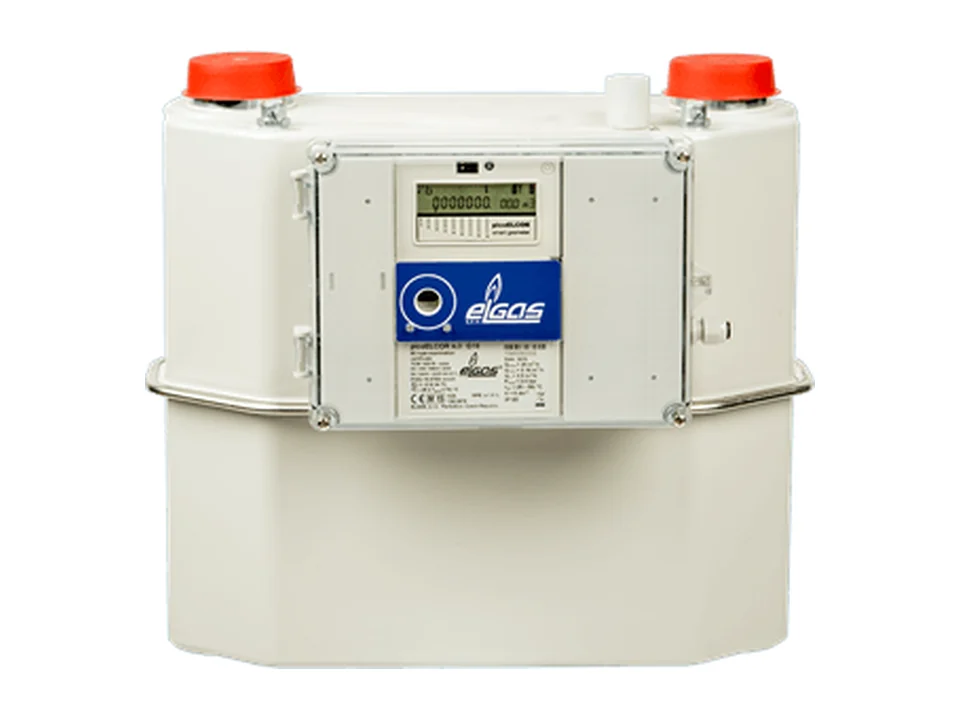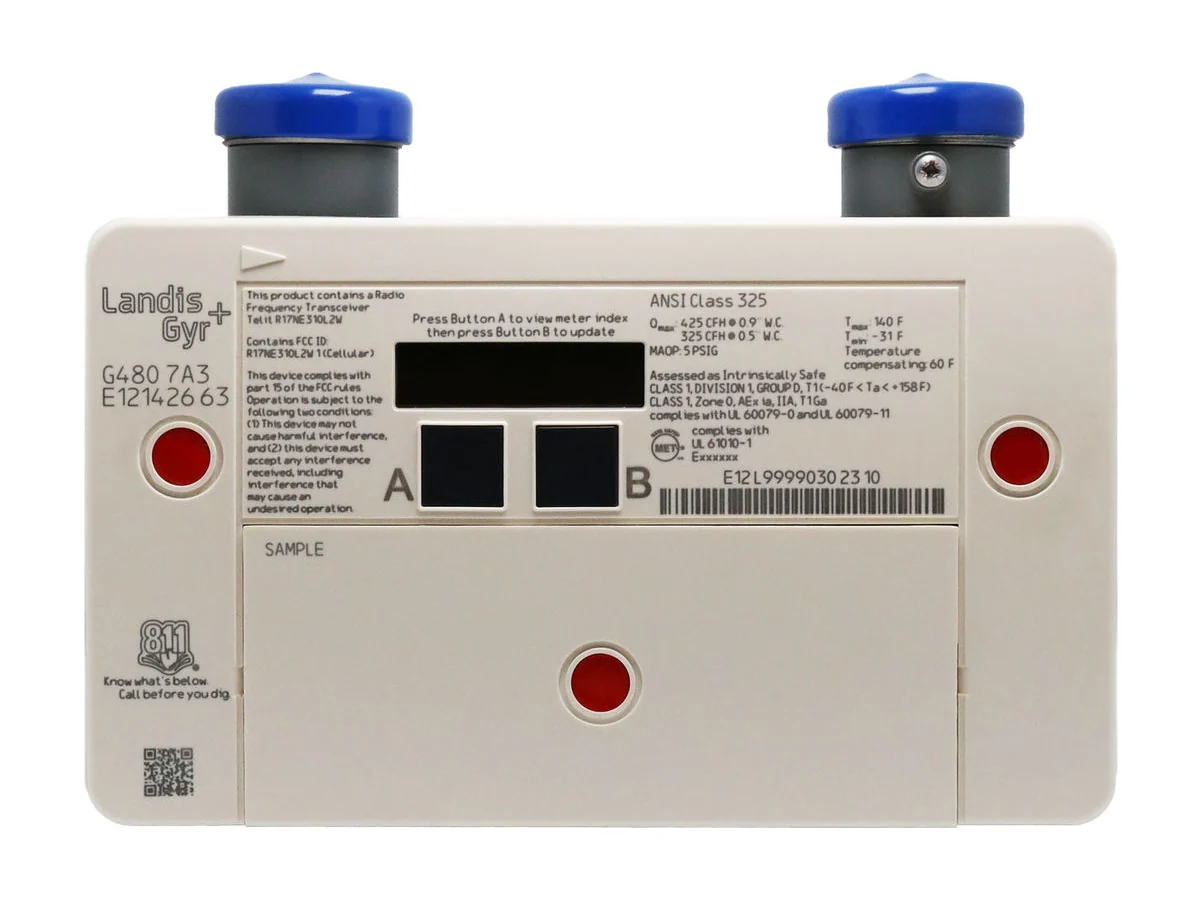
Landis+Gyr
Surent G480
Flow
Water, gas & heat meters
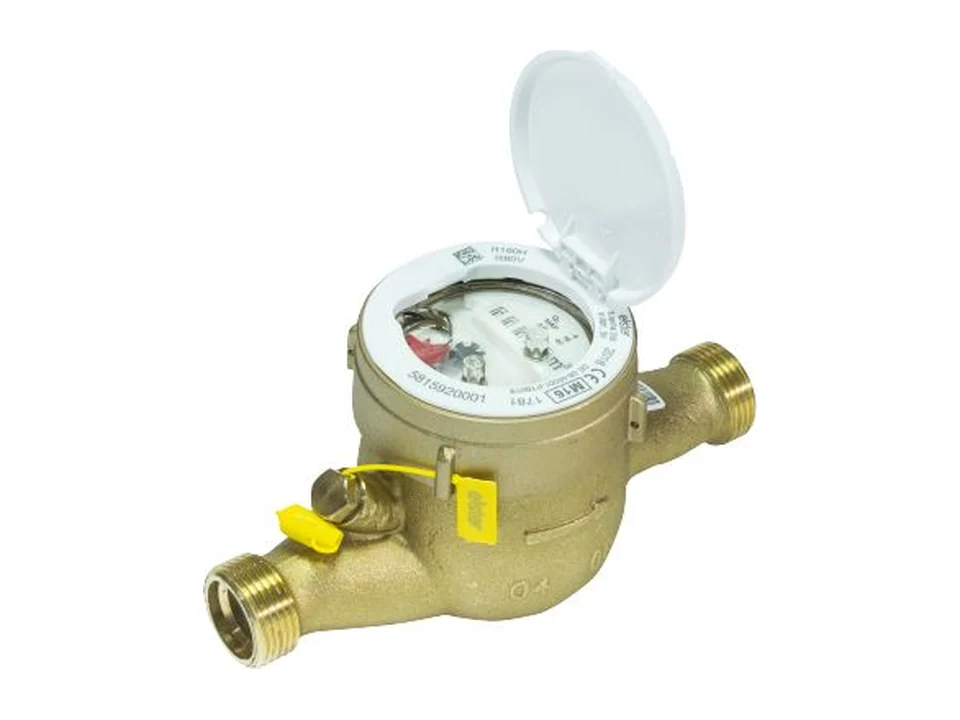
The M100i is a multi-jet wet-dial water meter for measuring cold water in residential and light commercial installations. It is available in nominal sizes DN15, DN20, DN25, DN32, DN40 and DN50 and is approved under the MID by EC type examination.
The meter works as a multi-jet velocity meter: the water is directed through several jets onto an impeller, whose rotation is proportional to the flow velocity and is transmitted to the register. The register is of the wet-dial type. An eSens communication interface allows volume increments to be transmitted with a resolution of 1 litre to external meter data management (MDM) systems via communication modules, so the meter can be read remotely.
Depending on size, the permanent flow rate Q3 is 2.5 to 25 m³/h, the overload flow rate Q4 is 3.125 to 31.25 m³/h, the transitional flow rate Q2 is 25 to 250 l/h and the minimum flow rate Q1 is 16 to 156 l/h. The accuracy class is R160 in horizontal installation and R80 in vertical installation. The meter is designed for horizontal installation and can be inclined up to 90°.
The maximum working pressure is 16 bar and the maximum water temperature 30 °C. The meter meets mechanical environment class M1 and electromagnetic environment class E1.
Connections are threaded (MNR version) or flanged (MNR-S version), to ISO 228/1 and ISO 7/1. Depending on the size, the overall length is 165 to 300 mm, the width approximately 100 to 165 mm, the height approximately 115 to 160 mm and the weight 1.5 to 10 kg.
The meter is intended for residential and light commercial water metering; with a communication module on the eSens interface, consumption can be read remotely.
Please send the nominal size, the connection type (threaded or flanged), the installation orientation, the quantity and whether communication modules are required.
State the minimum, normal and peak flow with units. Pipe bore, fluid properties and the available straight run affect the choice of measuring principle.
For an installed instrument, copy the complete ordering code and its suffixes from the nameplate. Identify the part that will remain in service and the part that needs to be replaced. A photograph of the connection face or terminal markings helps resolve differences between versions that share the same housing.
For a new installation, describe what the instrument must measure or control and where the reading will be used. Give the normal operating conditions separately from short peaks. Include units with every numerical value. A drawing with the available space, orientation and access for removal gives the supplier a practical starting point.
Add the quantity for each position and identify any accessories that belong with it. Where a particular drawing, material certificate or calibration record is required, mention it with the line item. Submit the list with the destination country so that the response can cover the requested configuration and delivery.