Bürkert Fluid Control Systems
Type 8805
Control valves & actuators
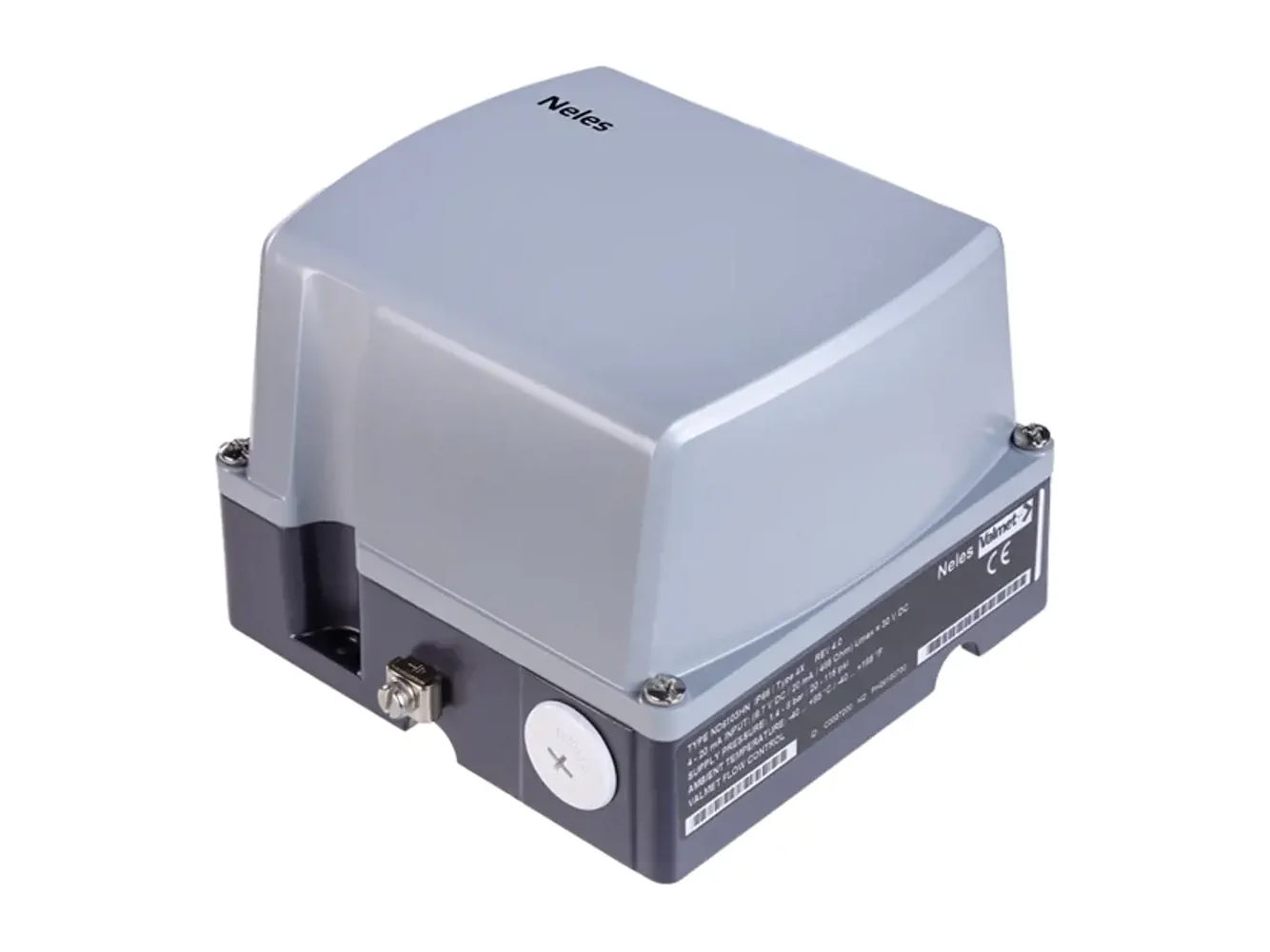
Valve positioners
The ND6000 is a streamlined digital valve positioner that provides dependable valve performance and basic digital diagnostics for industrial processes. A positioner receives the control signal from the process control system and adjusts the air supply to the valve actuator so that the valve reaches and holds the required position. The same ND6000 device is used for linear and for rotary valves.
The positioner measures the valve position with contactless feedback technology. The actual position is compared with the set point, and the pneumatic output is corrected accordingly.
Commissioning is quick. The simple local user interface (LUI) on the device allows setting up and calibrating the positioner directly at the valve with a simple, intuitive calibration procedure. Both local and remote operation are supported: remotely, the positioner is configured and monitored through the HART protocol.
Basic device diagnostics are built in. They include self-diagnostics of the positioner, a deviation trend that shows how closely the valve follows its set point, and counters that record valve activity. Extended off-line tests are available for checking the valve and actuator when the valve is not in operation.
The positioner is offered with multiple pneumatic capacity options. Some versions are intended for selected market areas only. The enclosure is rated IP66 and the device operates in an ambient temperature range of −40 to +85 °C. ATEX, IECEx, CCC and INMETRO certifications are listed for the product.
Industries named for the ND6000 are water and wastewater, fine chemicals, power, biofuels, pulp and paper, pharmaceuticals, and metals and mining. When you send an enquiry, please provide the valve type (linear or rotary), the actuator type and size, the required pneumatic capacity, the signal and communication requirements and any hazardous area certification that is needed, so that the correct version can be selected.
Record the valve tag, travel, pressure drop and actuator supply. Specify the required fail position and the existing feedback interface.
For an installed instrument, copy the complete ordering code and its suffixes from the nameplate. Identify the part that will remain in service and the part that needs to be replaced. A photograph of the connection face or terminal markings helps resolve differences between versions that share the same housing.
For a new installation, describe what the instrument must measure or control and where the reading will be used. Give the normal operating conditions separately from short peaks. Include units with every numerical value. A drawing with the available space, orientation and access for removal gives the supplier a practical starting point.
Add the quantity for each position and identify any accessories that belong with it. Where a particular drawing, material certificate or calibration record is required, mention it with the line item. Submit the list with the destination country so that the response can cover the requested configuration and delivery.