Bürkert Fluid Control Systems
Type 8189
Level
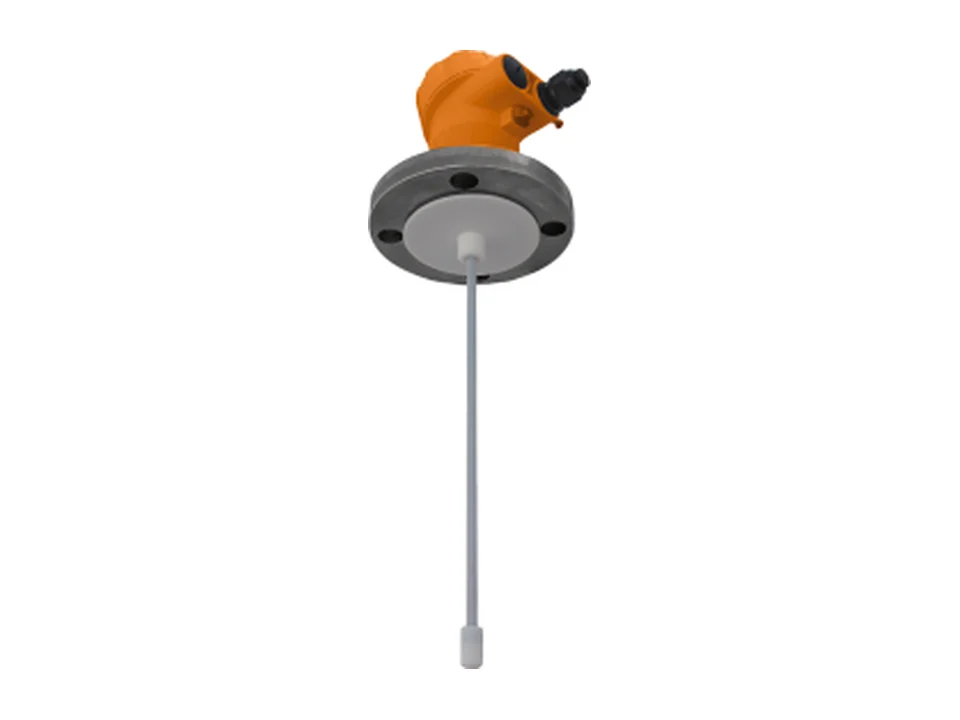
Radar level transmitters
The NGM is a guided wave radar level transmitter for continuous level measurement and point level detection in liquids and light solids. It is suited to oils and hydrocarbons with a low dielectric constant, bypass chambers and stilling wells, tall and narrow nozzles, difficult tank geometries, small tanks, and bulk solids in silos and tanks.
The transmitter works on the time domain reflectometry (TDR) principle. Low-energy, high-frequency electromagnetic impulses travel along a probe immersed in the medium and are reflected at the product surface. The transmitter calculates the level from the time difference between the transmitted and the reflected impulse. The measurement is independent of density, temperature, pressure, humidity and conductivity of the medium.
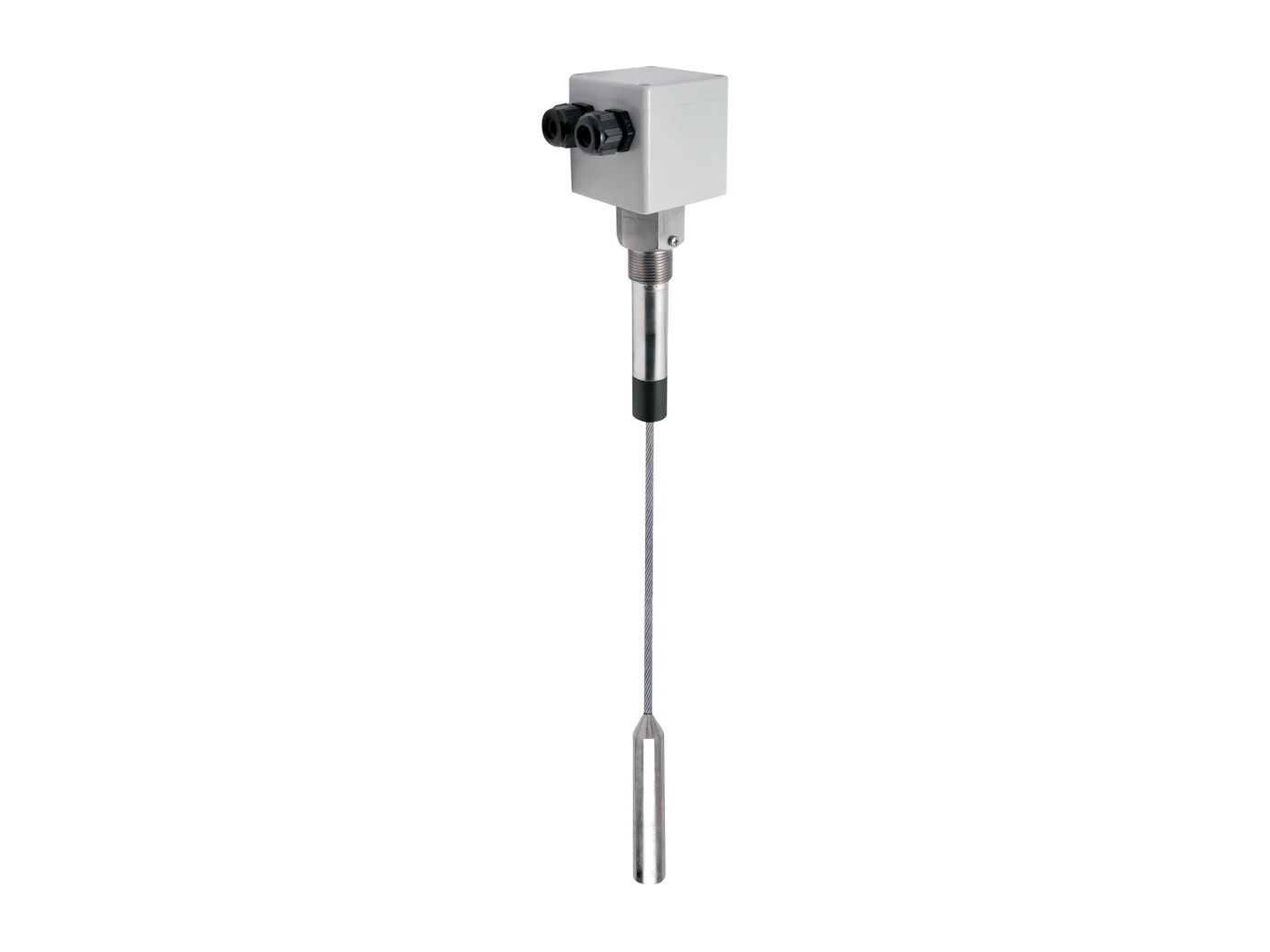
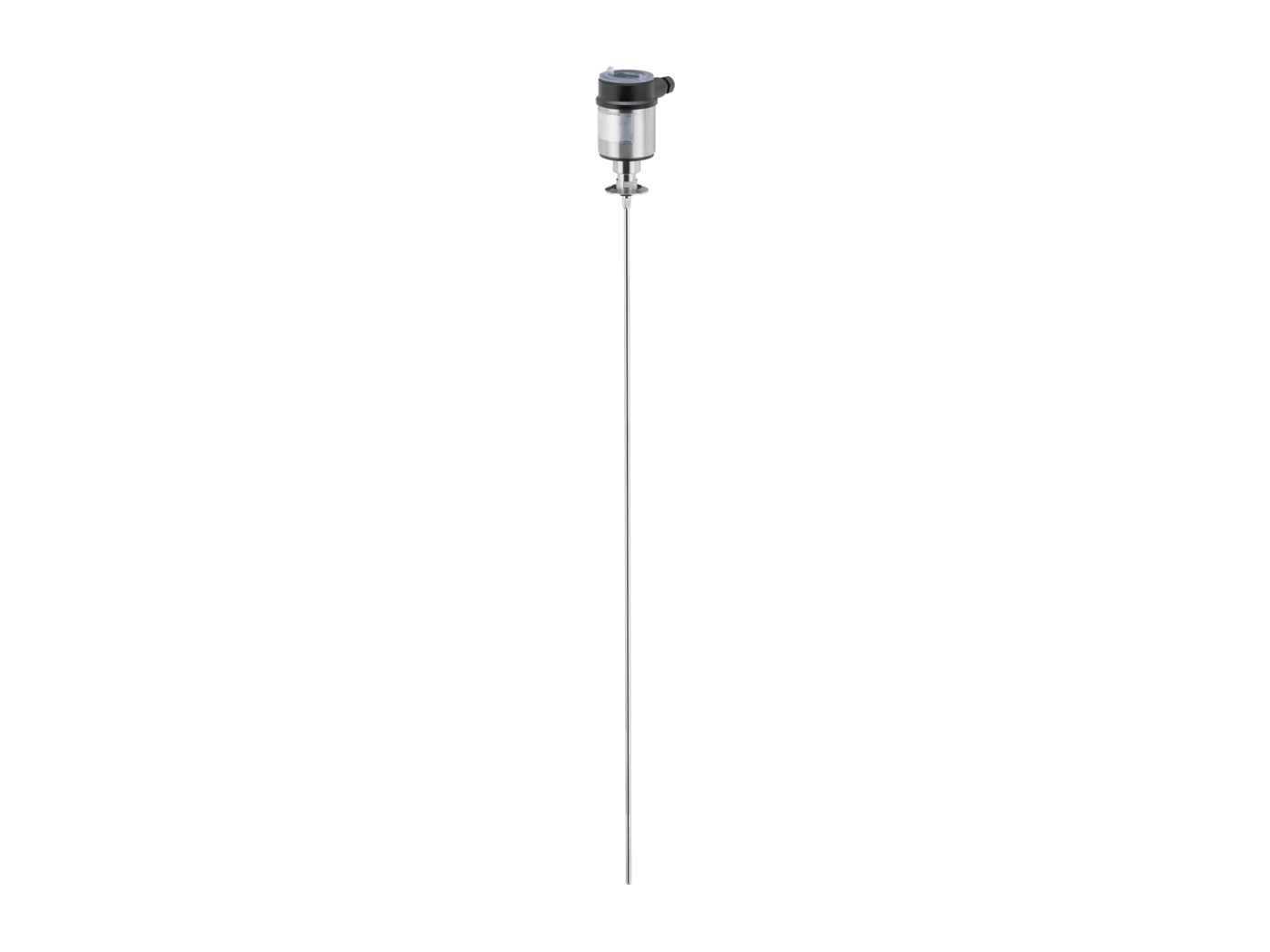
Three probe types are available: a rod probe of 6 mm diameter in lengths from 100 to 3000 mm, a wire rope probe of 4 mm diameter from 1000 to 20000 mm, and a coaxial probe of 17.2 mm diameter from 100 to 6000 mm. Accuracy is ±3 mm or 0.03 % of the measured distance, whichever is greater, repeatability is better than 2 mm and resolution better than 1 mm. Level changes up to 1000 mm/s can be followed. The response time is 0.5 s by default and can be set to 2 s, 5 s, below 100 ms or from 0.2 to 10 s. Process pressure is −1 to +40 bar, except NGM-19 with 0 to 4 bar, and ambient temperature −40 to +80 °C.
The transmitter provides a 4–20 mA analogue output with HART communication and an active DC PNP switching output. It is powered from 12 to 30 V DC, draws less than 50 mA at 24 V DC and starts up in under 6 s. Basic configuration uses DIP switches and a push button; advanced settings are made via a HART modem and a spreadsheet tool.
The housing is aluminium alloy, optionally stainless steel, with IP68 protection and two M20 × 1.5 cable entries. Wetted parts are stainless steel 1.4401 (316), 1.4404 (316L) or 1.4571 (316Ti); PTFE-coated variants and a high-temperature version are offered. Process connections include G 3/4 and 3/4″ NPT threads and flanges such as DN 40 / PN 40 and ASME. The transmitter is mounted vertically. Explosion-protected versions carry ATEX marking II 1/2G Ex ia/db IIC T6 Ga/Gb and II 1/2D Ex ia/tb IIIC T86 °C IP68 Da/Db, and SIL approval is available; cable entries must then be sealed with cable glands certified to IEC 60079-1.
Please send the medium, tank height, process connection, pressure and temperature, and the hazardous area classification with your enquiry.
HARTCOMM, NGM-HART, NGM-1, NGM-8, NGM-2, NGM-9, NGM-4, NGM-12, NGM-42, NGM-22, NGM-19, HARTCOM-0
Identify the vessel height, nozzle position and surface conditions. A point alarm and a continuous level reading require different outputs.
For an installed instrument, copy the complete ordering code and its suffixes from the nameplate. Identify the part that will remain in service and the part that needs to be replaced. A photograph of the connection face or terminal markings helps resolve differences between versions that share the same housing.
For a new installation, describe what the instrument must measure or control and where the reading will be used. Give the normal operating conditions separately from short peaks. Include units with every numerical value. A drawing with the available space, orientation and access for removal gives the supplier a practical starting point.
Add the quantity for each position and identify any accessories that belong with it. Where a particular drawing, material certificate or calibration record is required, mention it with the line item. Submit the list with the destination country so that the response can cover the requested configuration and delivery.