ELGAS s.r.o.
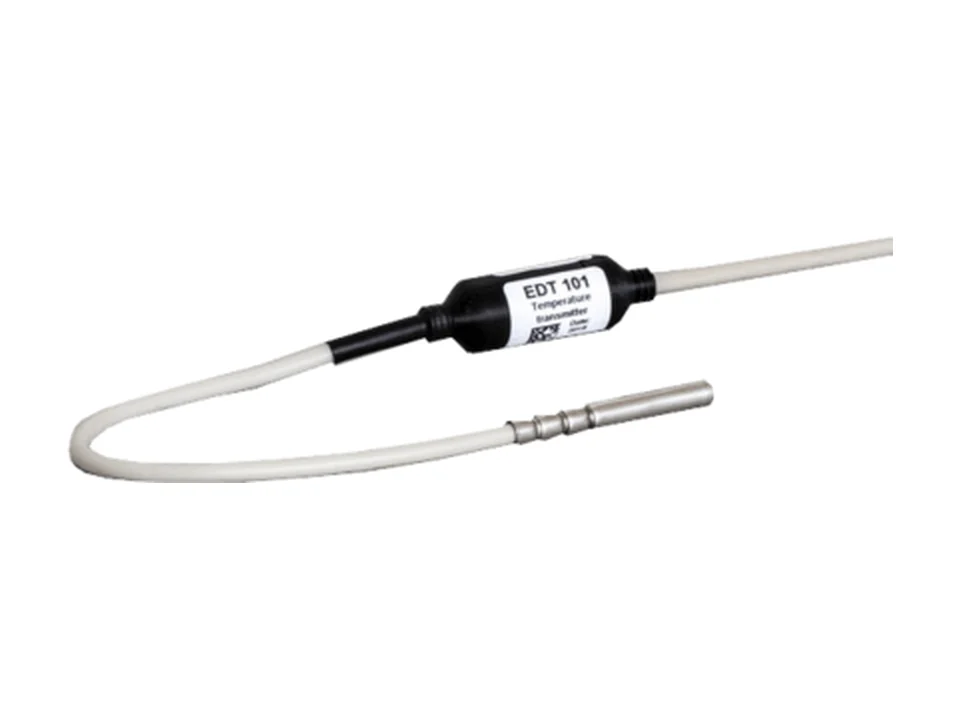
EDT 101
Temperature
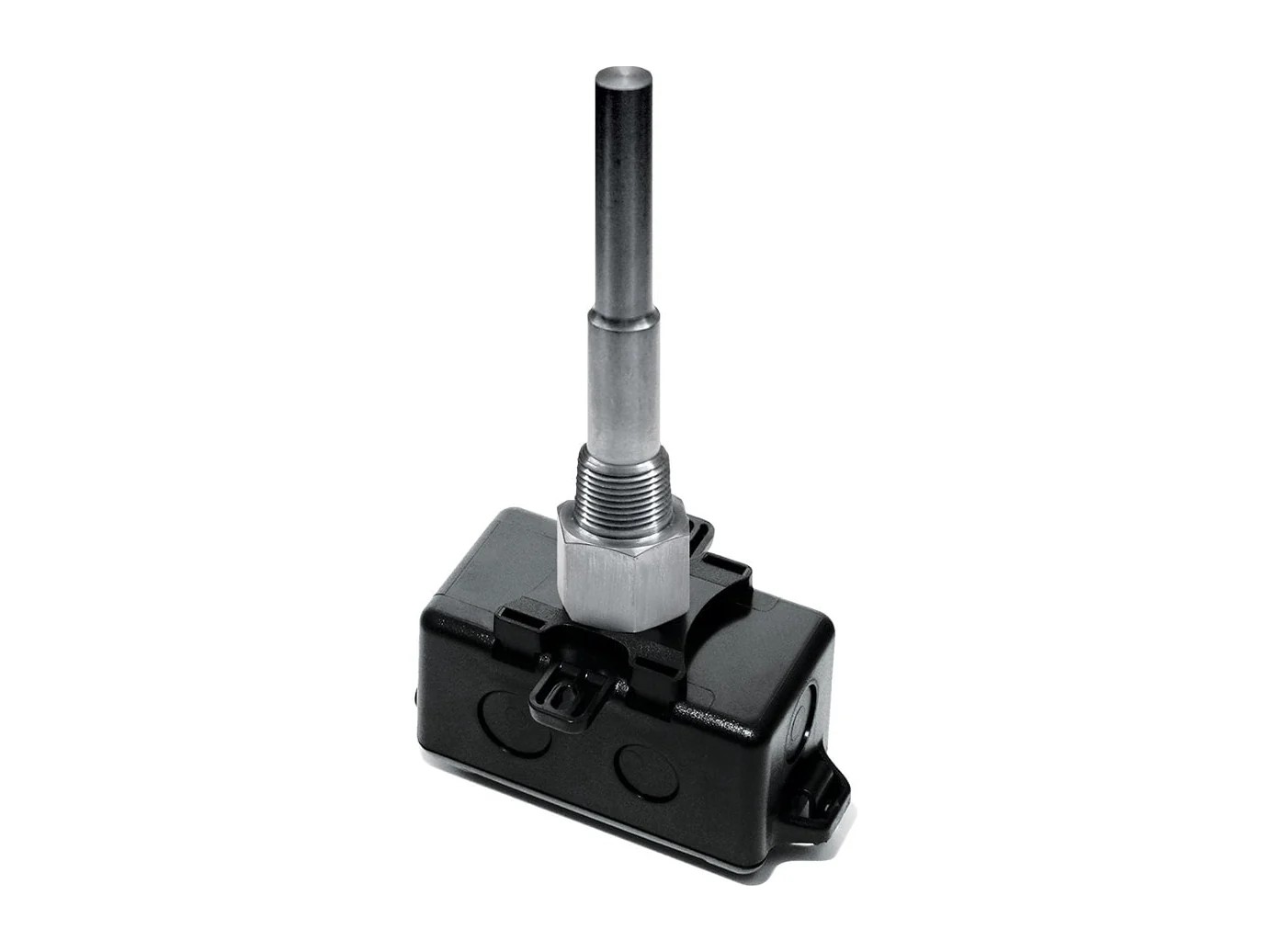
RTD sensors
The Nickel-Immersion series consists of single-point nickel RTD temperature sensors for electronic controllers in commercial heating and cooling building management systems. They are installed directly in the pipe or in a thermowell and measure the temperature of air, gas, steam or water flowing through it, in the range from −40 to 121 °C.
The sensing element is a 1000 Ω nickel RTD with a positive temperature coefficient (PTC) curve. It sits in a 1/4 in diameter 304 stainless steel probe and is connected with 22 AWG etched-PTFE coloured lead wires brought out as pigtails. A double encapsulation process and thermally conductive epoxy protect the element from moisture and speed up thermal response. Stated accuracy is ±0.17 °C (±0.34 °F) at 21.1 °C (70 °F), the nominal response time is 8 seconds and the operating current is 5 mA.
Three configurations are offered: I, immersion with a welded thermowell; IM, immersion with a machined thermowell; and INW, immersion without thermowell. Insertion lengths range from 1 in to 24 in. The process connection is a 1/2 in NPT male thread, and the fitting is made of polyamide 66 high-performance nylon. References include DIN 43760 and, for thermowells, ASME PTC 19.3 TW-2016.
The sensor is available with different enclosures: galvanised (GD), plastic box (PB), bell box (BB) or NEMA 4X (4X). Depending on the enclosure, protection ranges from IP10 and NEMA Type 1 to NEMA Type 3R, NEMA Type 4X and IP66. Permitted operating humidity is 10 to 95 % RH, non-condensing. An optional NIST certificate is available. The sensors carry CE marking and comply with RoHS2 and WEEE.
The sensor installs into a 1/2 in NPS female thread by means of a threadolet, tee or thermowell. The thermowell tip should sit in the middle of the pipe against the flow, and thermal grease should be applied before insertion.
Applications named are chilled water and hot water systems, boilers, pumps, compressors and chillers. Please state the configuration, insertion length and enclosure type in your enquiry.
A/1K-NI-I-2.5"-GD, A/1K-NI-I-4"-PB, A/1K-NI-I-6"-4X, A/1K-NI-IM-2.5"-BB, A/1K-NI-IM-4"-GD, A/1K-NI-IM-6"-PB, A/1K-NI-INW-2.5"-4X, A/1K-NI-INW-12"-GD, A/1K-NI-INW-18"-PB, A/xx-INW-1"-yy-zz, A/xx-INW-2.5"-yy-zz, A/xx-INW-4"-yy-zz, A/xx-INW-6"-yy-zz, A/xx-INW-8"-yy-zz, A/xx-INW-12"-yy-zz, A/xx-INW-18"-yy-zz, A/xx-INW-24"-yy-zz, A/xx-I-yy-PB, A/xx-I-yy-GD, A/xx-I-yy-BB, A/xx-I-yy-4X, A/xx-IM-yy-PB, A/xx-IM-yy-GD, A/xx-IM-yy-BB, A/xx-IM-yy-4X, 102595, 140574, 128349, 128350, 128351, 128337, 128338, 128343, 128344, 138725, 128339, 128341, 128342, 128352, 128353, 128354
Match the sensing element, insertion length and wiring to the existing input. Separate the process temperature from the ambient temperature at the connection head.
For an installed instrument, copy the complete ordering code and its suffixes from the nameplate. Identify the part that will remain in service and the part that needs to be replaced. A photograph of the connection face or terminal markings helps resolve differences between versions that share the same housing.
For a new installation, describe what the instrument must measure or control and where the reading will be used. Give the normal operating conditions separately from short peaks. Include units with every numerical value. A drawing with the available space, orientation and access for removal gives the supplier a practical starting point.
Add the quantity for each position and identify any accessories that belong with it. Where a particular drawing, material certificate or calibration record is required, mention it with the line item. Submit the list with the destination country so that the response can cover the requested configuration and delivery.