ifm electronic
LDH313
Gas analysis
Process gas analysers & chromatographs
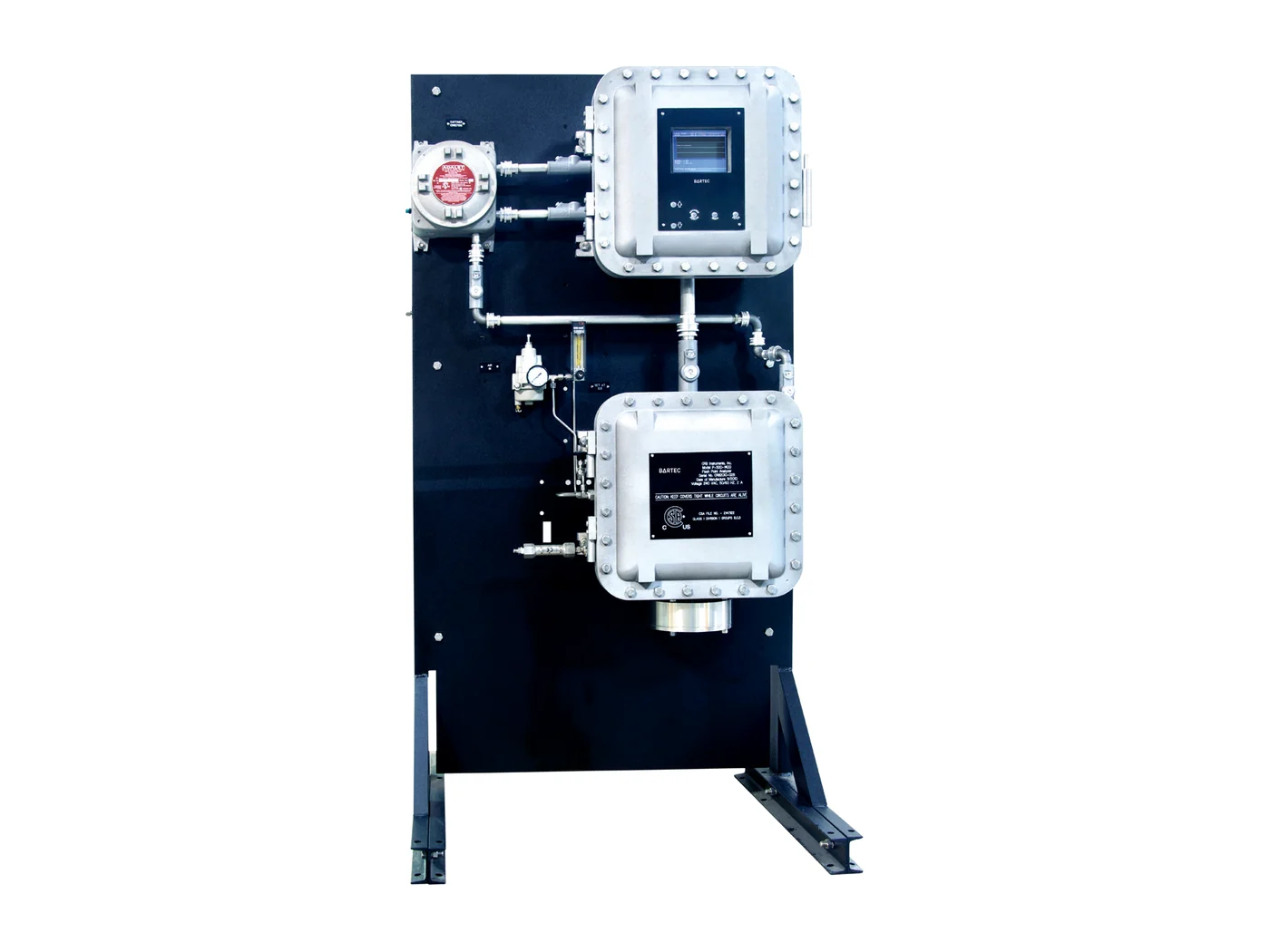
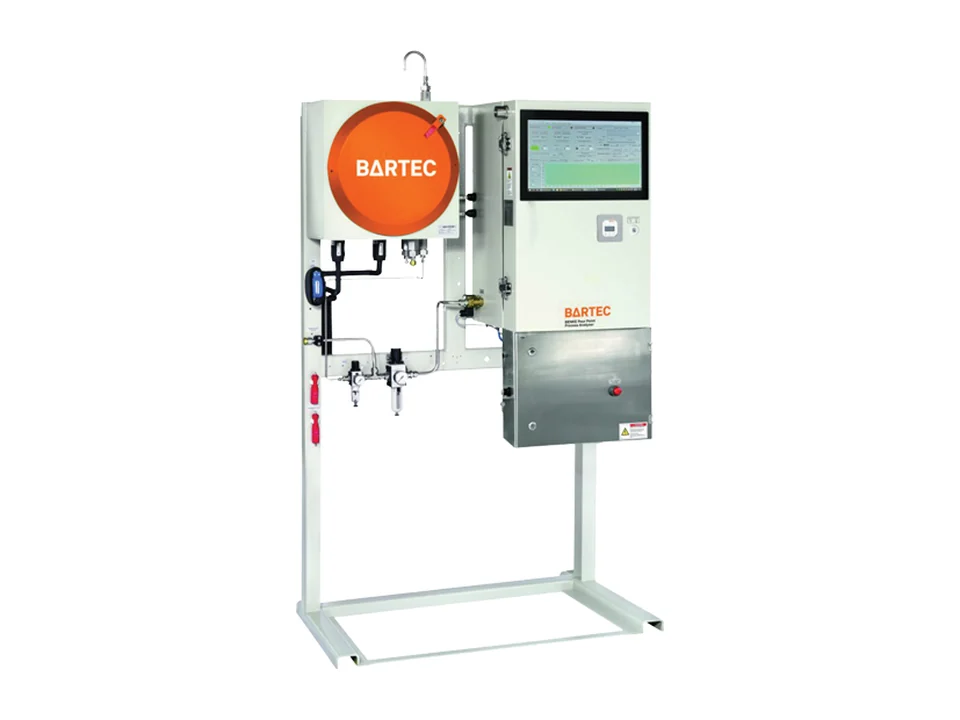
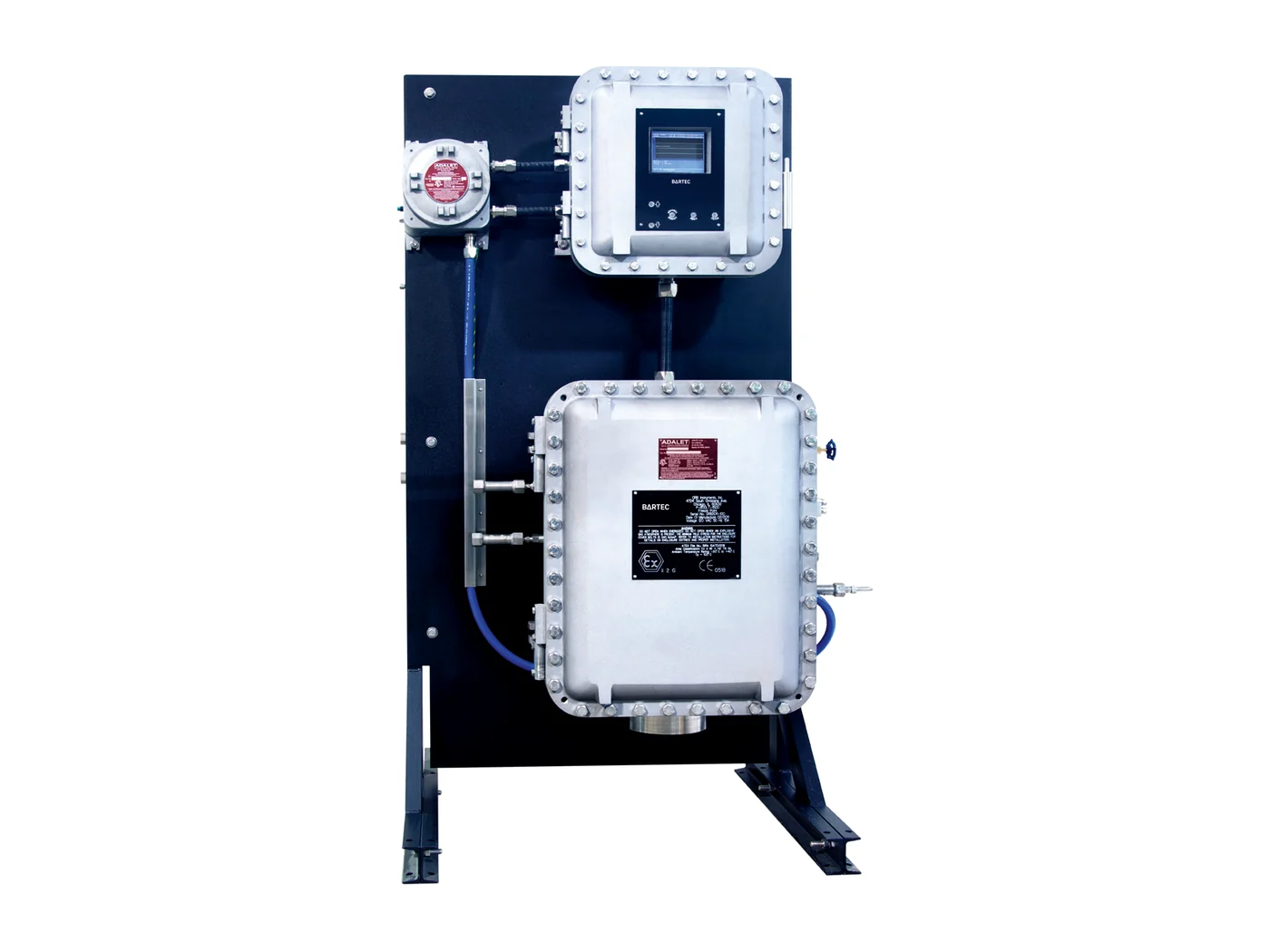
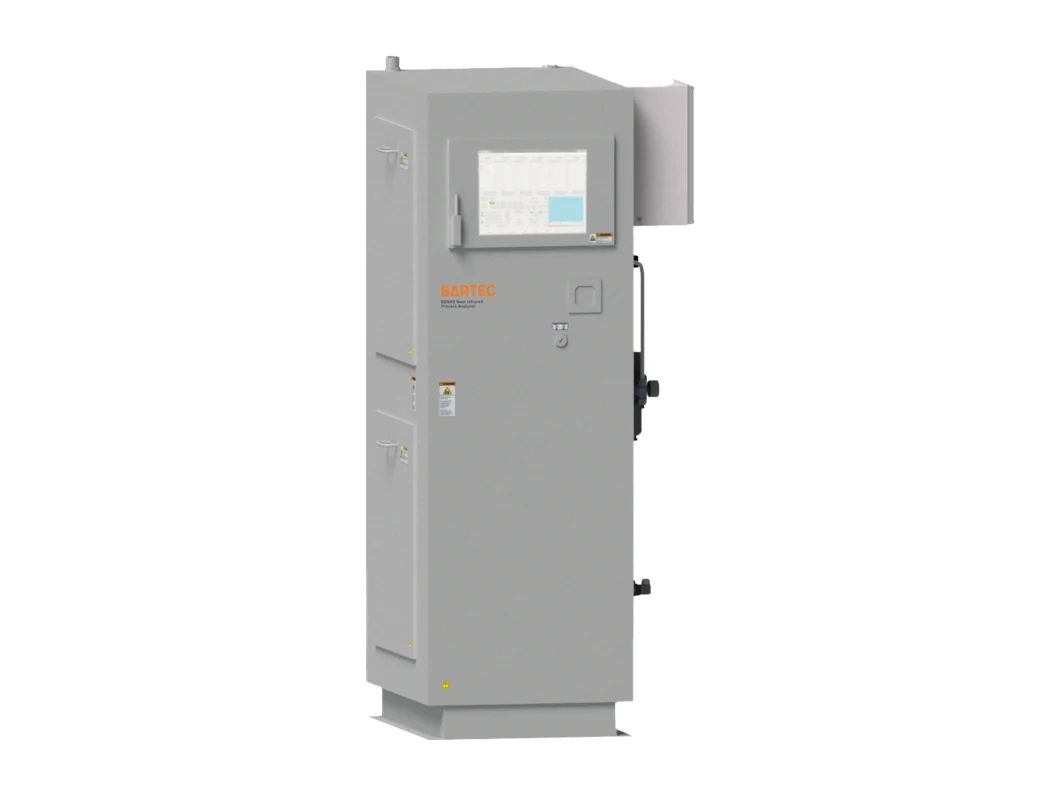
The NIR-4 is a near-infrared process analyser for the oil and gas industry. It records NIR absorption spectra of the process stream and uses them to predict compound-specific properties, for example RON, MON and aromatic content, with several properties determined simultaneously.
The analyser uses FT-NIR spectroscopy with a true dual beam flow-through cell. The cell contains a reference channel that compensates for drift, so that the measurement remains stable over time. The analyser is freely configurable with its control software, and the cycle time is typically below one minute.
Up to two sample streams and one validation stream can be connected. A typical sample flow is 20 l/h; the sample pressure should be 1 bar above the outlet pressure, with a maximum of 10 bar, and the sample temperature depends on the application up to 55 °C. Tube connections are typically compression fittings for 6, 12 or 18 mm tube.
The operator works on a 19-inch touch display running Windows 10 Enterprise LTSB. Data is transferred via Modbus RTU over RS-485, RS-422 or fibre optic, or via Modbus TCP over Ethernet using VDSL or fibre optic. Digital and analogue I/O, remote access and a remote maintenance interface are available. The unit requires 230 V AC ±10 %, single-phase, 50 Hz, and consumes approximately 450 W.
The analyser is housed in a fully temperature-controlled Ex p enclosure; ATEX and IECEx are listed. It operates at ambient temperatures from 5 to 40 °C and humidity from 5 to 80 % RH, non-corrosive, and can be stored from −20 to 60 °C. Overall dimensions are 855 × 1890 × 828 mm (W × H × D), and the weight is approximately 350 kg.
Options include a 6-port mechanical multiplexer and a 5-port optical multiplexer for multi-stream analysis, automated measuring cell cleaning, automated sampling of outliers, a manual sampling port, sample conditioning systems, an automated validation system and liquid sample recovery units.
Industries named for this analyser are oil and gas, chemical, pharmaceuticals, energy, manufacturing and logistics, hydrogen, and food and beverages. To prepare an offer, please send the properties to be measured, the number of sample streams, the sample conditions and the area classification of the installation site.
Identify the target gas, background gas and concentration units. State whether the sampling system is already installed or belongs in the enquiry.
For an installed instrument, copy the complete ordering code and its suffixes from the nameplate. Identify the part that will remain in service and the part that needs to be replaced. A photograph of the connection face or terminal markings helps resolve differences between versions that share the same housing.
For a new installation, describe what the instrument must measure or control and where the reading will be used. Give the normal operating conditions separately from short peaks. Include units with every numerical value. A drawing with the available space, orientation and access for removal gives the supplier a practical starting point.
Add the quantity for each position and identify any accessories that belong with it. Where a particular drawing, material certificate or calibration record is required, mention it with the line item. Submit the list with the destination country so that the response can cover the requested configuration and delivery.