Landis+Gyr
Surent G480
Flow
Water, gas & heat meters
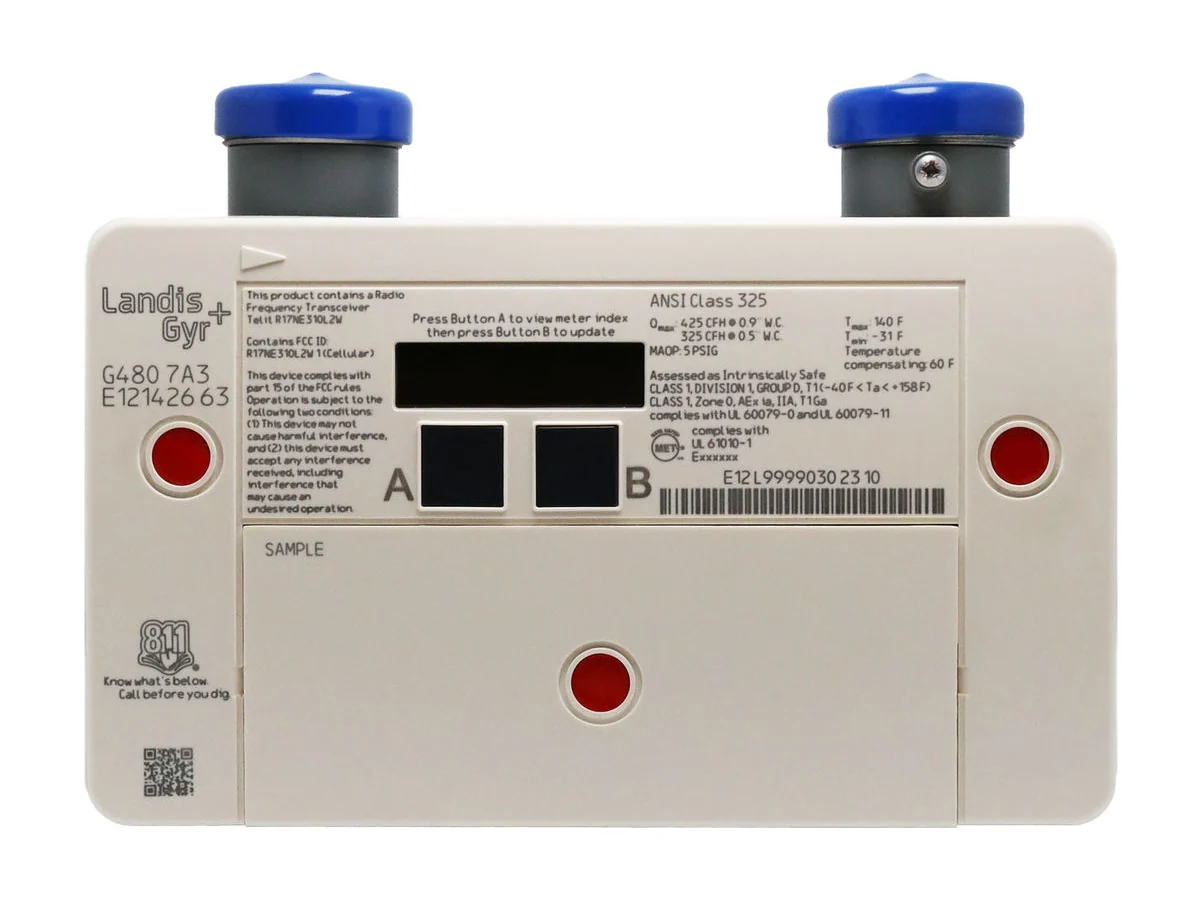
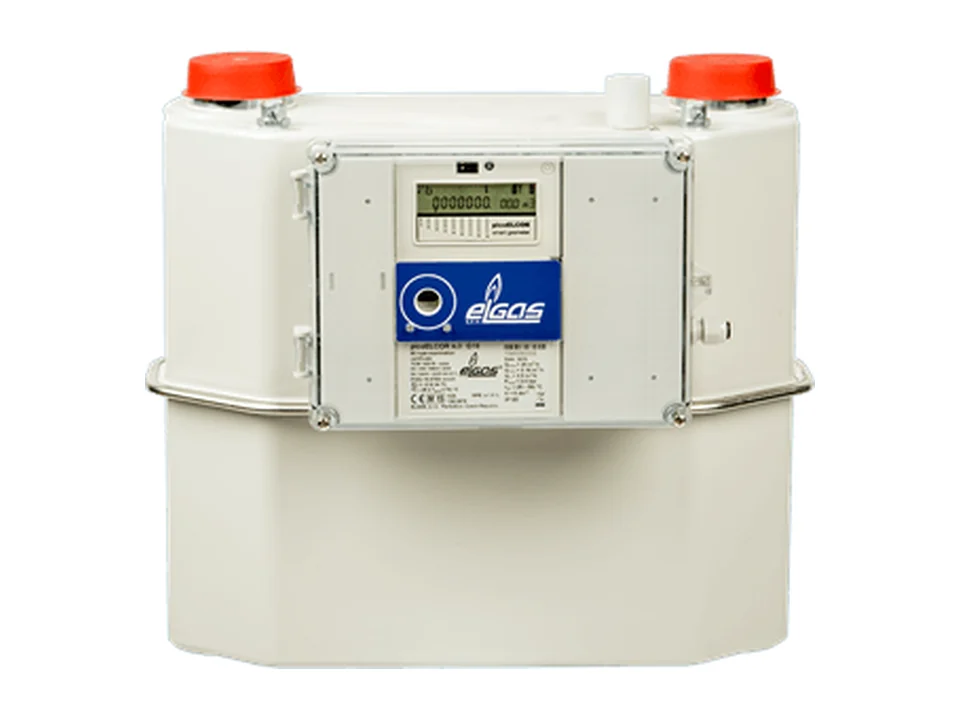
picoELCOR is a smart diaphragm gas meter that combines the traditional mechanical measurement of a diaphragm meter with an electronic index. Instead of only a mechanical register, it has electronics that convert the measured volume to corrected volume and send the data remotely, so readings are available without a site visit. The meter is intended for gas metering applications.
In a diaphragm meter, the gas fills and empties measuring chambers separated by flexible diaphragms, and each cycle corresponds to a defined volume; the count of cycles gives the volume that has passed at actual conditions. The picoELCOR records this volume electronically and calculates the corrected volume using measured pressure and temperature, with full PTZ volume conversion. The billed quantity is thus referred to base conditions rather than to the actual pressure and temperature in the meter.
Collected data are transferred remotely via an integrated GSM/GPRS modem, which also supports SMS; GSM/LTE communication is listed for the device. A pulse output is provided for connection of further equipment. Because the electronics are battery-powered, no mains supply is needed at the meter, and the battery life is up to 15 years.
Three sizes are available: G10, G16 and G25, which define the flow capacity of the meter. A newer variant, picoELCOR v.3, is also offered. The meter is designed for installation in Zone 1 hazardous areas.
The meter is approved under the Measuring Instruments Directive (MID, 2014/32/EU) and also refers to ARG 155/08 and UNI/TS 11291, which concern requirements for gas metering and remote reading of smart gas meters.
In summary, the meter offers high accuracy, full PTZ volume conversion, an integrated GSM/GPRS/SMS modem, a pulse output and a battery life of up to 15 years in sizes G10 to G25. Please tell us the required size, the gas pressure and the communication network to be used, and we will confirm the configuration.
State the minimum, normal and peak flow with units. Pipe bore, fluid properties and the available straight run affect the choice of measuring principle.
For an installed instrument, copy the complete ordering code and its suffixes from the nameplate. Identify the part that will remain in service and the part that needs to be replaced. A photograph of the connection face or terminal markings helps resolve differences between versions that share the same housing.
For a new installation, describe what the instrument must measure or control and where the reading will be used. Give the normal operating conditions separately from short peaks. Include units with every numerical value. A drawing with the available space, orientation and access for removal gives the supplier a practical starting point.
Add the quantity for each position and identify any accessories that belong with it. Where a particular drawing, material certificate or calibration record is required, mention it with the line item. Submit the list with the destination country so that the response can cover the requested configuration and delivery.