Bürkert Fluid Control Systems
Type 8203
Liquid analysis
pH & ORP electrodes
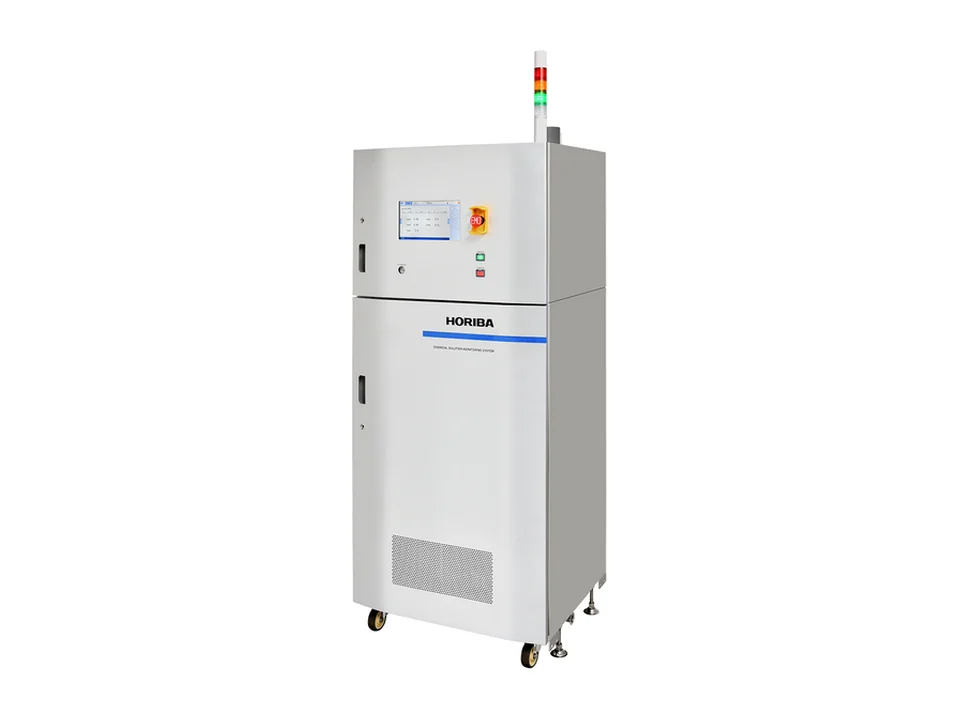
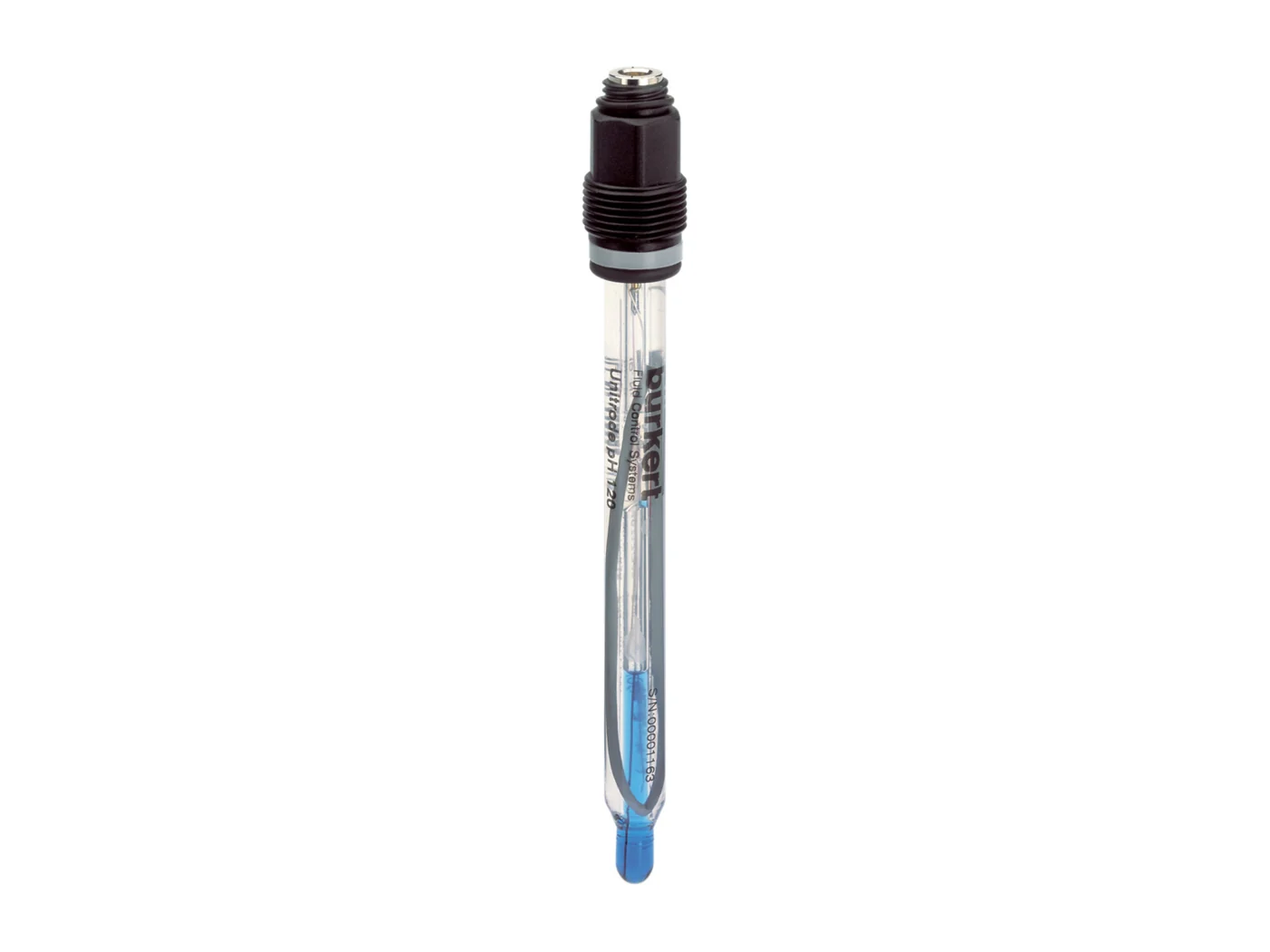
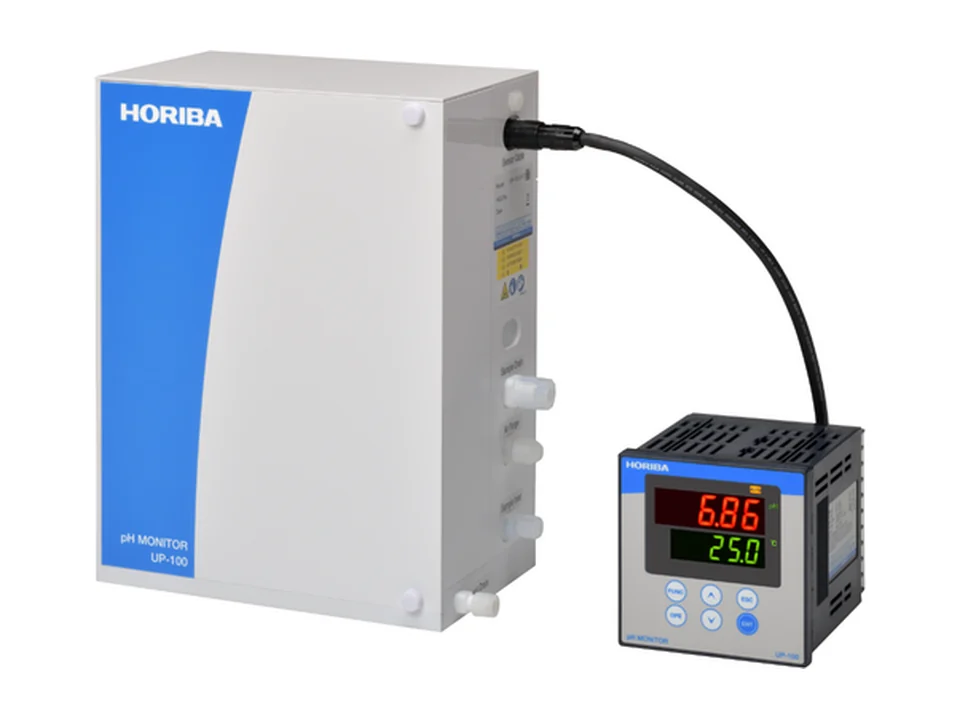
The UP-100 is a micro-volume pH monitor that uses a glass electrode for continuous pH monitoring in processes where only trace amounts of sample can be taken. It is aimed at semiconductor cleaning and etching processes, and is also listed for food manufacturing, pharmaceutical production and bioprocessing.
Each measurement takes a sample volume of just 500 µL, which corresponds to a consumption of up to 30 mL per hour, and data can be updated as often as once per minute; the measurement interval is selectable from 1 to 11 minutes. The system consists of a controller, a sensor unit and an electrode unit. Both pH and electrode voltage are measured, and an automatic calibration function keeps the measurement on track. Operation is described as maintenance-free, with reagent replacement every six months.
The measurable range is pH 0.00 to 14.00 with a repeatability of 0.10 pH and a stability of 0.10 pH per hour. Display resolution is 0.01 pH, 0.1 mV for electrode potential and 0.1 °C for temperature. Permitted sample temperature is 18 to 60 °C and sample pressure 0.0 to 0.2 MPa; the unit is intended for ambient conditions of 20 to 40 °C and 40 to 70 % relative humidity. Two calibration models are available: 1-point calibration at pH 4 or 2-point calibration at pH 4 and pH 7.
Results are output as a 4–20 mA current signal and over RS-485. An open-collector output (maximum 5 mA when ON, 30 VDC when OFF) and a photocoupler-isolated 12–30 VDC voltage input are provided, along with serial input and output. The system is powered from 24 VDC ±10 % and consumes approximately 12 W.
Wetted and structural materials include PVC, PTFE, glass, ETFE, PEEK, olefinic resin, THV, PFA, Kalrez 6190 and 4079 elastomers and Pharmed BPT tubing. The controller measures 96 × 96 × 135 mm and weighs 0.45 kg; the sensor unit measures 200 × 269 × 118 mm and weighs 2.6 kg, and the electrode unit 0.2 kg. The connecting cable is 5 m or 10 m long. The monitor conforms to RoHS, REACH and EMC requirements.
Please specify the calibration model (1-point or 2-point), cable length and details of the sample when enquiring.
UP-100
Record the sample temperature, expected concentration and how the probe is mounted. Identify the mating transmitter when replacing a sensor.
For an installed instrument, copy the complete ordering code and its suffixes from the nameplate. Identify the part that will remain in service and the part that needs to be replaced. A photograph of the connection face or terminal markings helps resolve differences between versions that share the same housing.
For a new installation, describe what the instrument must measure or control and where the reading will be used. Give the normal operating conditions separately from short peaks. Include units with every numerical value. A drawing with the available space, orientation and access for removal gives the supplier a practical starting point.
Add the quantity for each position and identify any accessories that belong with it. Where a particular drawing, material certificate or calibration record is required, mention it with the line item. Submit the list with the destination country so that the response can cover the requested configuration and delivery.