Bürkert Fluid Control Systems
Type 8203
Liquid analysis
Water quality analysers
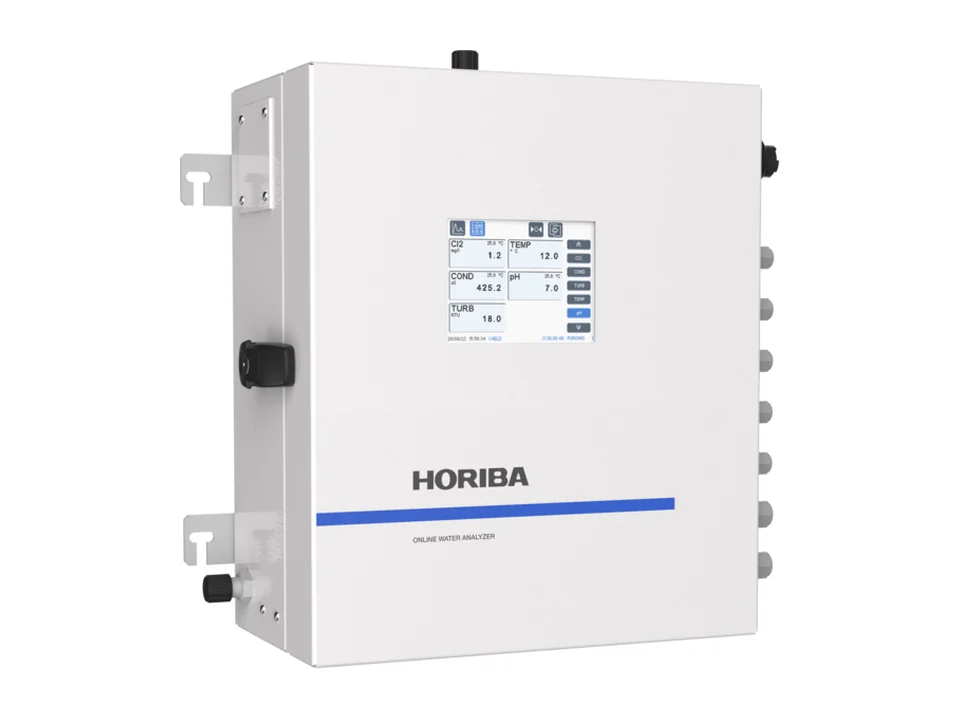
The UV300-5D is a pre-defined configuration of the UV300 online analyser dedicated to drinking water monitoring. It measures five parameters simultaneously: total residual chlorine, turbidity, pH, conductivity and temperature. The base UV300 series allows further parameters such as UV254, NO3, colour and NH4 to be added as modules, and the UV400 covers a higher total number of parameters.
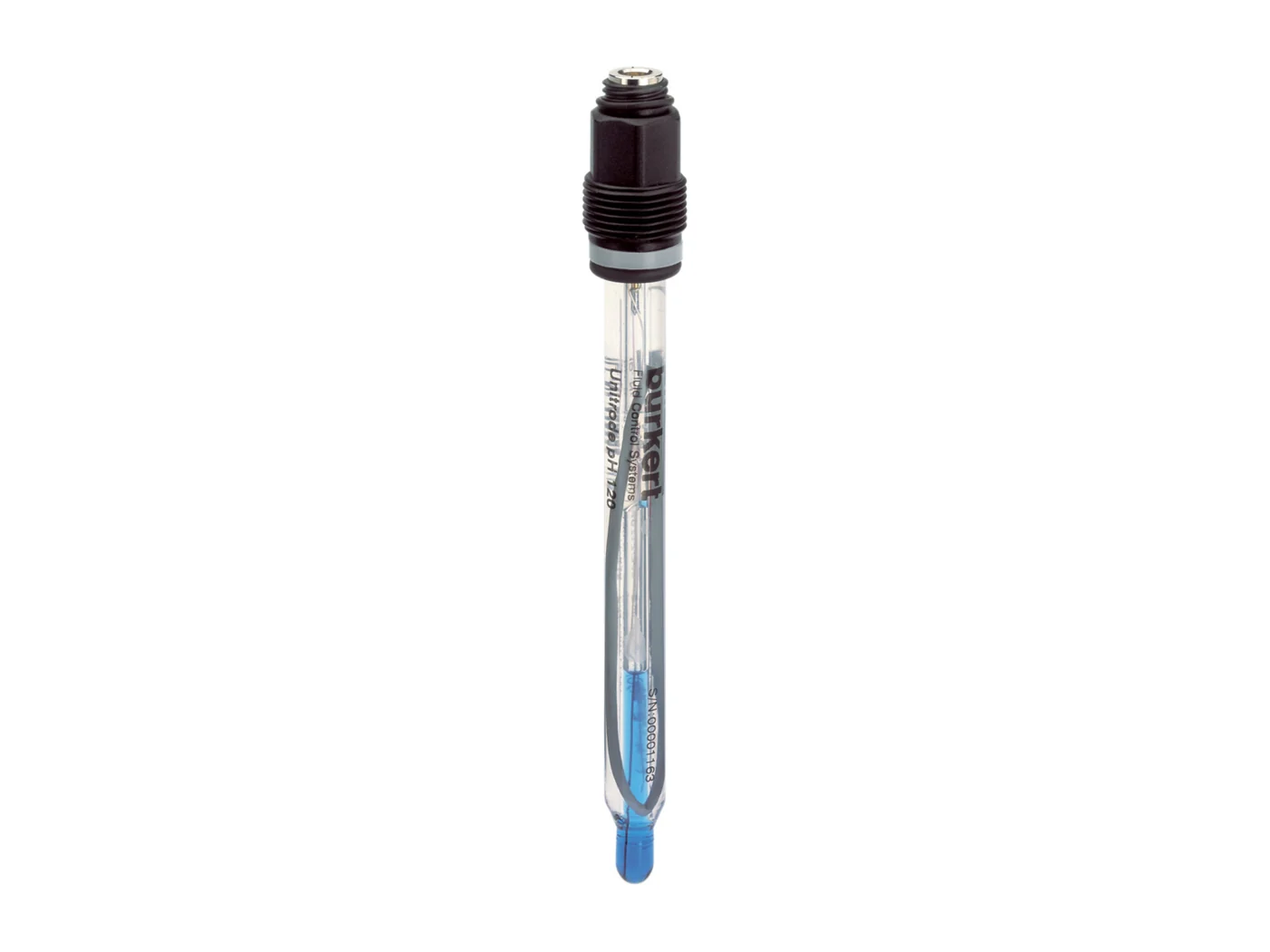
Each parameter uses its own measuring method. Total residual chlorine is determined by the colorimetric DPD method with a multi-wavelength LED source. Turbidity is measured nephelometrically with a laser diode in accordance with ISO 7027, and pH and conductivity with specific electrodes. The patented flow cell is designed to be free of clogging, and an automatic cleaning system with 5 % sulphuric acid solution, together with an auto-zero function, provides long-term stability and prevents drift.
Ranges are 0–5 mg/l for total residual chlorine, 0–10 NTU for turbidity, 0–14 pH, 0–2000 µS for conductivity and 0–80 °C for temperature; a dissolved oxygen module for 0–25 mg/l O2 is optional. Turbidity, pH and conductivity are measured in 5 seconds and continuously; chlorine takes 2 minutes, with an interval selectable from 2 to 720 minutes. The sample is supplied at 0.05 to 1 l/min, 0 to 4 bar and 0 to 50 °C. Reagent consumption is low: 0.3 ml of chlorine reagent per measurement and about 220 ml of cleaning solution per day.
The analyser has a colour TFT LCD screen of 320 × 240 pixels with LED backlight and stores 5000 lines of measurements. Communication is via RS-232 with Modbus or via an HTTP/web interface for SCADA integration. Options are a 4–20 mA output module (MO4-20), a relay module (MRELAY), Wi-Fi (WIFI400), Ethernet (ETHER400), a phone modem (MTI133) and a GSM modem, as well as a multiplexing system for up to six streams that controls external electric valves or pumps. Power supply is 90–264 V AC, 50/60 Hz, 40 VA, or 12 V DC, 3 A maximum.
The analyser is wall-mounted with brackets included, has IP65 protection, measures 420 × 360 × 200 mm and weighs 14 kg. Wetted materials are quartz, polypropylene, polyethylene, FPM (Viton) and PMMA, with an epoxy-coated stainless steel enclosure. It conforms to EN 61010-1, EN 61326, ISO 7027 and US-EPA 330.5 and complies with CE, RoHS and REACH.
Applications are drinking water utilities, municipal waste water and industrial process water monitoring.
Please state the number of sample streams, whether the dissolved oxygen module is needed and the required outputs.
MO4-20, MRELAY, WIFI400, ETHER400, MTI133, GSM
Record the sample temperature, expected concentration and how the probe is mounted. Identify the mating transmitter when replacing a sensor.
For an installed instrument, copy the complete ordering code and its suffixes from the nameplate. Identify the part that will remain in service and the part that needs to be replaced. A photograph of the connection face or terminal markings helps resolve differences between versions that share the same housing.
For a new installation, describe what the instrument must measure or control and where the reading will be used. Give the normal operating conditions separately from short peaks. Include units with every numerical value. A drawing with the available space, orientation and access for removal gives the supplier a practical starting point.
Add the quantity for each position and identify any accessories that belong with it. Where a particular drawing, material certificate or calibration record is required, mention it with the line item. Submit the list with the destination country so that the response can cover the requested configuration and delivery.