Landis+Gyr
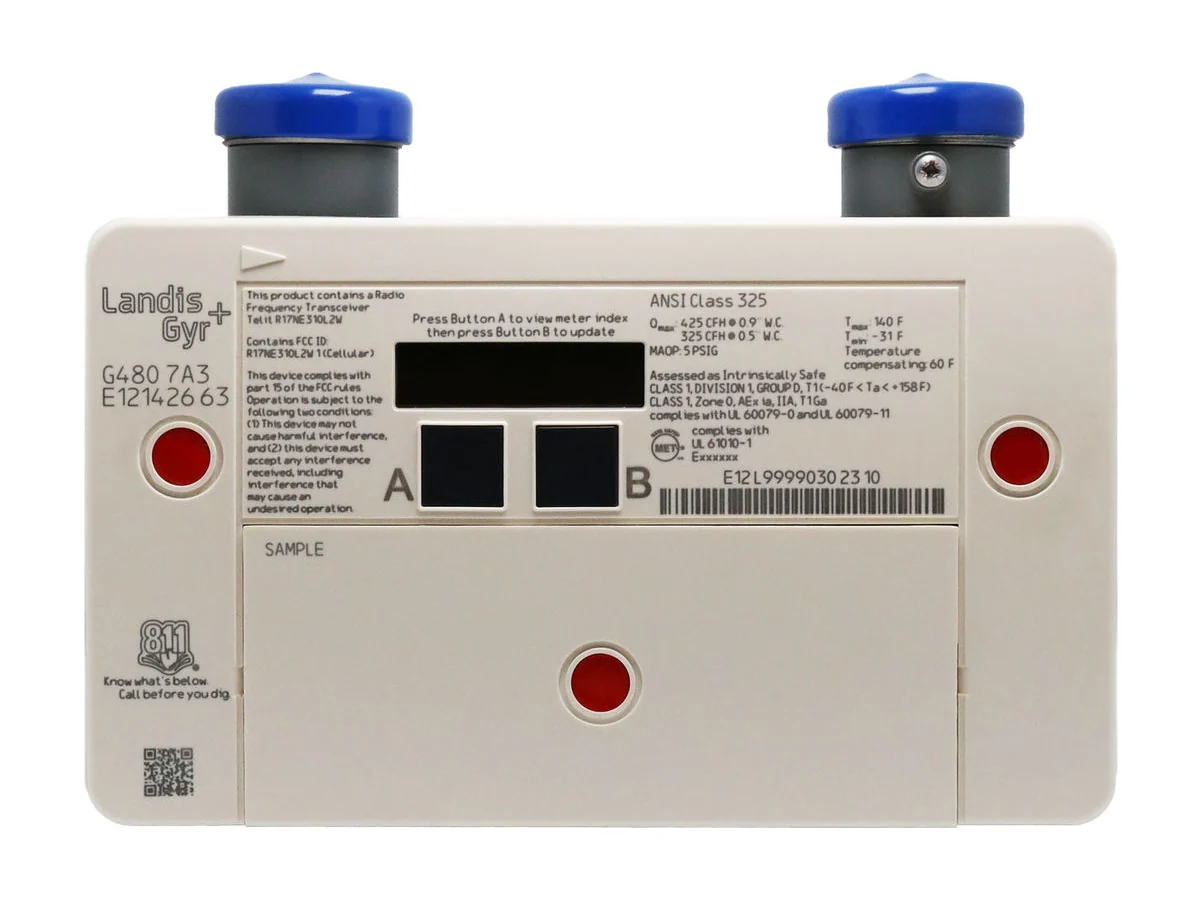
Surent G480
Flow
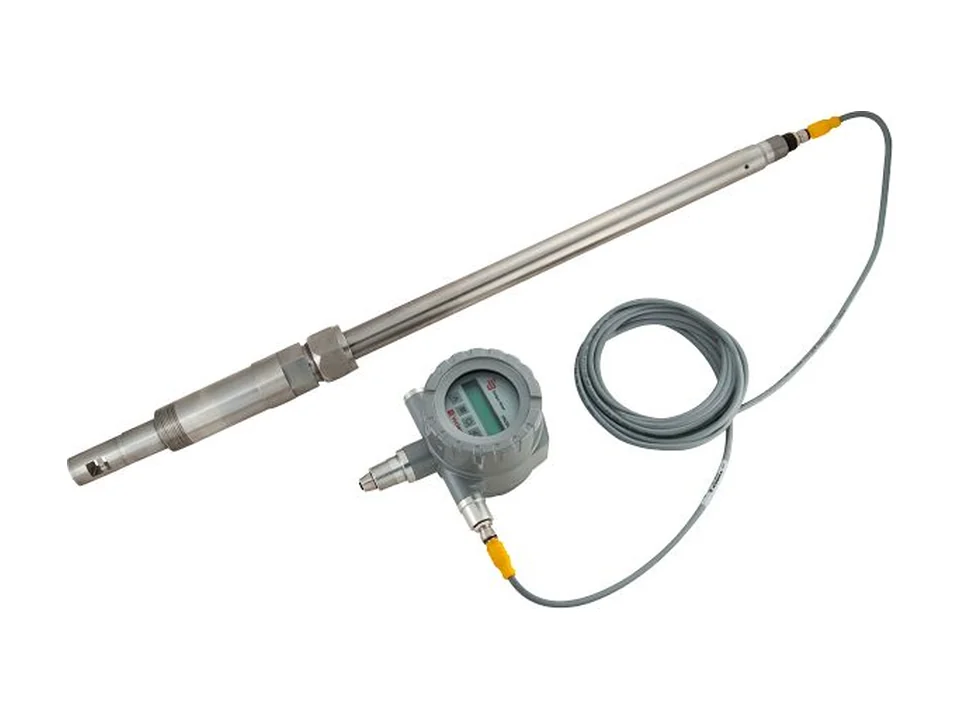
Vortex flowmeters
The VN2000 is a heavy-duty vortex flow meter designed for hot tap insertion into existing pipelines. It measures the volumetric or mass flow rate of steam, gases and liquids, and can also be used for heat flow measurement. Because it is inserted through a hot tap connection, the meter can be installed in pressurised lines with a removable insertion and extraction tool, which suits high-pressure applications.
Measurement is based on the vortex principle: a bluff body in the flow sheds vortices at a frequency proportional to flow velocity, and the sensor counts this frequency. The meter has no moving parts and is described as virtually maintenance-free. There are no internal O-rings or seals touching the process fluid.
The VN2000 is used in pipes from 50 to 900 mm (2 to 36 inches). The flow range is 49 to 593,174 l/min (13 to 156,700 gpm). For liquids the velocity range is 0.402 to 9 m/s; for gases it extends up to 91 m/s (300 ft/s), with a minimum velocity given by the cube root of 140/ρ ft/s. The meter operates in the Reynolds number range of 10,000 to 7,000,000, depending on fluid density. Volumetric flow accuracy is ±1.0 % of reading for liquids, gas and steam, mass or heat flow accuracy is also ±1.0 % of reading, and repeatability is ±0.25 % of reading.
The meter is rated for fluid temperatures from −120 to 204 °C and pressures up to 68.9 bar (1,000 psi). Wetted parts are made of stainless steel 304L. The hot tap connection is 1-1/2 inch, either NPT or ASME/ANSI class 150 or 300 flanges. The sealing assembly consists of two ethylene propylene O-rings, and a removable extractor is available as an option. For correct measurement a straight run of 10 pipe diameters upstream and 5 diameters downstream is required, with one 90° elbow before the meter. Modbus and BACnet communication protocols are listed for the meter.
Typical media are liquids, compressed air and saturated steam. Fields of use listed for the meter are HVAC systems, property operations and wastewater treatment. Please state the pipe size, medium, flow range, temperature and pressure in your enquiry so that the meter can be configured.
State the minimum, normal and peak flow with units. Pipe bore, fluid properties and the available straight run affect the choice of measuring principle.
For an installed instrument, copy the complete ordering code and its suffixes from the nameplate. Identify the part that will remain in service and the part that needs to be replaced. A photograph of the connection face or terminal markings helps resolve differences between versions that share the same housing.
For a new installation, describe what the instrument must measure or control and where the reading will be used. Give the normal operating conditions separately from short peaks. Include units with every numerical value. A drawing with the available space, orientation and access for removal gives the supplier a practical starting point.
Add the quantity for each position and identify any accessories that belong with it. Where a particular drawing, material certificate or calibration record is required, mention it with the line item. Submit the list with the destination country so that the response can cover the requested configuration and delivery.