ELGAS s.r.o.
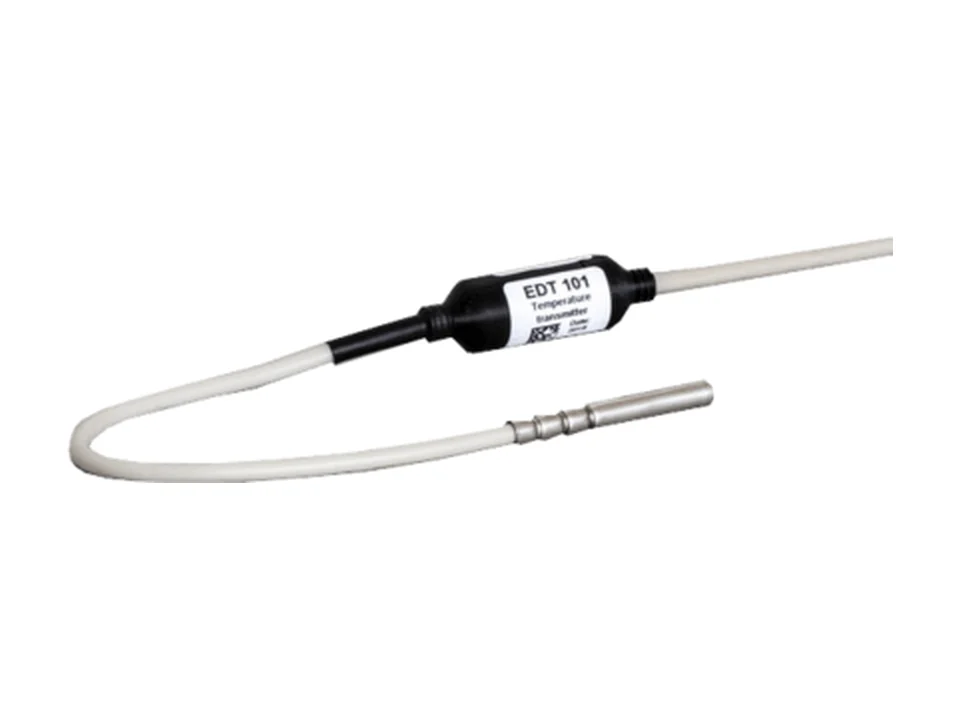
EDT 101
Temperature
Pyrometers & thermal cameras
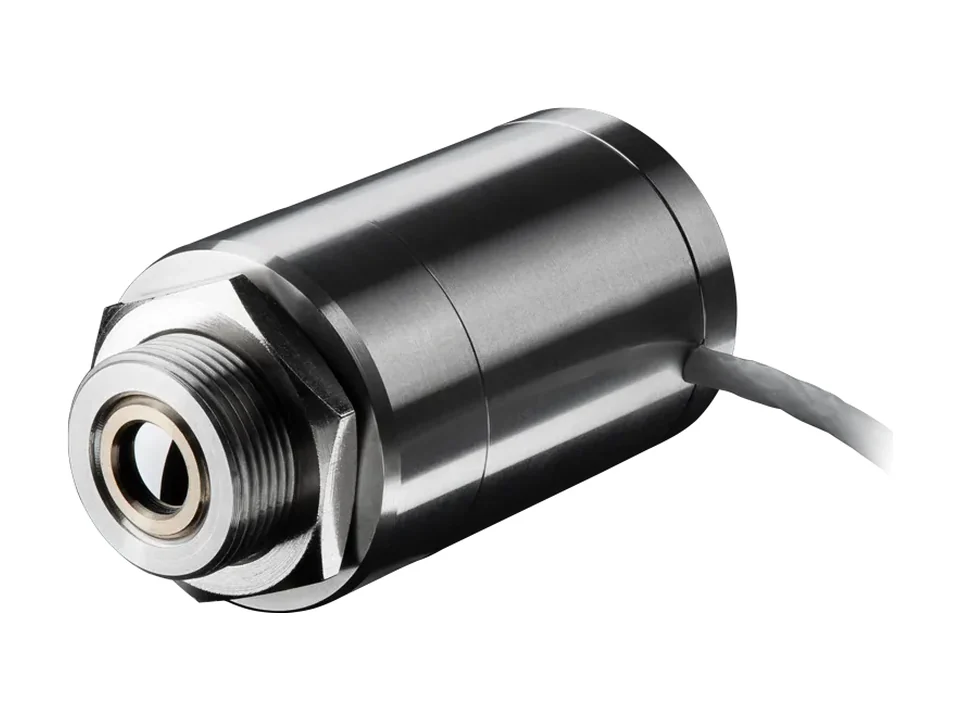
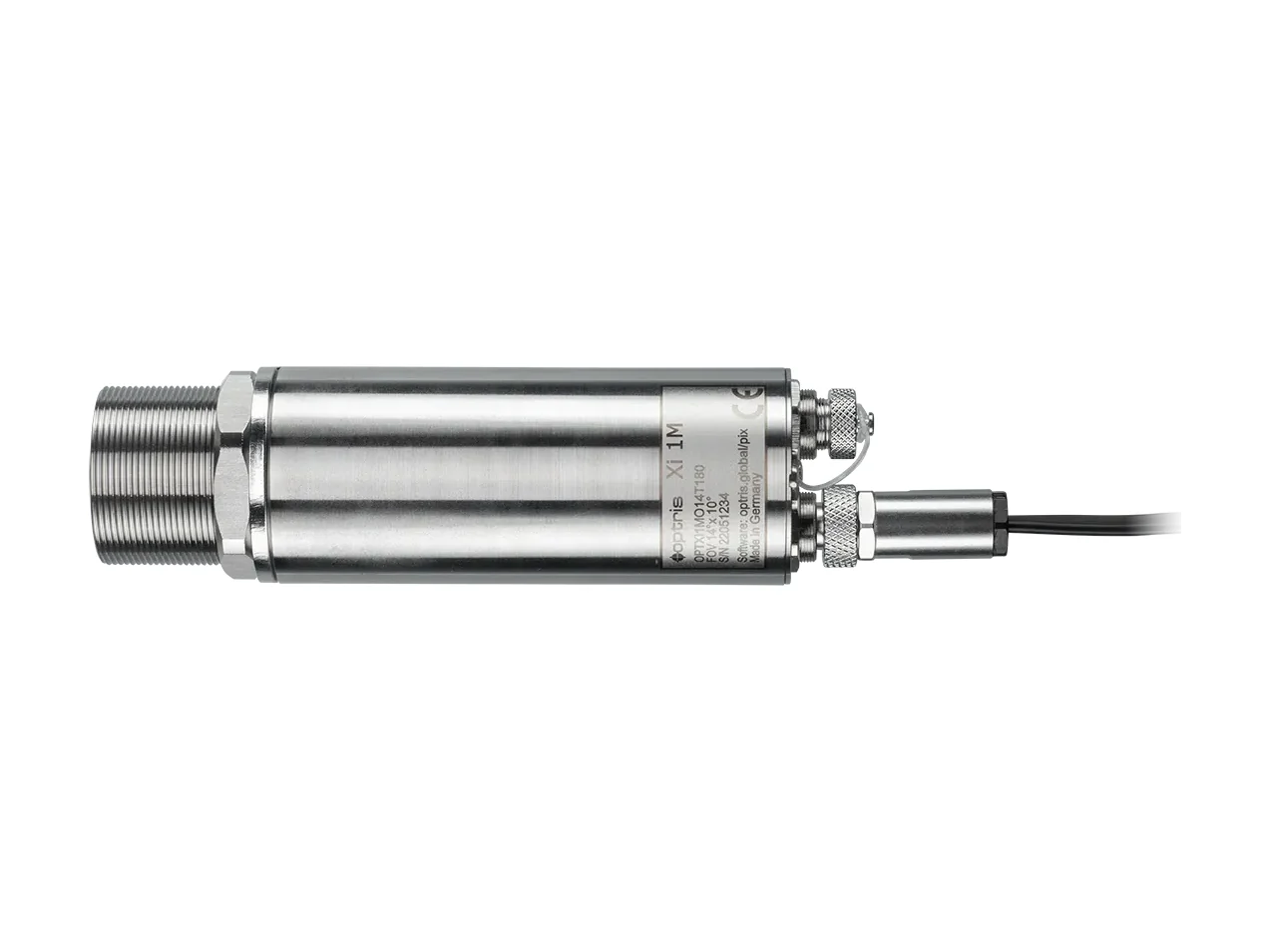
The Xi 1M ETH is a compact industrial thermal camera working in the short-wavelength infrared (SWIR) range. It is designed for non-contact temperature measurement of hot metals and alloys. Applications include metal casting and forging, glass and plastics manufacturing, automotive and electronics production, semiconductors and solar, battery monitoring and fire detection, and condition monitoring in electric utilities.
The camera uses a CMOS detector with 396 × 300 pixels and a 15 µm pixel pitch, sensitive in the spectral range from 0.85 to 1.1 µm. It measures object temperatures from 450 to 1800 °C. Accuracy is ±1 % of reading below 1400 °C and ±2 % below 1600 °C; thermal sensitivity is below 2 K up to 900 °C and below 4 K up to 1400 °C.
Full-resolution images are captured at 20 Hz, the same rate applies in subframe mode, and a line scan mode reaches 500 Hz. The motorised focus can be adjusted remotely. Lenses with fields of view from 7° to 50° are available.
The camera can work autonomously, with analogue and alarm outputs, or with a computer. Interfaces are Ethernet, USB 2.0 and RS-485, and the unit can be powered from 8–30 V DC, via USB or via Power over Ethernet; consumption is at most 2.5 W. With interface kits, the camera communicates via Modbus TCP, PROFINET and EtherNet/IP. Industrial process interface (PIF) modules add further inputs and outputs. Configuration is done with the supplied software.
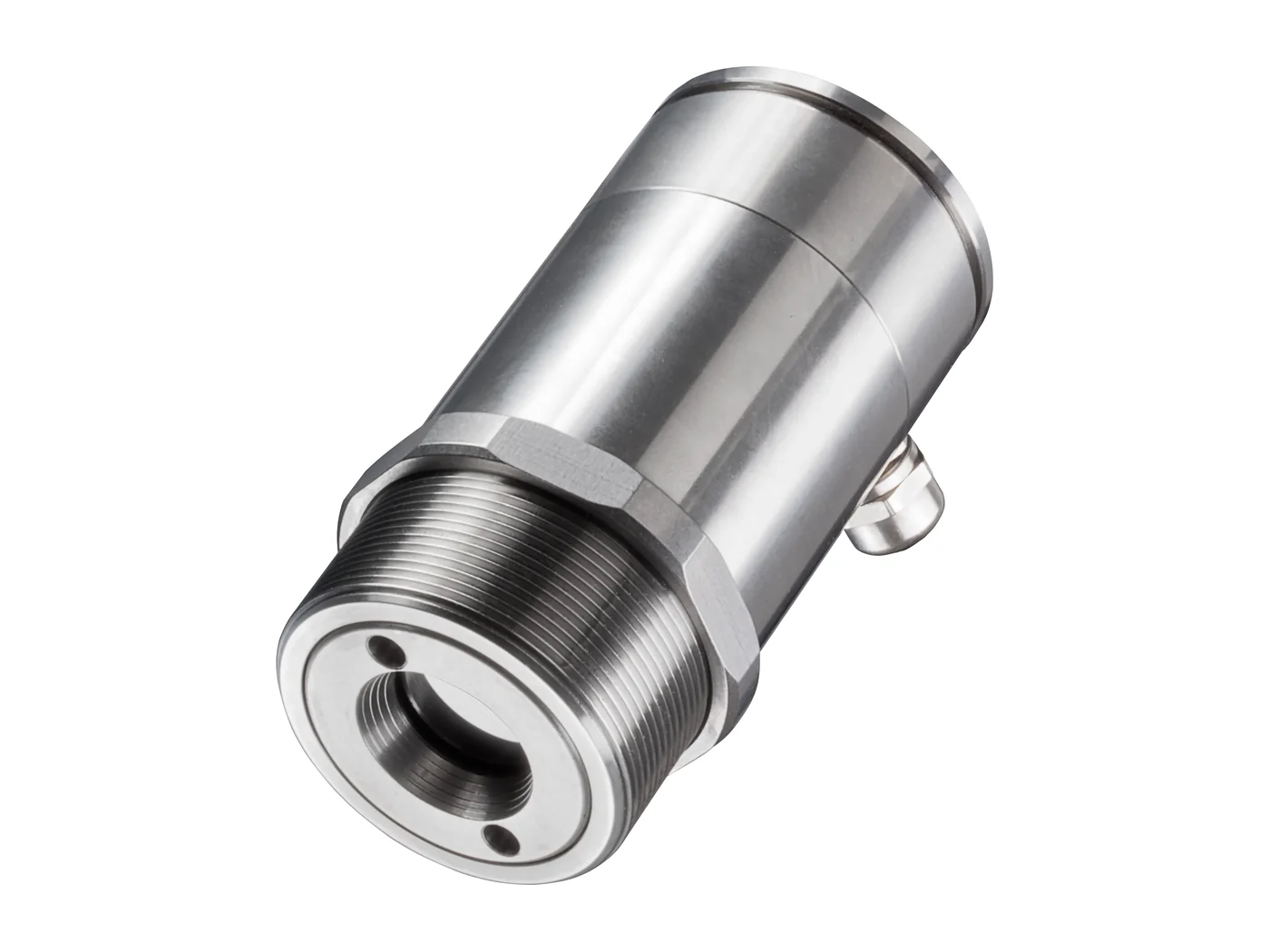
The stainless steel housing measures Ø 36 × 112–127 mm, weighs 270 g and is rated IP67 / NEMA 4. Ambient operating temperature is 5 to 50 °C; for hotter locations a water-cooled housing, a laminar air purge and an outdoor protective housing are available, as well as mounting brackets and a 1/4-20 UNC tripod thread. The camera is tested for shock and vibration to IEC 60068-2-6, -27 and -64 and complies with CE, UKCA and RoHS.
Please send the object temperature range, measuring distance, target size and required interface so that we can propose the right lens and accessories.
OPTXI1MO50T180, OPTXI1MO7SFT180, OPTXI1MO7CFT180, OPTXI1MO14T180, OPTXI1MO28T180
Match the sensing element, insertion length and wiring to the existing input. Separate the process temperature from the ambient temperature at the connection head.
For an installed instrument, copy the complete ordering code and its suffixes from the nameplate. Identify the part that will remain in service and the part that needs to be replaced. A photograph of the connection face or terminal markings helps resolve differences between versions that share the same housing.
For a new installation, describe what the instrument must measure or control and where the reading will be used. Give the normal operating conditions separately from short peaks. Include units with every numerical value. A drawing with the available space, orientation and access for removal gives the supplier a practical starting point.
Add the quantity for each position and identify any accessories that belong with it. Where a particular drawing, material certificate or calibration record is required, mention it with the line item. Submit the list with the destination country so that the response can cover the requested configuration and delivery.