Bürkert Fluid Control Systems
Type 8203
Liquid analysis
Conductivity & resistivity sensors
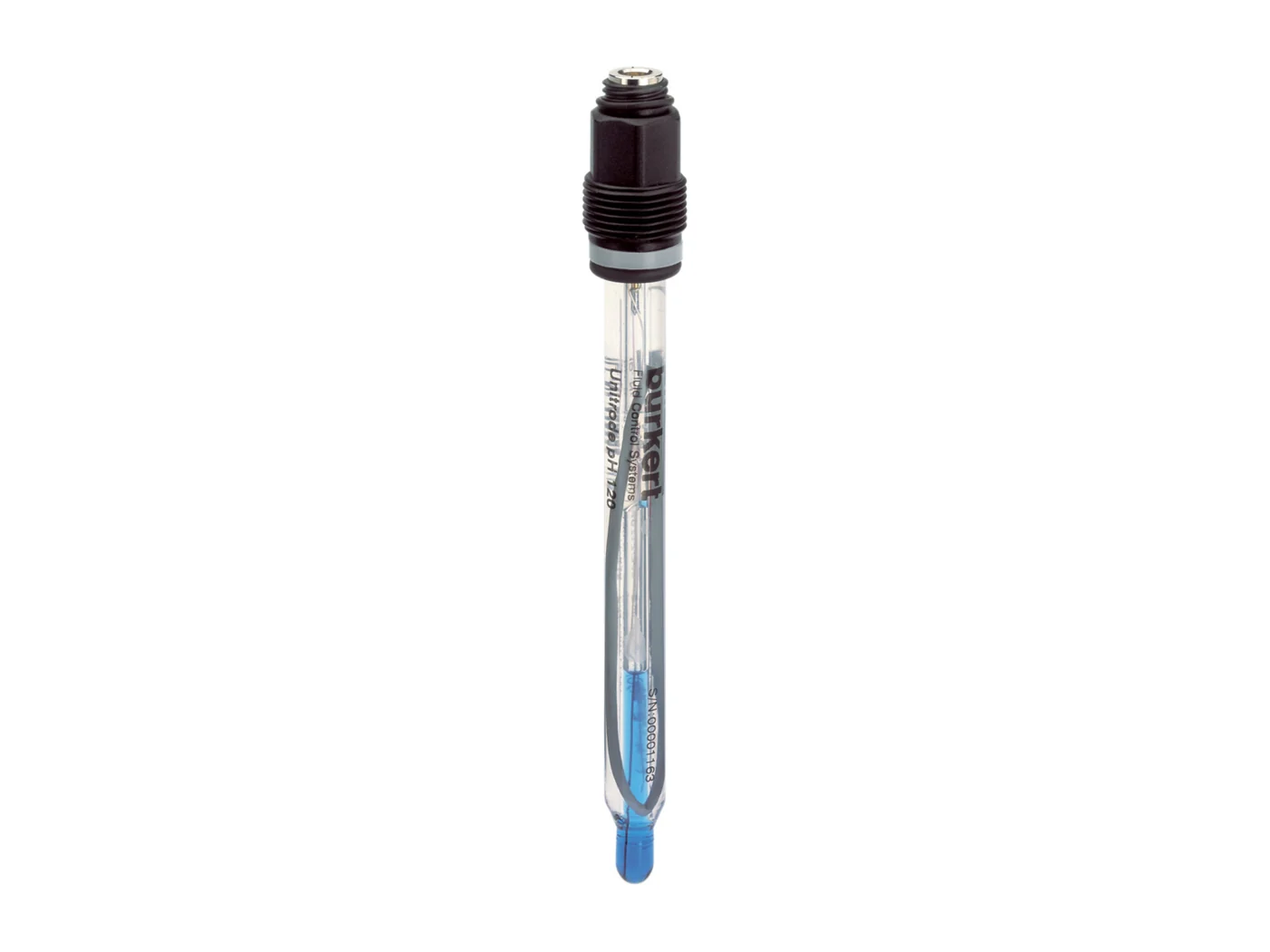
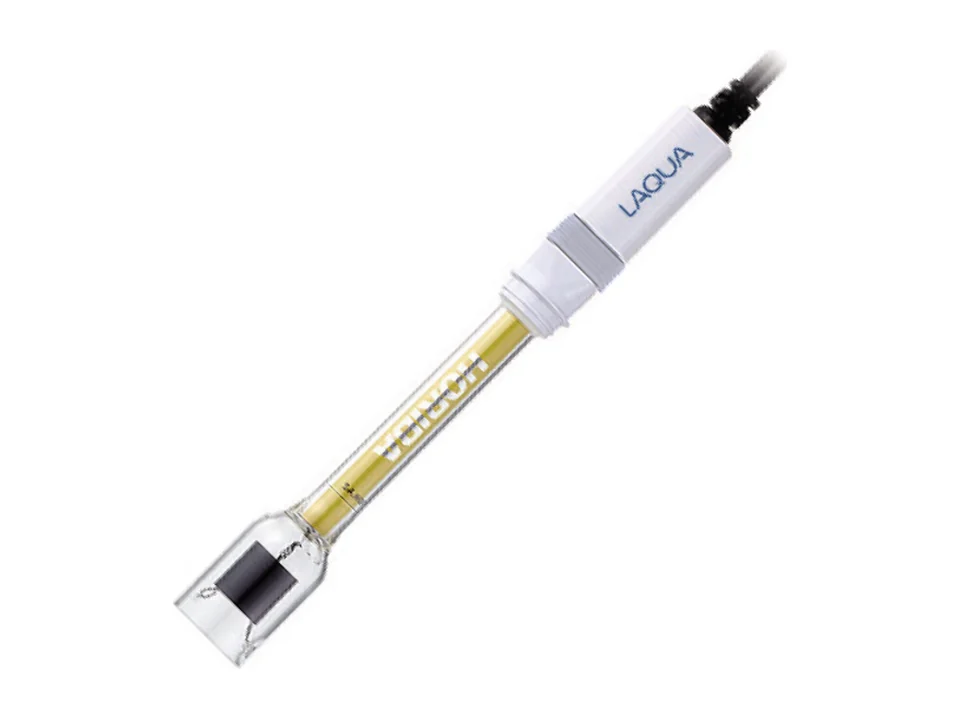
The 3551-10D is a submersible conductivity cell designed for measuring low-conductivity water, such as deionised, distilled and pure water. It has an integrated temperature sensor, so the connected meter can measure conductivity and temperature with one cell.
The cell constant is 0.1 cm⁻¹. A low cell constant is used for samples with low conductivity, and with this constant the measuring range of the 3551-10D is 0.1 µS/cm to 10 mS/cm. The electrodes are made of platinum coated with platinum black and are mounted in a glass body.
The cell is used at sample temperatures from 0 to 60 °C. A sample volume of 50 ml is required. The probe is 175 mm long and 23 mm in diameter, and it is connected to the meter with a 1-metre cable fitted with a BNC connector for the conductivity signal and a phono jack for the temperature sensor.
The cell complies with RoHS requirements according to EN IEC 63000 and BS EN IEC 63000.
The 3551-10D is part of a series of conductivity cells that includes submersible types and flow types. The 3551-10D itself is the submersible type with a 0.1 cm⁻¹ constant, designed specifically for low-conductivity water; flow-type cells are offered as other models in the series.
The listed fields of application are drinking water utilities, semiconductor manufacturing processes and research and testing laboratories, where pure or deionised water has to be checked for its conductivity.
When choosing between cells, the expected conductivity of the sample is the main criterion: the 3551-10D is intended for deionised, distilled and pure water, with a lower range limit of 0.1 µS/cm.
To request a quotation, please state the number of cells and the meter to which they will be connected.
3551-10D
Record the sample temperature, expected concentration and how the probe is mounted. Identify the mating transmitter when replacing a sensor.
For an installed instrument, copy the complete ordering code and its suffixes from the nameplate. Identify the part that will remain in service and the part that needs to be replaced. A photograph of the connection face or terminal markings helps resolve differences between versions that share the same housing.
For a new installation, describe what the instrument must measure or control and where the reading will be used. Give the normal operating conditions separately from short peaks. Include units with every numerical value. A drawing with the available space, orientation and access for removal gives the supplier a practical starting point.
Add the quantity for each position and identify any accessories that belong with it. Where a particular drawing, material certificate or calibration record is required, mention it with the line item. Submit the list with the destination country so that the response can cover the requested configuration and delivery.