Bürkert Fluid Control Systems
Type 8203
Liquid analysis
Water quality analysers
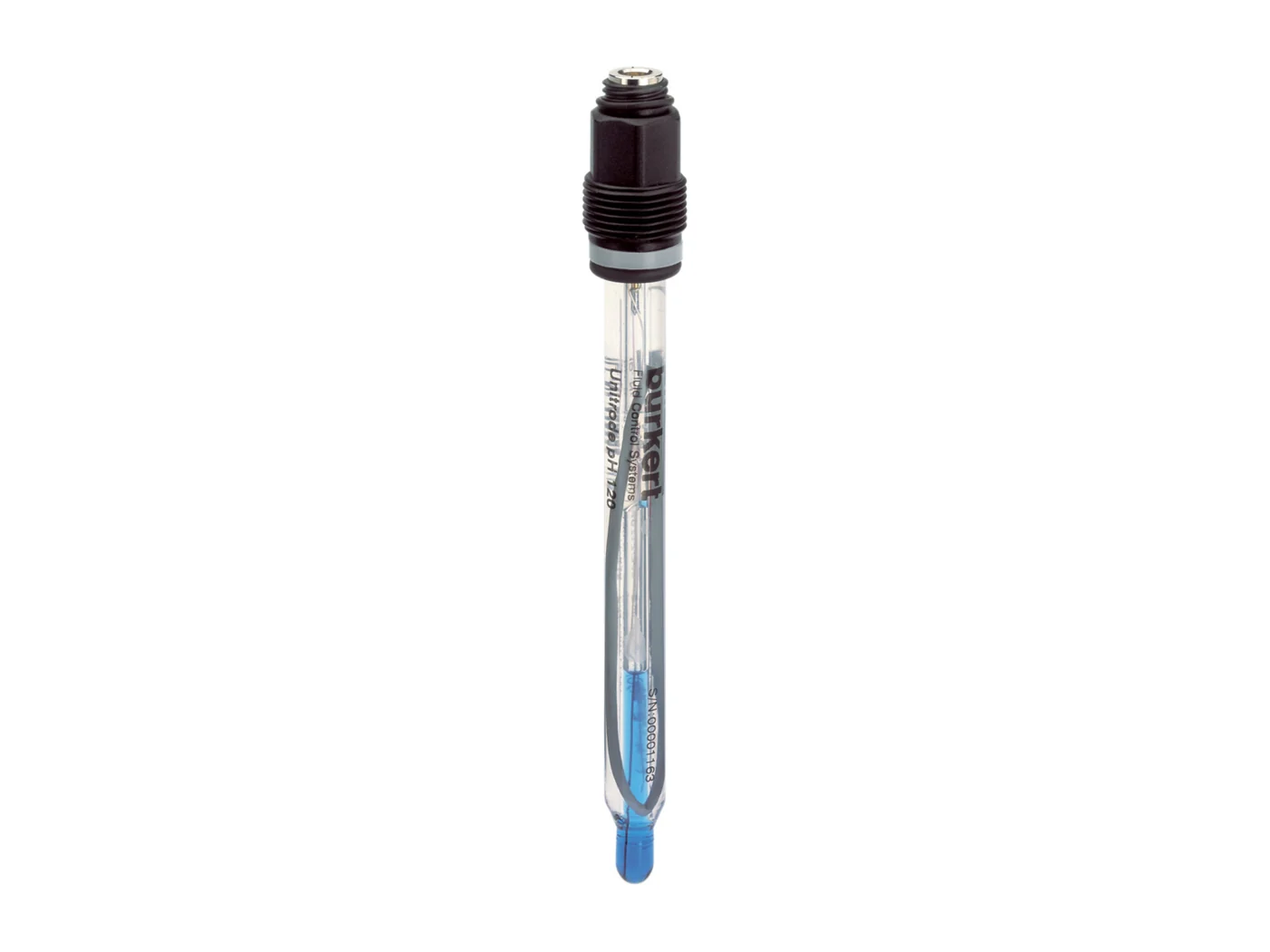
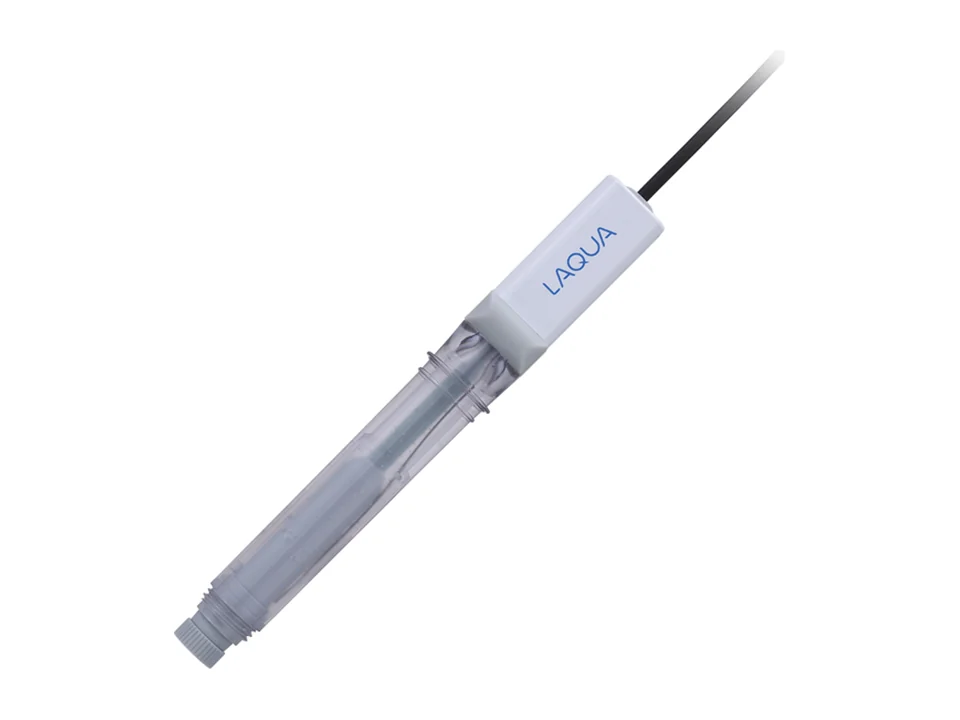
The 6583S-10C is a combination ion-selective electrode (ISE) for measuring the concentration of calcium ions (Ca²⁺) in liquid samples. As a combination electrode it contains both the calcium-sensitive measuring element and the reference system in one body, so only a single electrode needs to be connected to the ion meter.
The electrode generates a potential that depends on the calcium ion activity in the sample, with a slope of 25 to 32 mV per decade of concentration. The reference system uses an Ag/AgCl internal electrode and a 3 mol/L NH4Cl internal solution, with a movable sleeve liquid junction.
The measuring range is 0.4 to 40,080 mg/L Ca²⁺, corresponding to 10⁻⁵ to 1 mol/L, with an accuracy of ±4 %. The electrode can be used at sample temperatures from 0 to 50 °C and in the pH range 5 to 11 (specified at 4.0 mg/L Ca²⁺).
The wetted parts are made of PVC and PSU. The electrode is 150 mm long with a diameter of 16.5 mm and is connected through a BNC connector on a 1 m cable. It complies with RoHS according to EN 50581 and with GB/T 26572.
The sensing tip can be replaced: the 7683S calcium ion electrode tip is available as a spare part. Matching solutions in 500 mL bottles complete the system: 500-CA-IFS filling solution, 500-CA-SL standard solution with 100 mg/L Ca²⁺, 500-CA-SH standard solution with 1000 mg/L Ca²⁺, and 500-CA-ISA ionic strength adjustor.
Applications named for this electrode include agriculture and plant tissue analysis, soil, water softening systems, boiler feed water, drinking and mineral water, biological cultures, dental and clinical analysis, and dairy, food and beverage samples.
Please include the number of electrodes and the required spare tips and solutions in your enquiry, together with the meter to which the electrode will be connected.
6583S-10C, 7683S, 500-CA-IFS, 500-CA-SL, 500-CA-SH, 500-CA-ISA
Record the sample temperature, expected concentration and how the probe is mounted. Identify the mating transmitter when replacing a sensor.
For an installed instrument, copy the complete ordering code and its suffixes from the nameplate. Identify the part that will remain in service and the part that needs to be replaced. A photograph of the connection face or terminal markings helps resolve differences between versions that share the same housing.
For a new installation, describe what the instrument must measure or control and where the reading will be used. Give the normal operating conditions separately from short peaks. Include units with every numerical value. A drawing with the available space, orientation and access for removal gives the supplier a practical starting point.
Add the quantity for each position and identify any accessories that belong with it. Where a particular drawing, material certificate or calibration record is required, mention it with the line item. Submit the list with the destination country so that the response can cover the requested configuration and delivery.