Optris
CTi LThot
Temperature
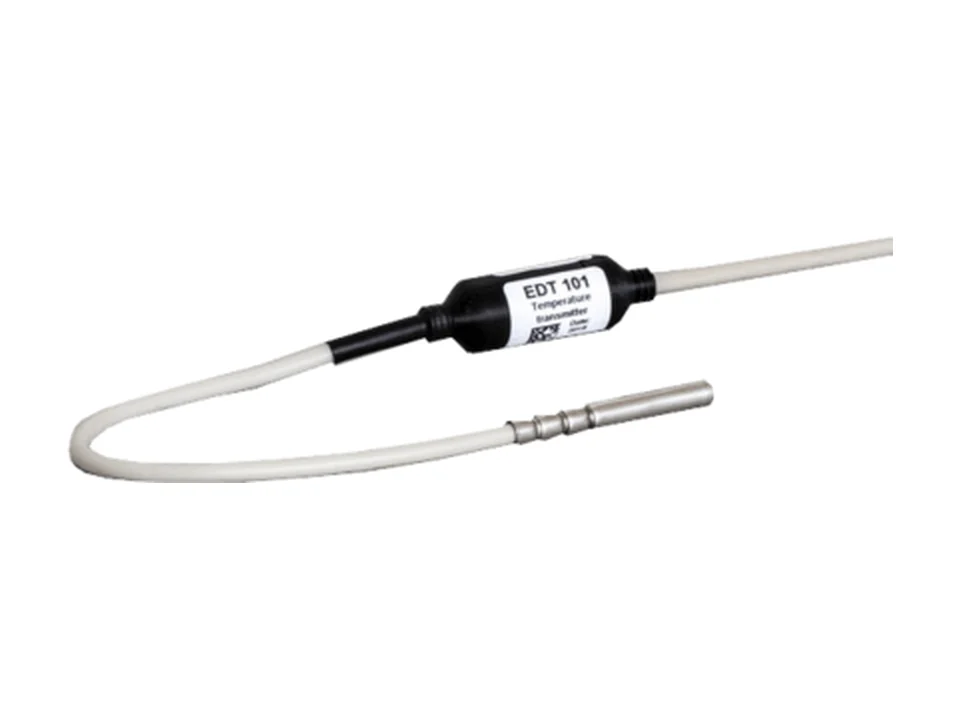
Temperature transmitters
The EDT 101 is a miniature precision temperature transducer for applications that require high measuring accuracy together with ultra-low power consumption. It is intended for connection to electronic gas volume converters, data loggers, gas volume correction devices and telemetric systems and is designed for use in potentially explosive atmospheres.
The transducer measures temperature and transmits the result digitally. It connects to the host device through an RS 485 interface using the Modbus communication protocol, so the measured value is passed to the converter or logger as a digital value rather than as an analogue signal.
Two measuring ranges are available: −25 to +70 °C and −40 to +70 °C. Stated accuracy is ±0.2 °C.
Power consumption is ultra-low. In standby the transducer draws 3 µA, and during active measurement 1 mA. It operates from a supply voltage of 2.8 V upwards.
The EDT 101 is intrinsically safe, with the marking II 1G Ex ia IIC T4 Ga to EN 60079-11. Equipment group II, category 1G and equipment protection level Ga mean that it is designed for use in Zone 0 gas atmospheres, the most demanding hazardous area classification for gases, with gas group IIC and temperature class T4.
The combination of ±0.2 °C accuracy, a supply voltage from 2.8 V and a standby current of 3 µA is the basis of its specification for gas volume correction devices and telemetric systems, where the transducer is connected via RS 485 and Modbus.
Applications named are electronic gas converters, data loggers, gas volume correction devices and telemetric systems. Please state the required temperature range and the host device to which the transducer will be connected in your enquiry, so that a compatible version can be offered.
Match the sensing element, insertion length and wiring to the existing input. Separate the process temperature from the ambient temperature at the connection head.
For an installed instrument, copy the complete ordering code and its suffixes from the nameplate. Identify the part that will remain in service and the part that needs to be replaced. A photograph of the connection face or terminal markings helps resolve differences between versions that share the same housing.
For a new installation, describe what the instrument must measure or control and where the reading will be used. Give the normal operating conditions separately from short peaks. Include units with every numerical value. A drawing with the available space, orientation and access for removal gives the supplier a practical starting point.
Add the quantity for each position and identify any accessories that belong with it. Where a particular drawing, material certificate or calibration record is required, mention it with the line item. Submit the list with the destination country so that the response can cover the requested configuration and delivery.