Bürkert Fluid Control Systems
Type 8203
Liquid analysis
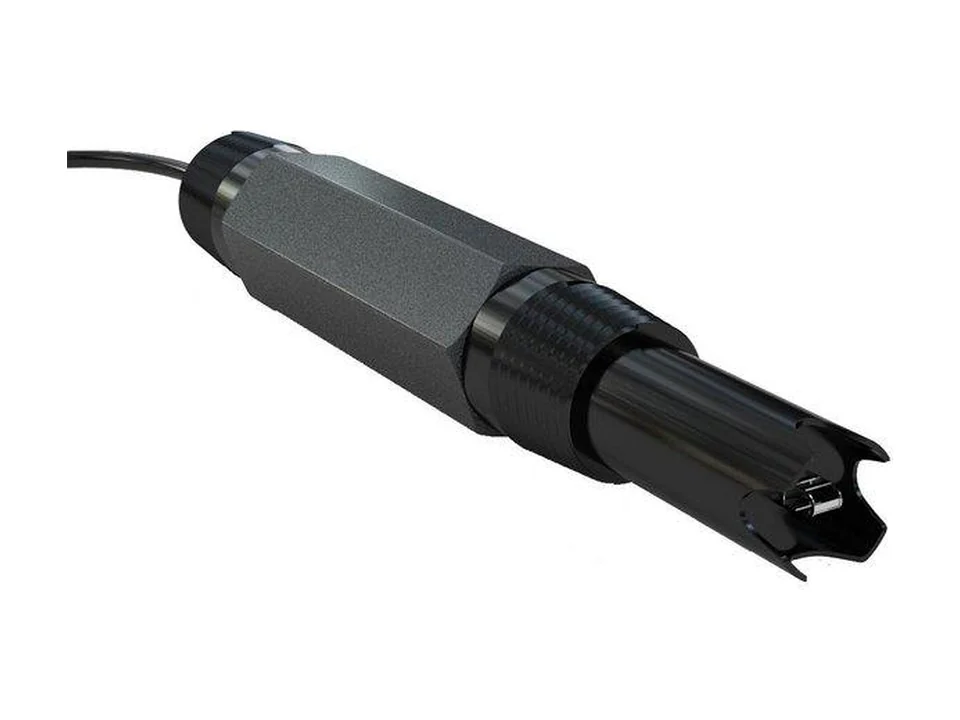
Conductivity & resistivity sensors
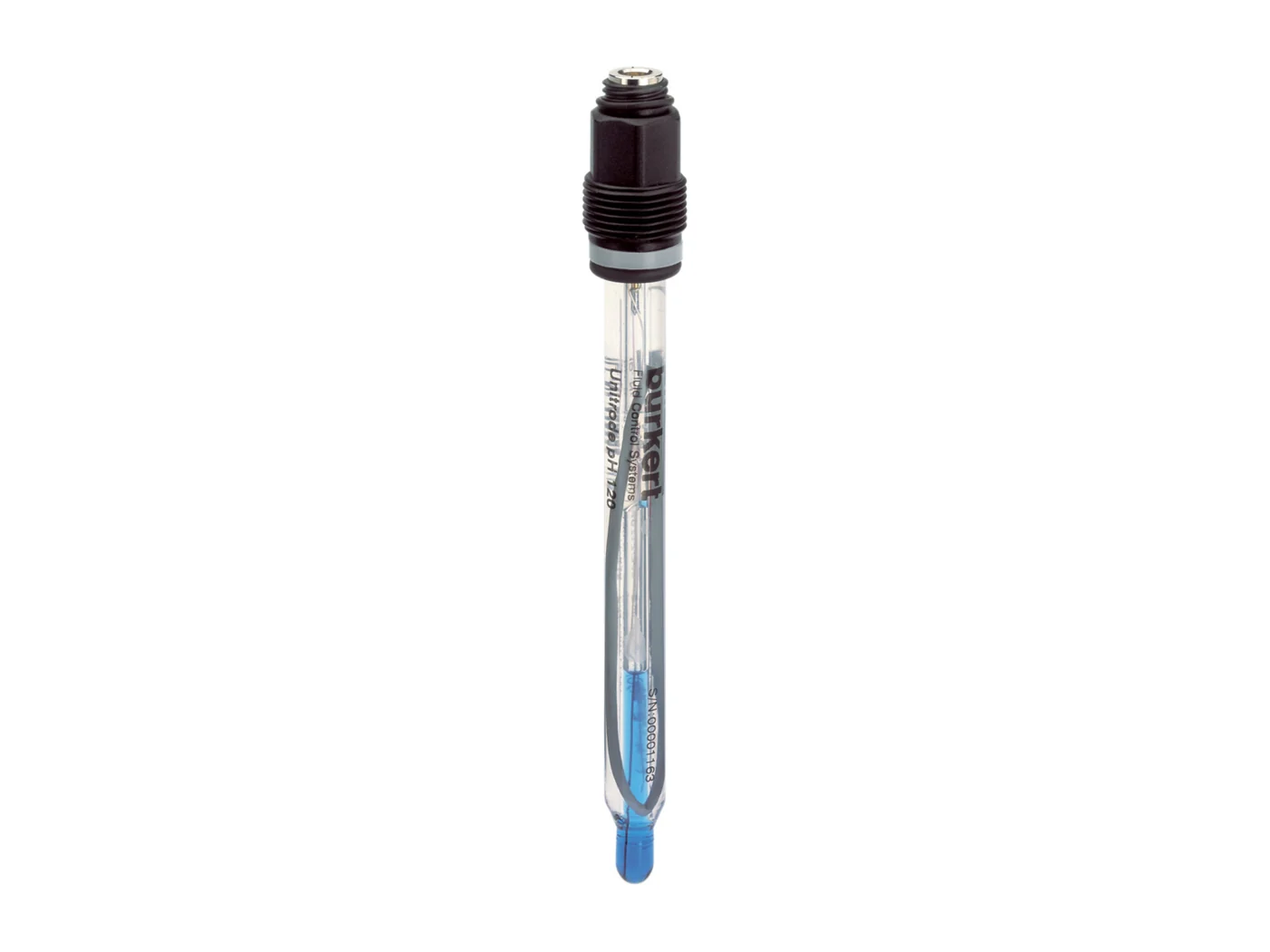
The ELCOND and ICOND conductivity probes are heavy-duty online sensors for in-pipe (flow-through) installation in industrial water applications. The body is made of polypropylene, and the probes are screwed into the line with a 3/4" NPT thread on the sensor body.
The ELCOND probes are contacting conductivity sensors. The conductivity of the liquid between the electrodes is measured, and the result is related to the cell constant of the probe. A Pt100 resistance thermometer is built into each probe so that the transmitter can perform automatic temperature compensation. The ICOND is an inductive conductivity online probe with built-in temperature compensation at 2.2 %/°C.
Four cell constants cover different conductivity ranges. The ELCOND-0.01 with k = 0.01 cm⁻¹ is intended for the very low range up to 200 µS, the ELCOND-0.1 with k = 0.1 cm⁻¹ for the low range up to 2000 µS, the ELCOND-1 with k = 1.0 cm⁻¹ for the medium range up to 20 mS and the ELCOND-10 with k = 10.0 cm⁻¹ for the high range up to 200 mS. The inductive ICOND measures from 0 to 100 mS.
The probes can be used at process temperatures from 0 to 80 °C and at a maximum operating pressure of 100 psi. The ELCOND probes have an integral sensor cable of 6 m, and the ICOND has a 3 m cable. The probes conform to RoHS, REACH and EMC requirements.
The polypropylene body is chosen for chemical and impact resistance. Installation is in-pipe via the 3/4" NPT thread, so the probe sits directly in the flowing medium.
Applications named for these probes include industrial and municipal waste water treatment plants, drinking water treatment plants, surface water and other process water applications.
To prepare an offer, please state the expected conductivity range, the process temperature and pressure, the required model (ELCOND cell constant or ICOND) and the quantity.
ELCOND-1, ELCOND-10, ELCOND-0.1, ELCOND-0.01, ICOND
Record the sample temperature, expected concentration and how the probe is mounted. Identify the mating transmitter when replacing a sensor.
For an installed instrument, copy the complete ordering code and its suffixes from the nameplate. Identify the part that will remain in service and the part that needs to be replaced. A photograph of the connection face or terminal markings helps resolve differences between versions that share the same housing.
For a new installation, describe what the instrument must measure or control and where the reading will be used. Give the normal operating conditions separately from short peaks. Include units with every numerical value. A drawing with the available space, orientation and access for removal gives the supplier a practical starting point.
Add the quantity for each position and identify any accessories that belong with it. Where a particular drawing, material certificate or calibration record is required, mention it with the line item. Submit the list with the destination country so that the response can cover the requested configuration and delivery.