Bürkert Fluid Control Systems
Type 8203
Liquid analysis
Water quality analysers
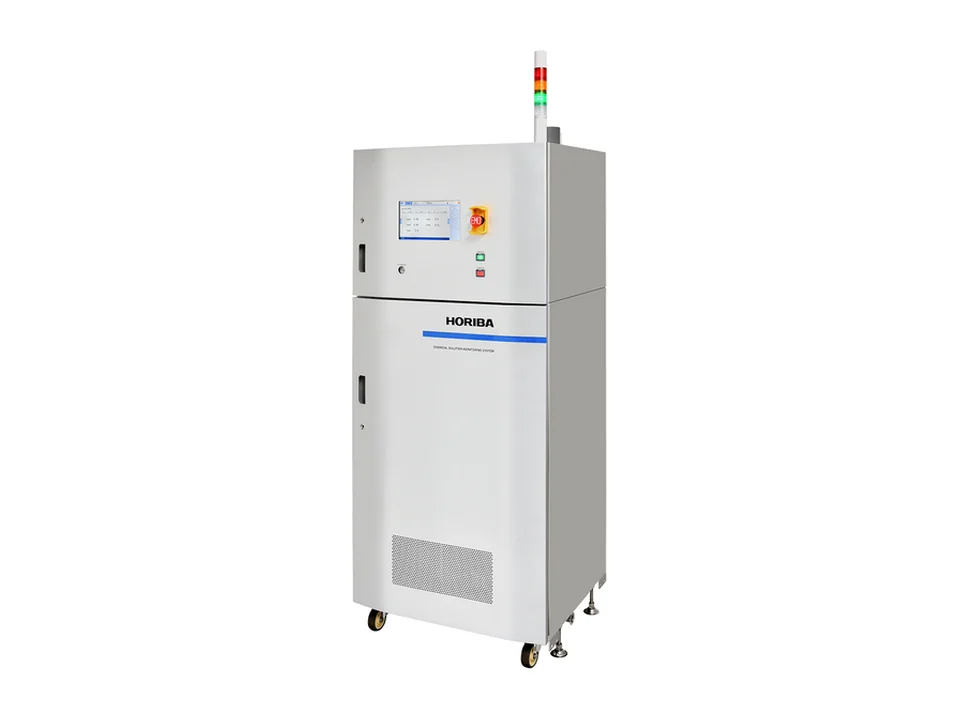
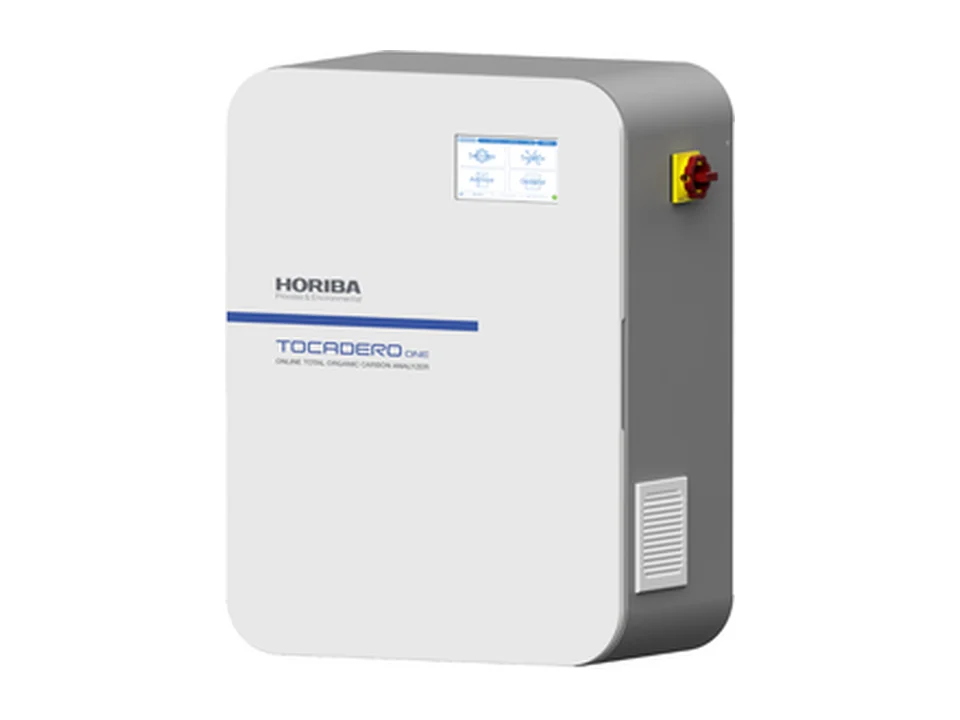
Tocadero EVO is a continuous online analyser for total organic carbon (TOC). It is designed for precise monitoring of organic contamination in pure and ultrapure water systems, in pharmaceutical production, microelectronics and power generation.
The analyser combines UV oxidation with differential conductivity measurement. Organic substances in the sample are oxidised by UV light, and the change in conductivity caused by the oxidation products is measured and converted into a TOC value. The method is reagent-free, which keeps operating costs low, and the UV technology is long-lasting with minimal maintenance. Measurement is continuous online with response times in the range of seconds; an offline mode with an optional autosampler allows analysis of single samples. Automatic dilution supports precise calibration.
The measuring range is 0–1000 ppb TOC, with an online accuracy of ±0.05 ppb and a limit of detection of 0.1 ppb. The cycle time is one second. The sample flow is approximately 14 ml/min; sample temperature must be below 50 °C, inlet pressure below 0.5 bar, and the stated sample conductivity is 2 µS/cm.
Standard outputs include a 4–20 mA analogue output, one relay for collective error, Ethernet and USB. Options add two further analogue outputs, two further relay outputs and a set of one sample and three check connections. Power supply is 110–230 V AC ±10 %, 47–63 Hz, 60 W. The integrated software complies with FDA 21 CFR Part 11, and the system itself provides maintenance information.
The analyser measures 338 × 200 × 450 mm (W × D × H) and weighs 11 kg. It operates at 10 to 40 °C and below 80 % relative humidity, non-condensing. It supports testing to USP <643> and EP 2.2.44 and the Japanese and Chinese pharmacopoeias.
Applications are pharmaceutical water quality control (PW, HPW and WFI), ultrapure water monitoring in semiconductor production, rinse water monitoring in CIP applications, water quality control for electrolysers, power plant boiler feed water monitoring and laboratory analysis of single samples.
Please describe the water type, the number of sampling points and whether the autosampler or additional outputs are needed with your enquiry.
Record the sample temperature, expected concentration and how the probe is mounted. Identify the mating transmitter when replacing a sensor.
For an installed instrument, copy the complete ordering code and its suffixes from the nameplate. Identify the part that will remain in service and the part that needs to be replaced. A photograph of the connection face or terminal markings helps resolve differences between versions that share the same housing.
For a new installation, describe what the instrument must measure or control and where the reading will be used. Give the normal operating conditions separately from short peaks. Include units with every numerical value. A drawing with the available space, orientation and access for removal gives the supplier a practical starting point.
Add the quantity for each position and identify any accessories that belong with it. Where a particular drawing, material certificate or calibration record is required, mention it with the line item. Submit the list with the destination country so that the response can cover the requested configuration and delivery.