Bürkert Fluid Control Systems
Type 8203
Liquid analysis
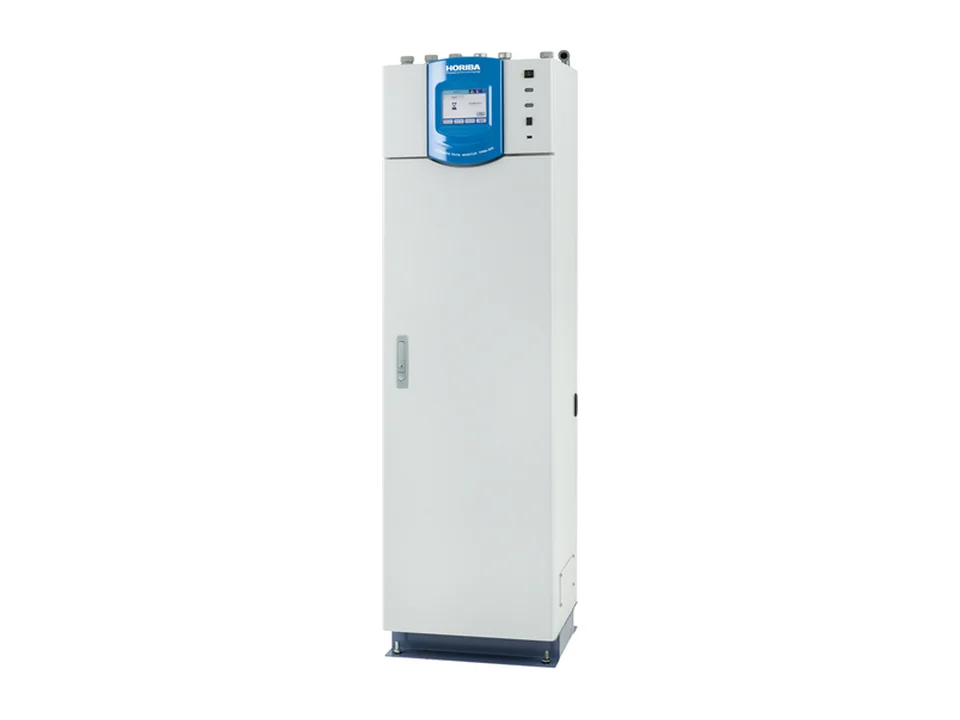
Water quality analysers
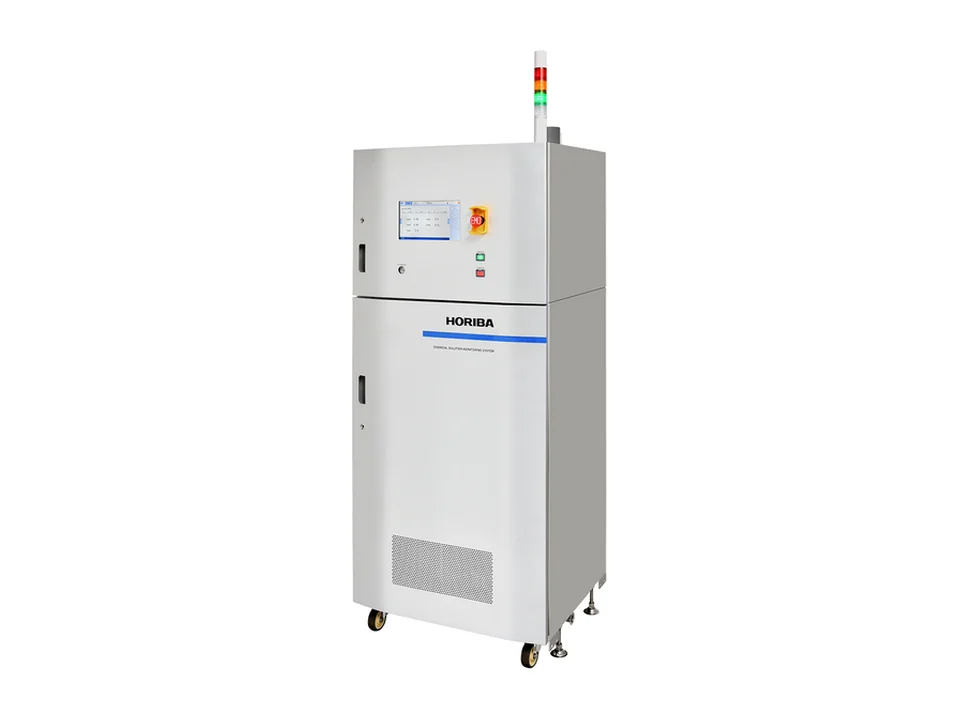
The TPNA-500 is an automatic online monitoring system for total nitrogen (TN) and total phosphorus (TP). It is designed for monitoring wastewater treatment and for environmental compliance, and the applications named for it are drinking water utilities, sewage treatment, industrial wastewater and environmental monitoring.
Total nitrogen is determined by alkaline potassium persulfate digestion with ultraviolet oxidative dissolution, followed by UV absorption spectrophotometry. Total phosphorus is determined by potassium persulfate digestion with ultraviolet oxidative dissolution, followed by the molybdenum blue spectrophotometric method. The analyser uses a robust weighing system that is resistant to contamination. The reagent replacement cycle is two months, and power consumption is stated to be reduced by approximately 30 %. A turbidity compensation function is available as an option.
The measuring range is 0 to 1000 mg N/L for total nitrogen and 0 to 250 mg P/L for total phosphorus; two measuring ranges can be configured as an option. Repeatability is within ±3 % or ±5 % of full scale, and the measurement cycle is 60 minutes. A load calculation function for TN and TP is integrated, and measurement data for more than one year are stored in memory.
The sample water must be at 2 to 40 °C without freezing, with a flow of 0.5 to 5 L/min when the OF-3 is used or 5 to 20 L/min with the OF-30. Pure or tap water consumption is about 43 L per month depending on range, at a supply pressure of 0.1 to 0.5 MPa; a continuous pure water supply is optional.
As standard, the analyser has four analogue outputs (4–20 mA or 0–16 mA DC, option eight, also 0–1 V or 1–5 V), 16 contact outputs rated 250 V AC 3 A or 30 V DC 3 A (option 22), one analogue input (option two) and nine contact inputs (option 18). Communication is via RS-485 with Modbus, with RS-232C optional. Operation is via a colour touch-panel LCD, and a printer with 58 mm paper is built in.
The analyser is supplied with 100–240 V AC ±10 %, 50/60 Hz, and consumes about 250 VA. It measures 460 × 385 × 1600 mm and weighs about 87 kg. It is intended for indoor installation on a flat surface free from vibration and shock, in a well-ventilated area without dust, mist or corrosive gas, at 2 to 40 °C and up to 85 % RH. It conforms to EN 61010-1, RoHS, REACH and EMC.
Please state the sample type, expected TN and TP ranges, required options and outputs when you enquire.
TPNA-500
Record the sample temperature, expected concentration and how the probe is mounted. Identify the mating transmitter when replacing a sensor.
For an installed instrument, copy the complete ordering code and its suffixes from the nameplate. Identify the part that will remain in service and the part that needs to be replaced. A photograph of the connection face or terminal markings helps resolve differences between versions that share the same housing.
For a new installation, describe what the instrument must measure or control and where the reading will be used. Give the normal operating conditions separately from short peaks. Include units with every numerical value. A drawing with the available space, orientation and access for removal gives the supplier a practical starting point.
Add the quantity for each position and identify any accessories that belong with it. Where a particular drawing, material certificate or calibration record is required, mention it with the line item. Submit the list with the destination country so that the response can cover the requested configuration and delivery.