Bürkert Fluid Control Systems
Type 8203
Liquid analysis
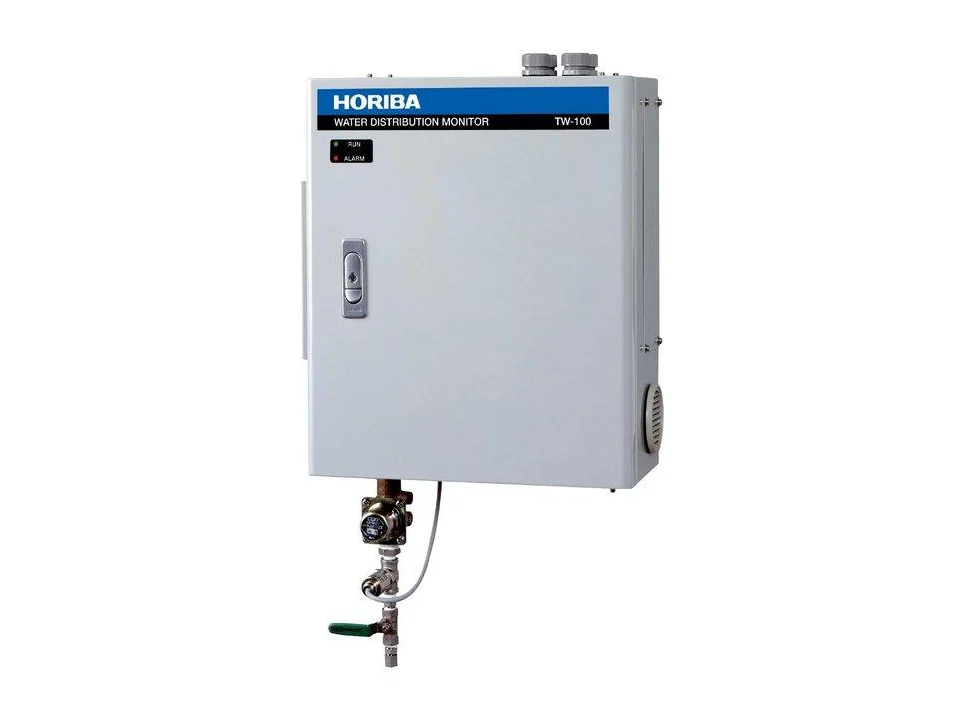
Water quality analysers
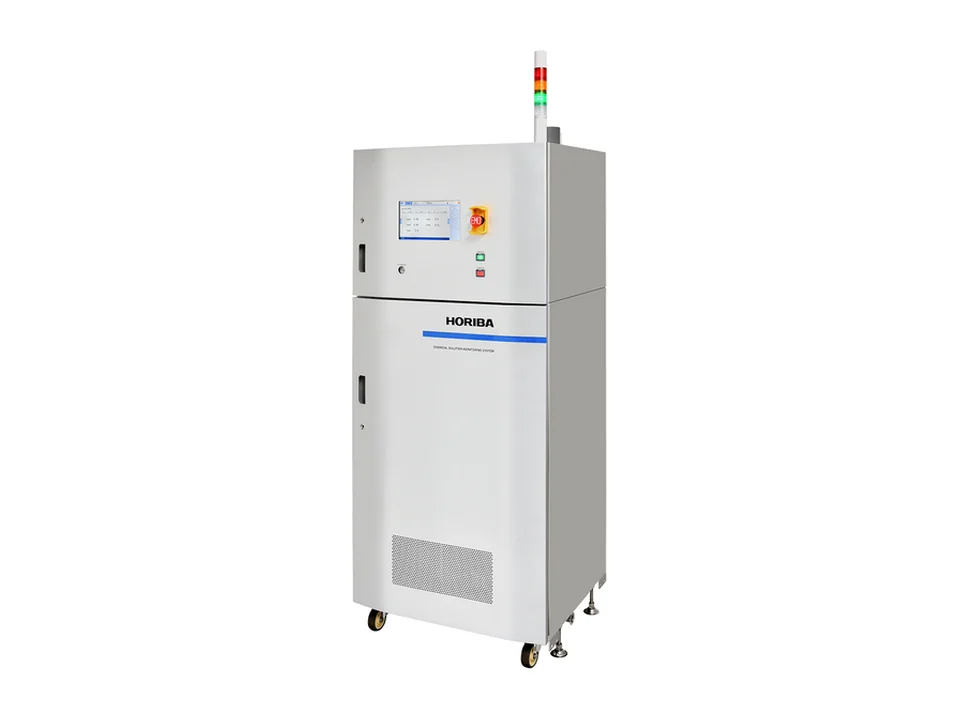
The TW-100 is an automatic water quality monitor for water distribution networks. It carries out the daily inspection parameters of a drinking water supply automatically and without reagents, helping utilities to check the safety and reliability of the water delivered through the network. Applications named for the instrument are drinking water utilities, water reuse and water testing.
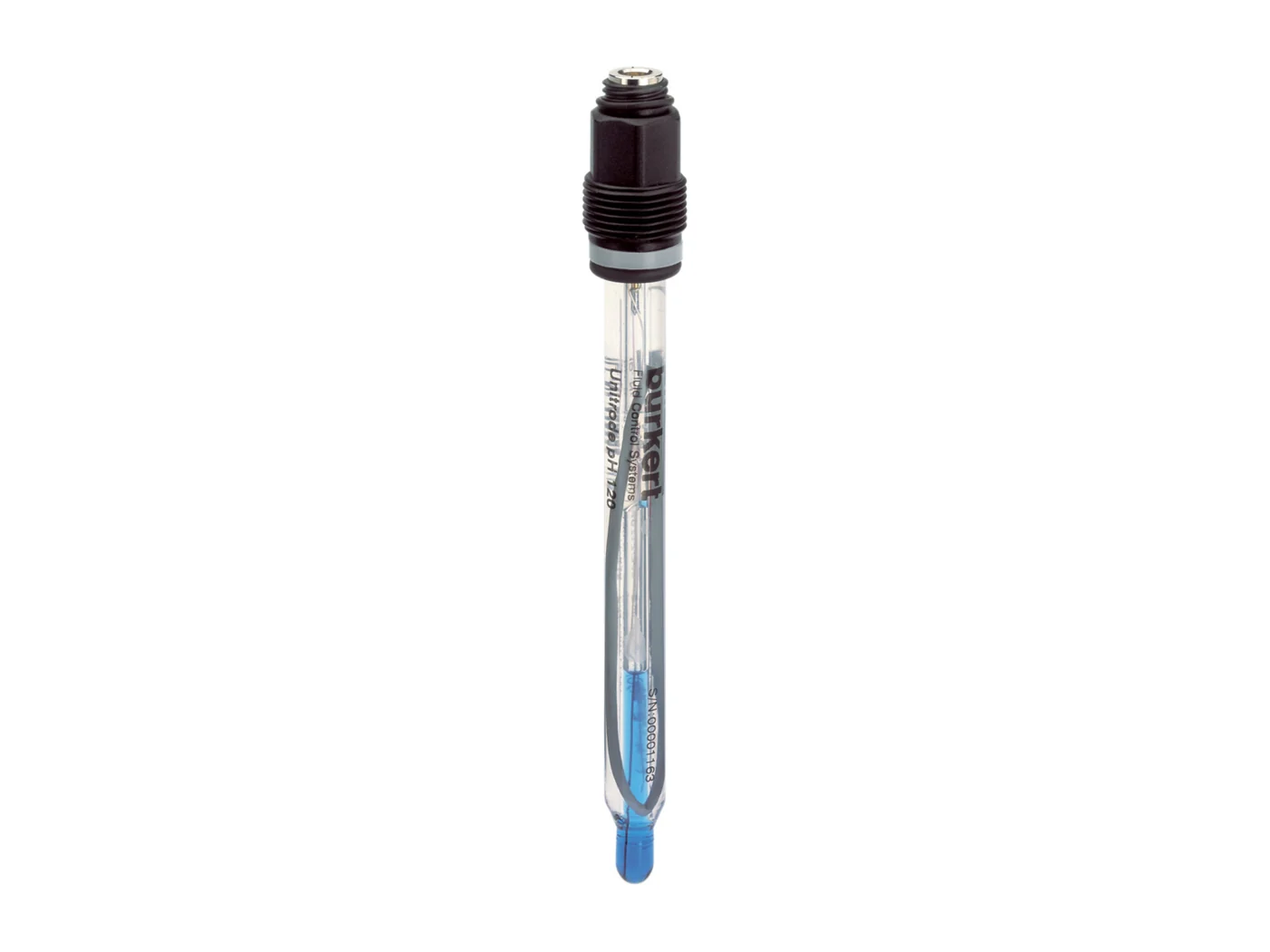
The standard version measures turbidity, colour, free chlorine and water pressure. Turbidity and colour are determined by transmitted light absorption, free chlorine by polarography and water pressure by a diaphragm pressure sensor. Optional modules add pH with a glass electrode, conductivity with an AC bipole cell and water temperature with a thermistor. The optical and chlorine measurement uses automatic zero calibration, and the cells are cleaned automatically by a wiper or a bead grinder.
Measuring ranges are 0–2 or 0–4 FTU for turbidity, 0–10 or 0–20 CU for colour, 0–2 mg/L for free chlorine and 0–1 MPa for water pressure. The options cover pH 2 to 12, conductivity 0–50 mS/m and water temperature 0–50 °C. The sample water should be at 0–40 °C and 0.1–0.75 MPa with a supply flow above 100 mL/min; the flow through the measuring section is 50–100 mL/min.
Measured values are output as isolated 4–20 mA DC signals (maximum load 600 Ω), four as standard and up to seven with options. Voltage-free contact outputs (rated 125 V AC 0.3 A or 30 V DC 1 A) and contact inputs are provided, and an RS-232C interface is available. Data are stored internally and can be transferred with a CF card. Operation is via an LCD touch panel. A remote monitoring system is offered as an option.
The monitor is designed for wall mounting and is space-saving: 350 mm wide, 160 mm deep and 420 mm high, weighing about 15 kg. Parts can be replaced without tools. It operates at 0–40 °C ambient and up to 85 % humidity and is supplied from 100–230 V AC, 50/60 Hz, with 120–150 VA consumption. For installation outdoors, existing outdoor panels can be used or a special exterior case is available. A bypass pipe is required, and the line must be flushed before start-up. The device conforms to RoHS, REACH and EMC requirements.
Please tell us which optional parameters are needed, whether an outdoor case or remote monitoring is required, and the number of measuring points.
Record the sample temperature, expected concentration and how the probe is mounted. Identify the mating transmitter when replacing a sensor.
For an installed instrument, copy the complete ordering code and its suffixes from the nameplate. Identify the part that will remain in service and the part that needs to be replaced. A photograph of the connection face or terminal markings helps resolve differences between versions that share the same housing.
For a new installation, describe what the instrument must measure or control and where the reading will be used. Give the normal operating conditions separately from short peaks. Include units with every numerical value. A drawing with the available space, orientation and access for removal gives the supplier a practical starting point.
Add the quantity for each position and identify any accessories that belong with it. Where a particular drawing, material certificate or calibration record is required, mention it with the line item. Submit the list with the destination country so that the response can cover the requested configuration and delivery.